


What Is Local SEO?
Local SEO is the process of optimizing your online presence to increase local traffic, visibility, and brand awareness.
Common local SEO tasks include:
- Optimizing your Google Business Profile
- Finding local keywords
- Creating locally relevant content
Among others.
And any business that has a physical location or serves a geographic area can benefit from local SEO.
This is an example of a local search result on Google:
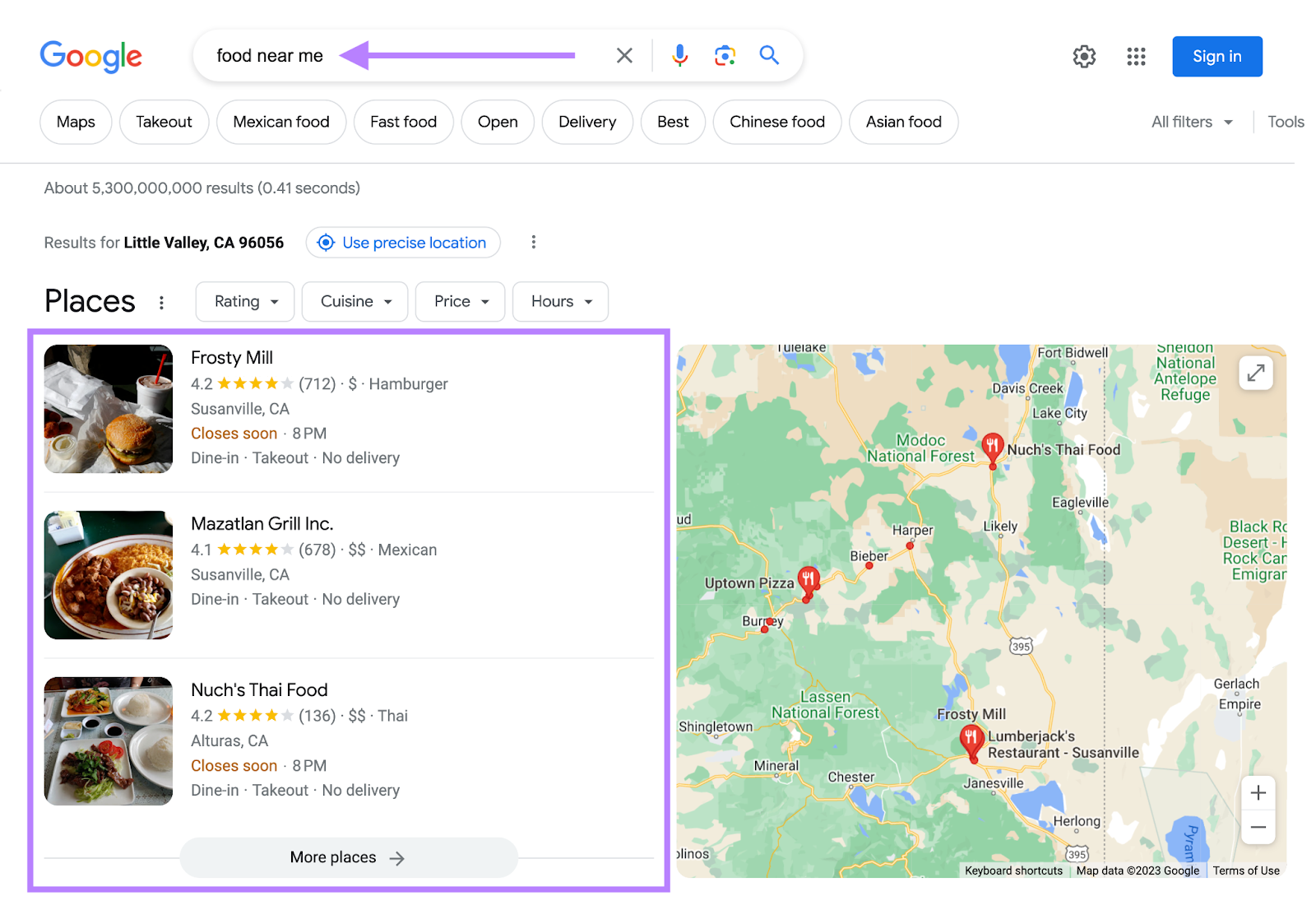
Local SEO can help your business appear in Google results for searches like these.
This article explains why local SEO is important, how it works, and how to do local SEO.
Tip: create a free Semrush account so you can follow along.
Why Is Local SEO Important?
The best way to get your site in front of people in your area is to use local SEO marketing.
Over 75% of consumers in the United States, France, Germany, and the United Kingdom use Google when looking for business information.
Making it the most dominant search engine for local search in those (and many other) countries. By far.
And Google Maps searches for “shopping near me” have grown globally by more than 100% year over year.
Mobile searches for “store open near me” also grew by over 250% in a recent two-year period. And “where to buy” + “near me” keywords by more than 200%.
That’s hundreds of millions of searches every day.
How Local SEO Works
On top of Google’s usual ranking factors, its local search algorithms use three main factors to help find the best match:
- Relevance (how closely related a Google Business Profile result is to the words a searcher uses in their query)
- Distance (how far Google believes a user is from a business when they search)
- Prominence (how important Google thinks a business is to its potential customers)
Then, Google displays two types of search results for local searches.
The “local pack” results (Google Maps and Business Profiles) and organic results.
Organic results are the “normal” blue link search results we’re all used to seeing on Google.
A local pack (or map pack) is a Google feature that shows the top local business listings and a map.
Like this:
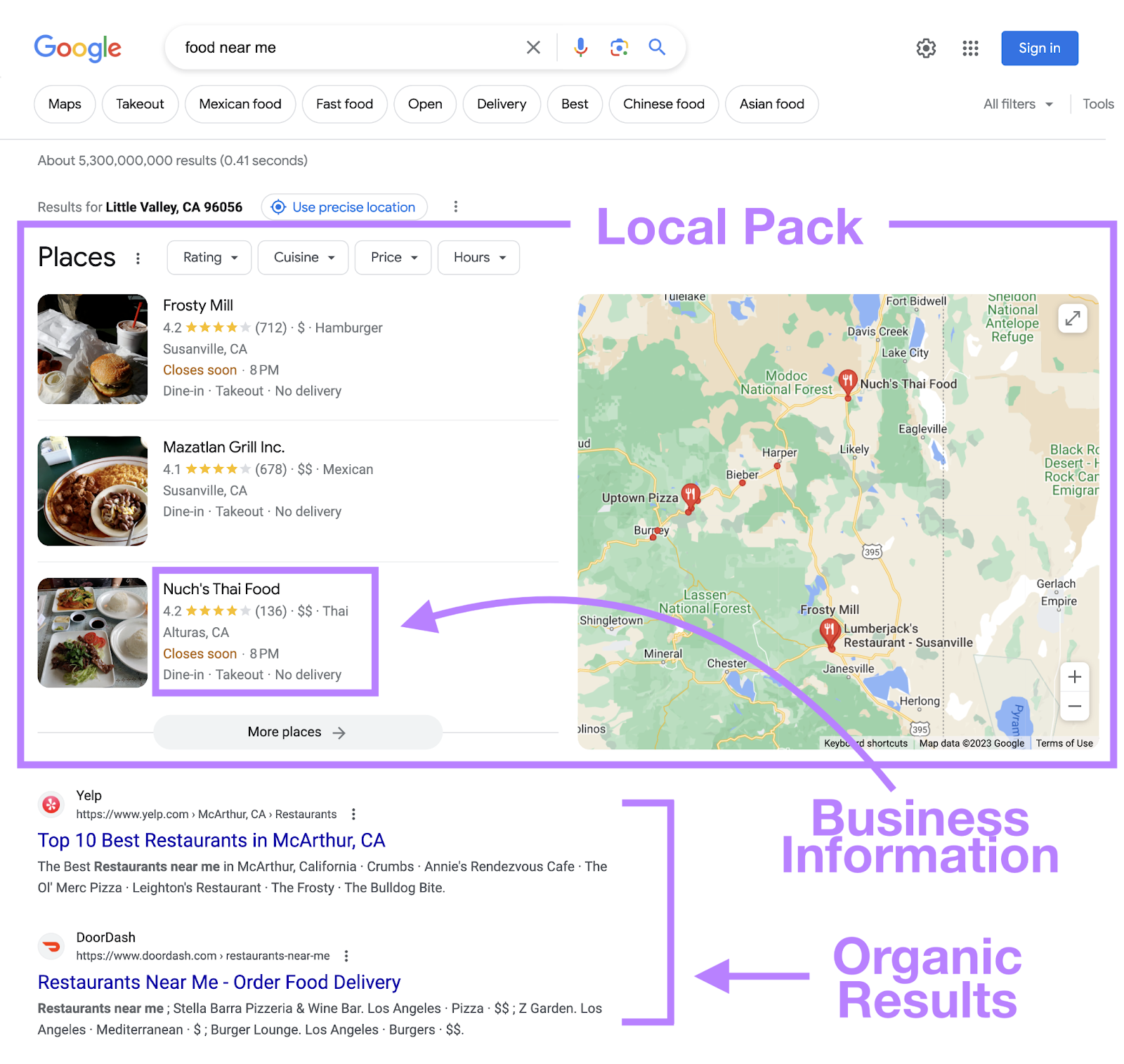
For example, when you search for “nutritionist miami,” Google displays a local pack at the very top.
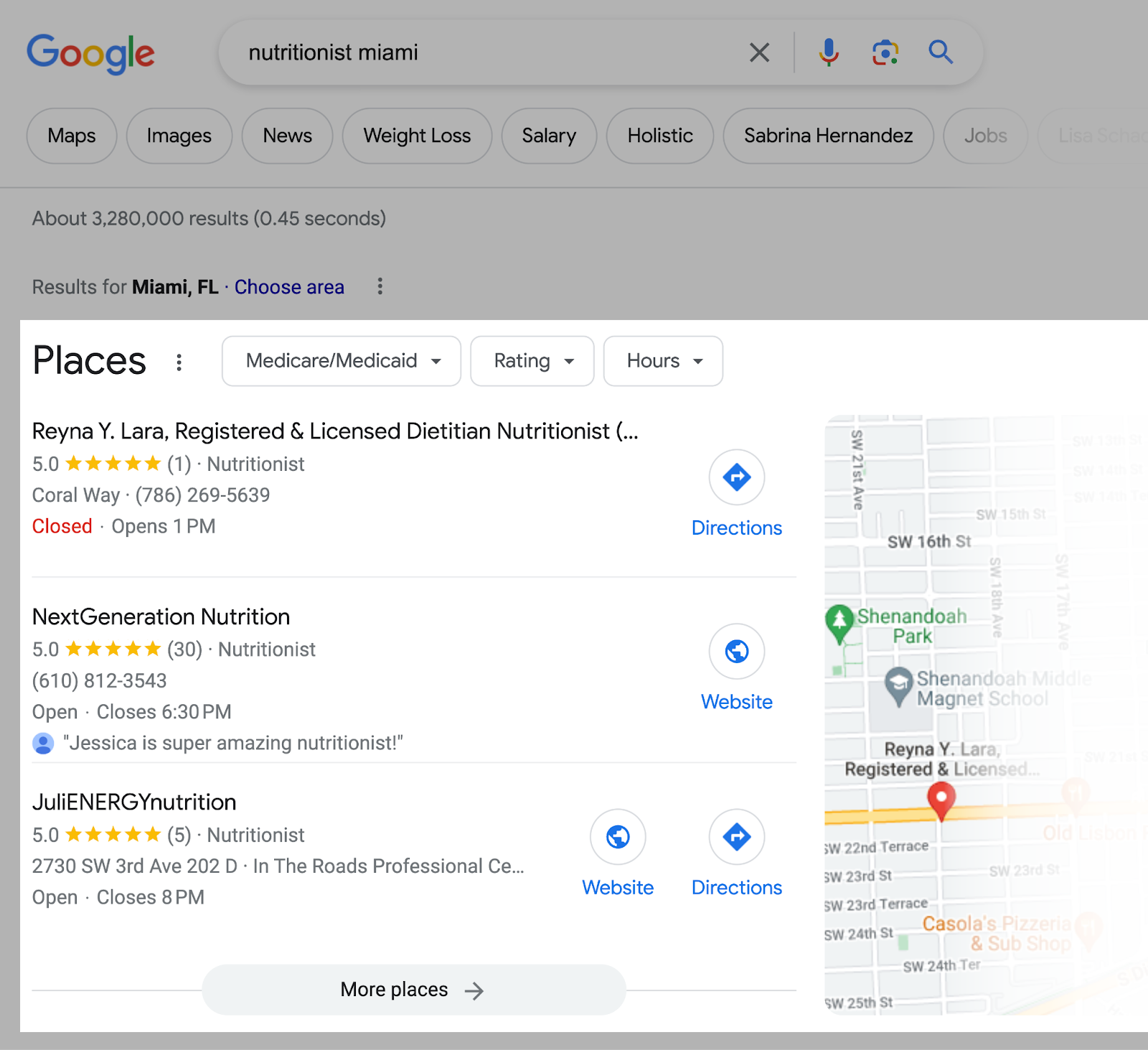
And the “regular” organic results underneath.
But Google doesn’t just display local results for queries that contain a city, state, or “near me” keyword.
If Google believes the intent of your search is local, it’ll display local results.
Even if your search isn’t explicitly local.
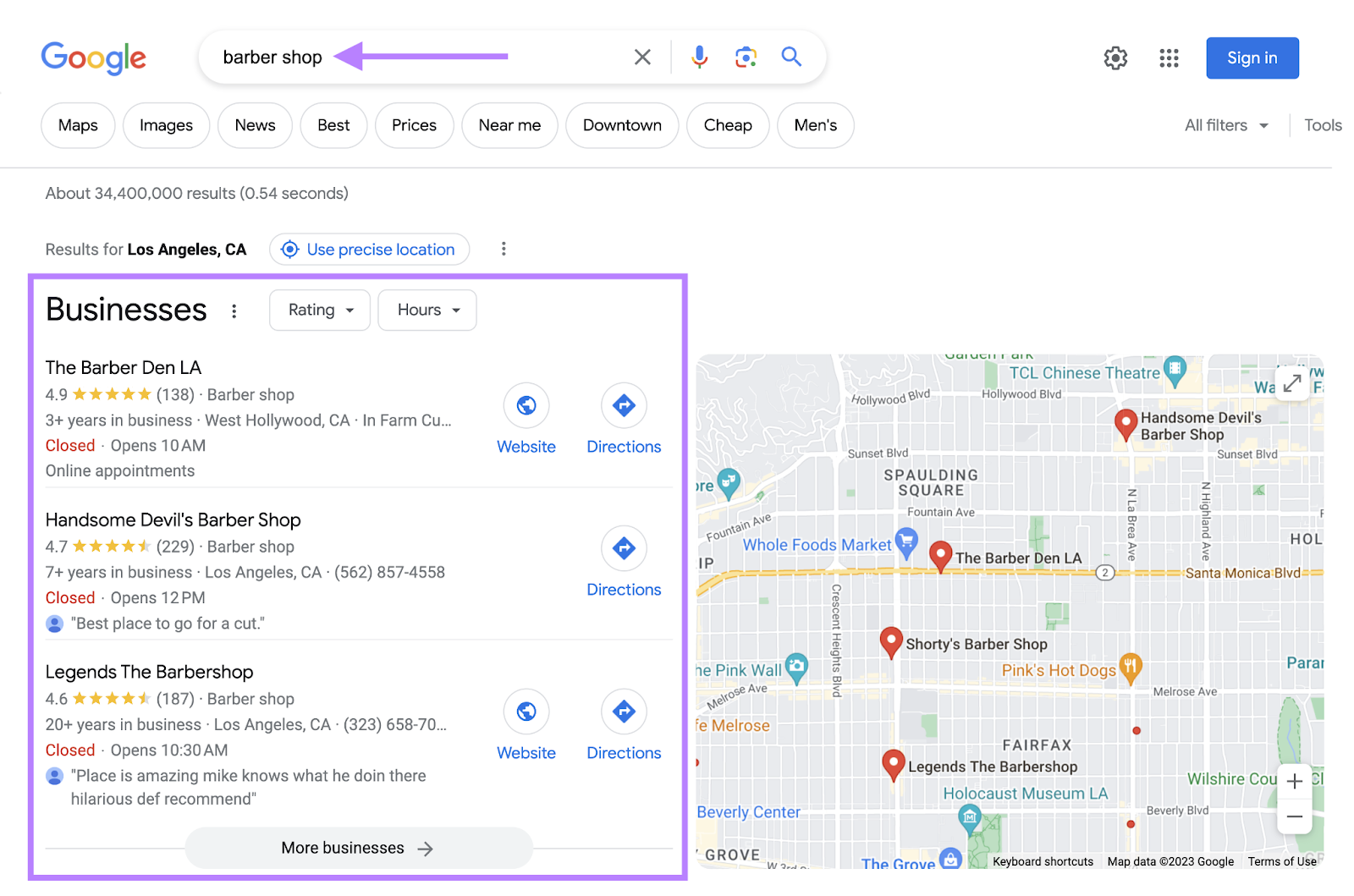
For example, if you were in Los Angeles and searched for “barber shops,” Google would still display a local pack for Los Angeles barber shops.
Like this:
How to Do Local SEO
Now it’s time to create a strategy so you can increase your local rankings and boost traffic. The following steps will help you get started.
Tip: Remember—you can create a free Semrush account to follow along.
Do Local Keyword Research
Keyword research for local SEO is the process of finding keywords people use when searching for local products and services.
Ranking for these keywords drives highly targeted local traffic to your site and sends more customers your way.
To get started, you need a short list of keywords people can use to find your local business.
Here are a few different ways to start.
Research Your Competitors
Seeing what your competitors are doing is an easy way to start gathering ideas.
One of the best ways to do that is to use Semrush’s Organic Research tool.
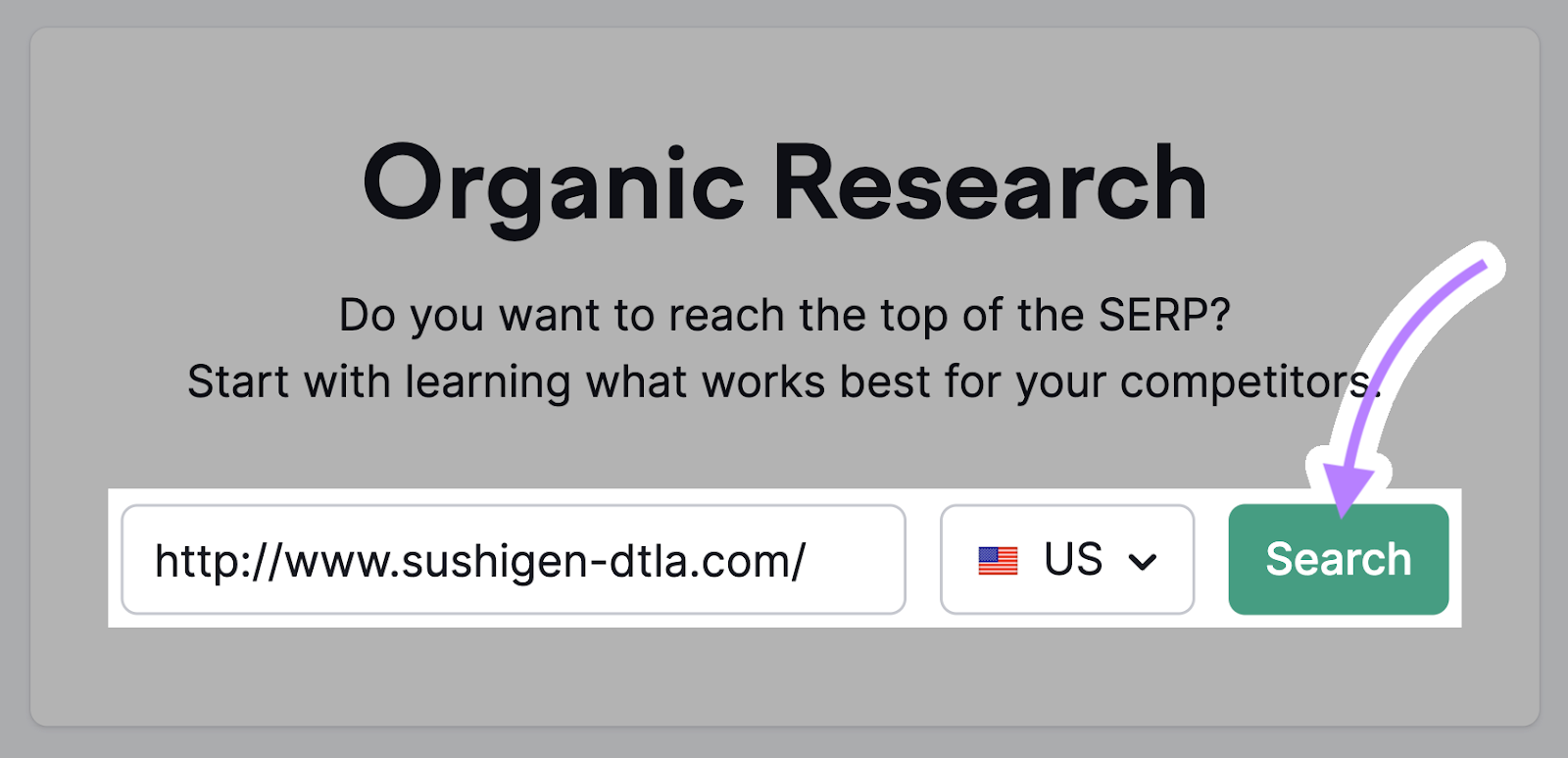
Enter a competing site and click “Search.”
Like so:
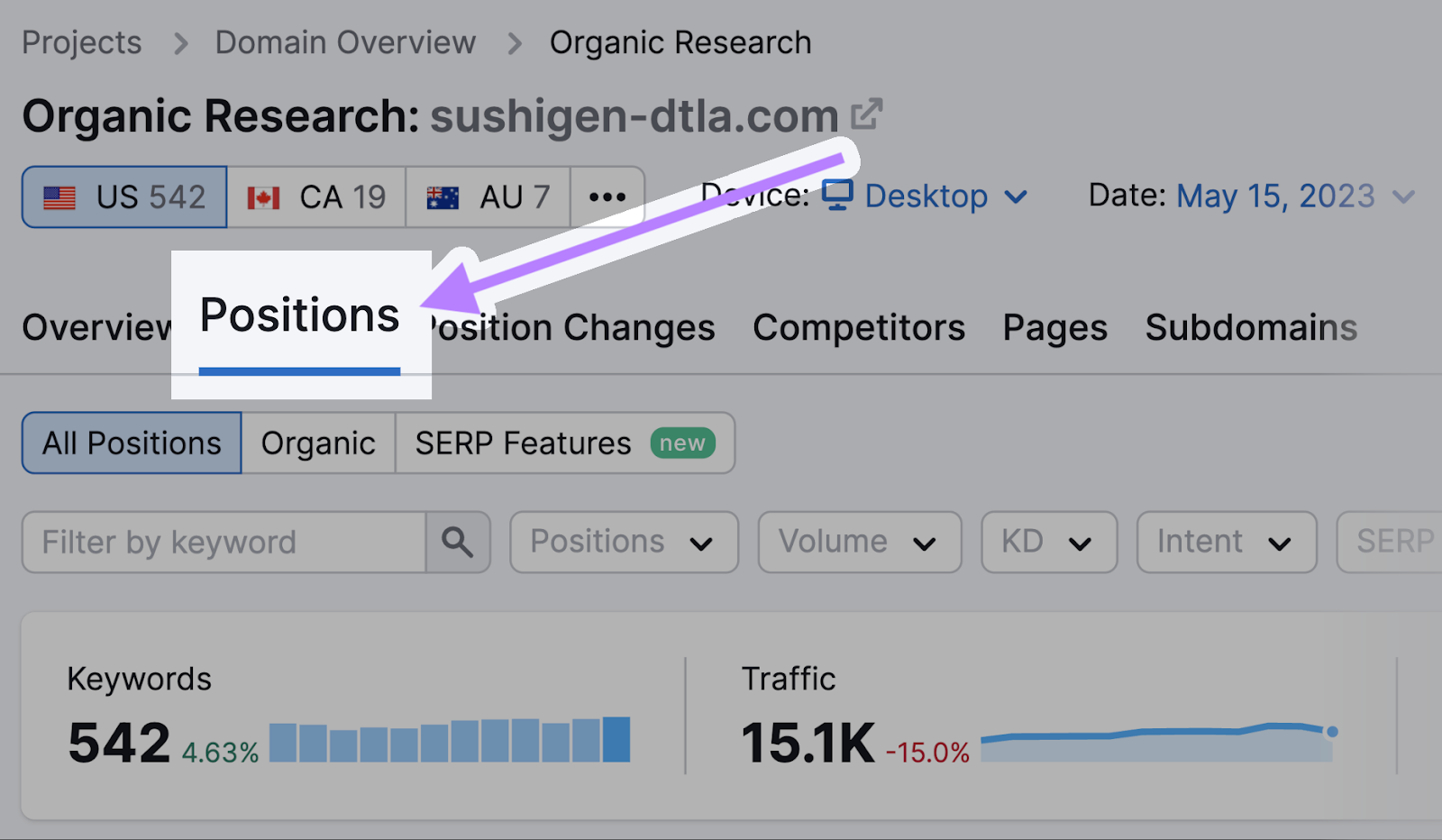
Then, go to the “Positions” tab.
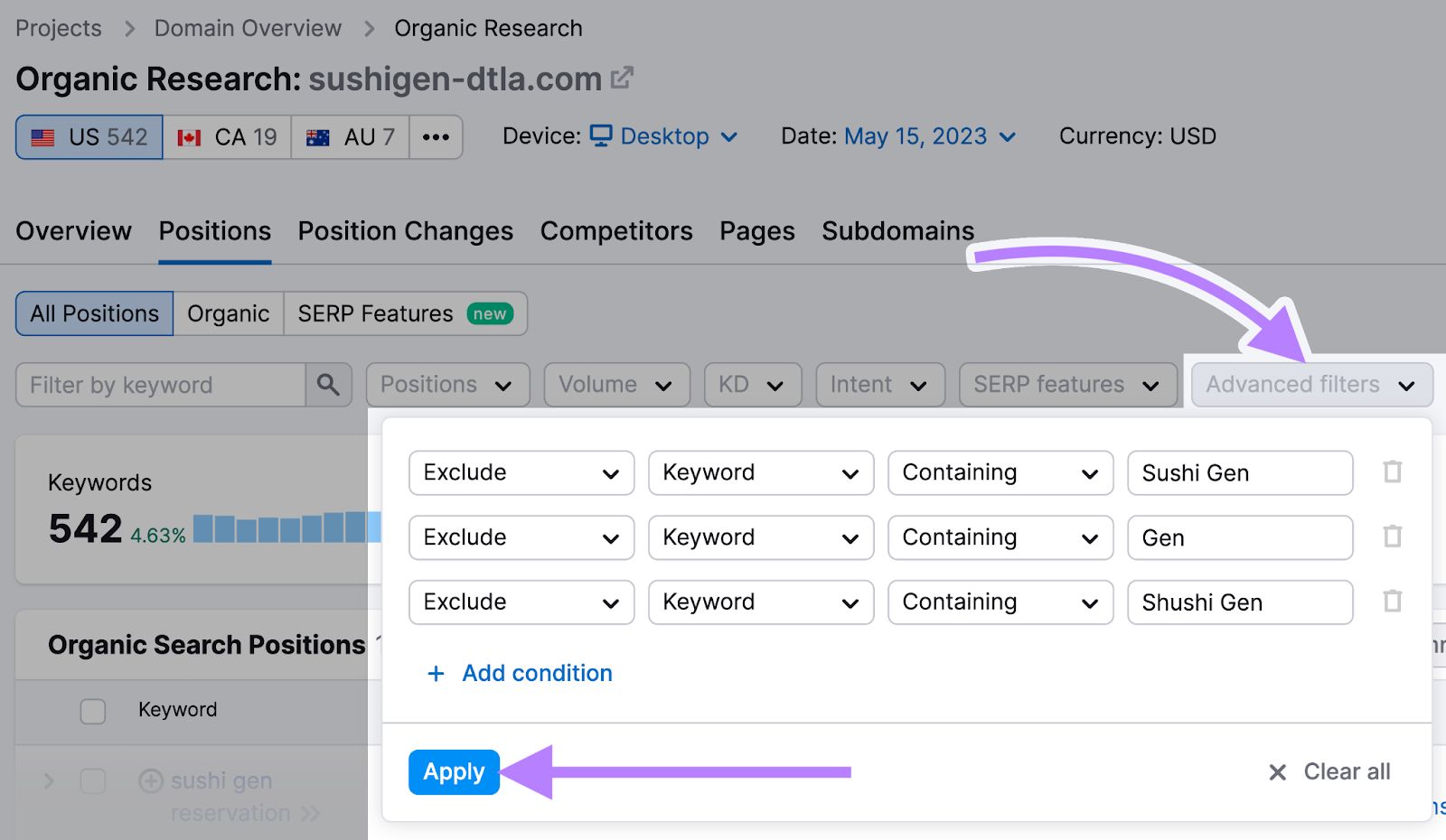
Click on “Advanced filters,” and exclude branded keywords (phrases that contain your competitor’s business name).
And click the “KD%” column to sort the table by keyword difficulty.
Like so:
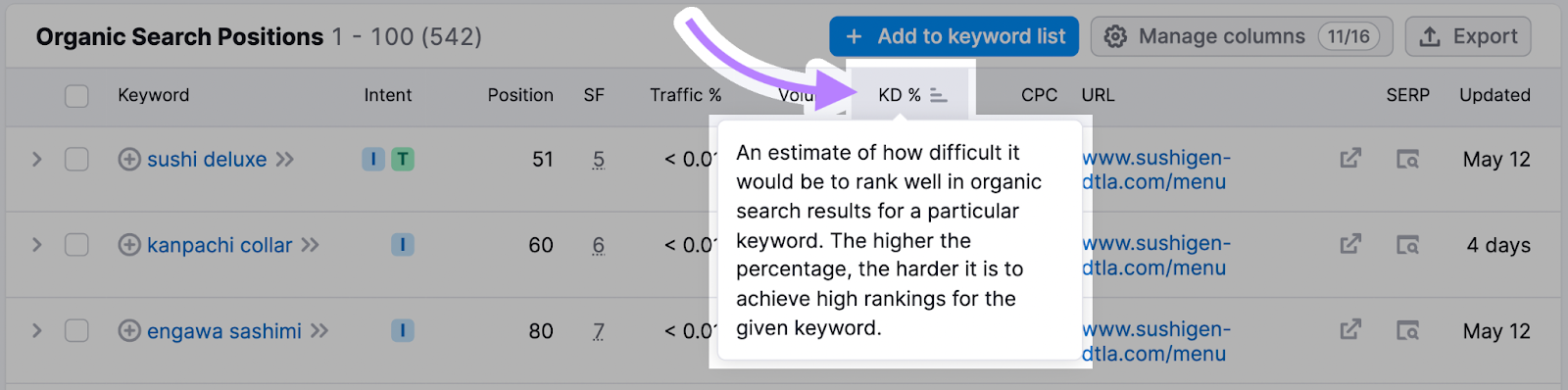
Now you have a list of keywords you might want to target.
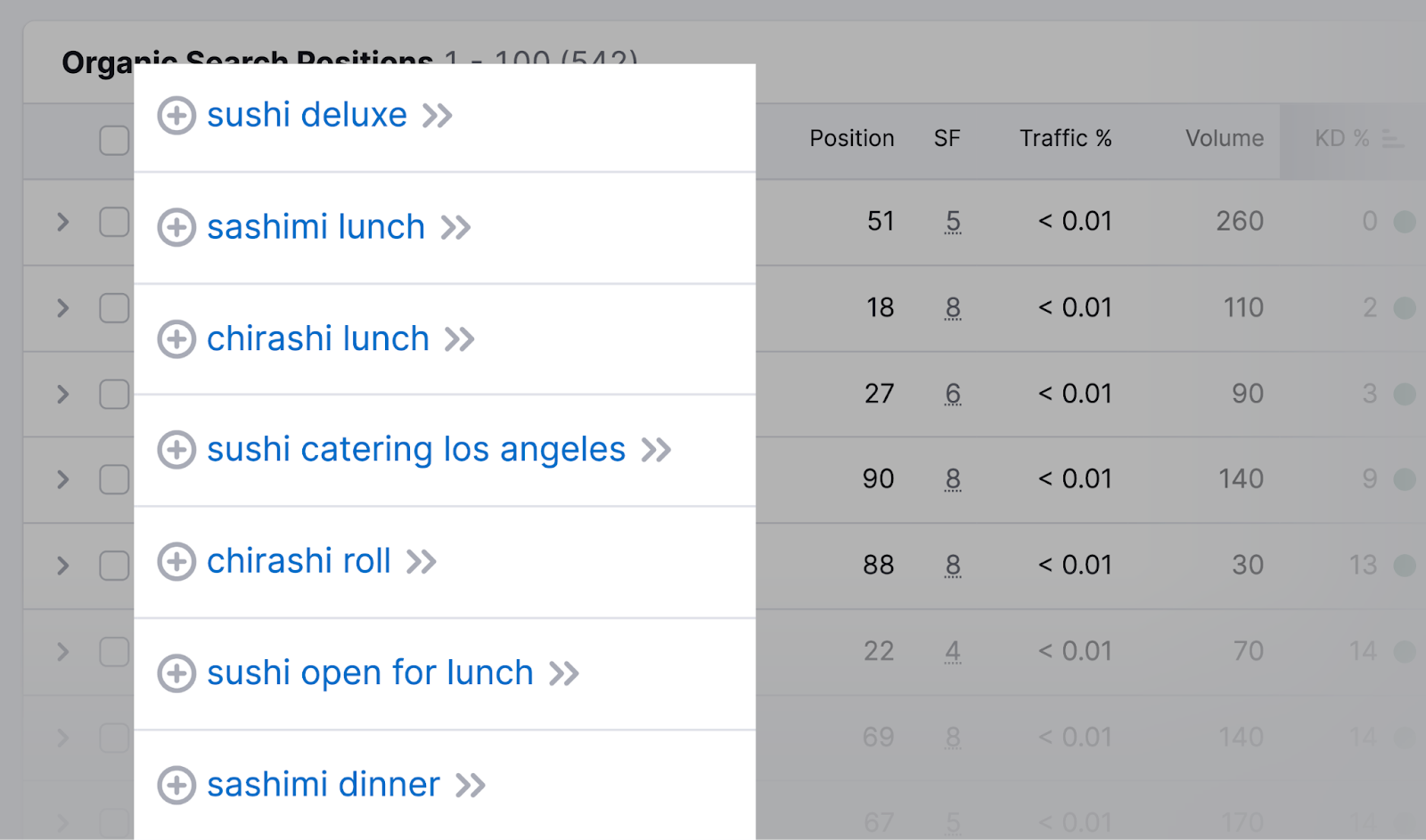
If your competitors are targeting these keywords, then they’re likely highly relevant to your business, too.
Check Local Keyword Volume Metrics
You’ll also want to get a sense of how difficult it is for your content to rank locally for keywords you choose to target.
Use the local volume metrics feature in the Keyword Overview tool to identify valuable keywords you’ll want to target in your content.
Enter your desired keyword into the search bar at the top of the page and hit “Search.”
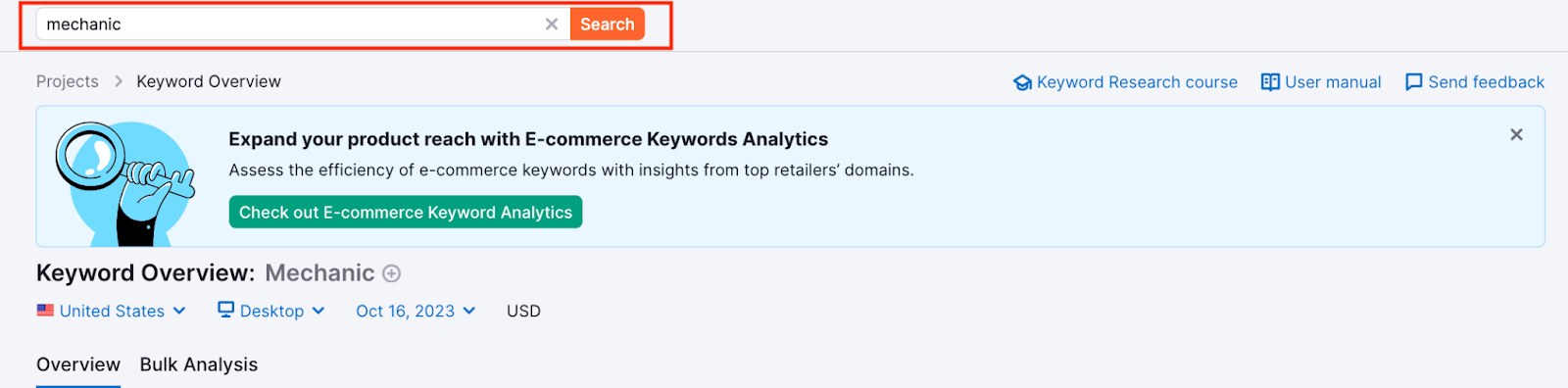
Once the tool delivers the keyword results, click on the drop-down bar labeled “Select location.”
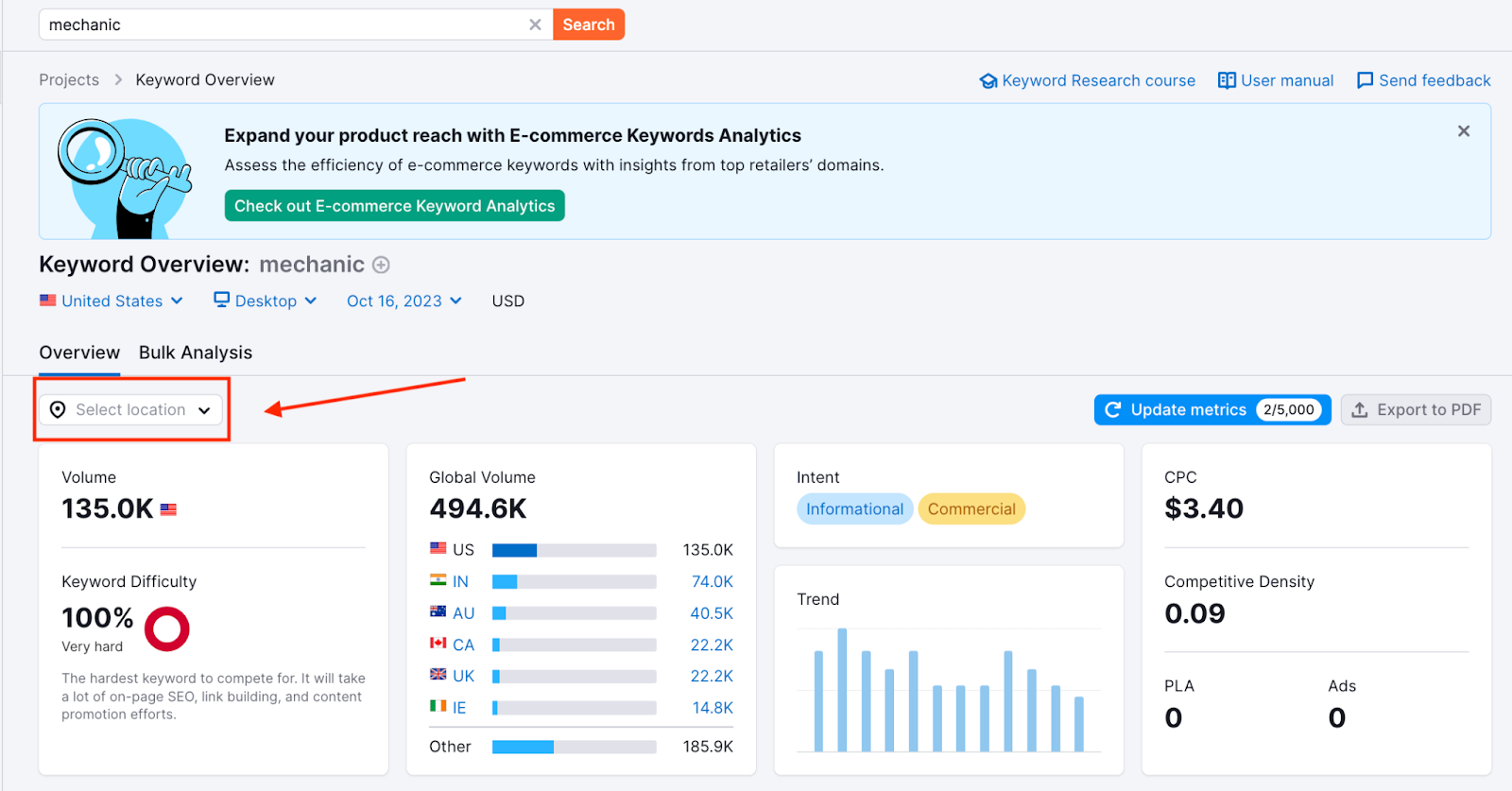
Type in your locale. This could be a state, county, province, city, or municipality. Go as narrow on the location as you wish.
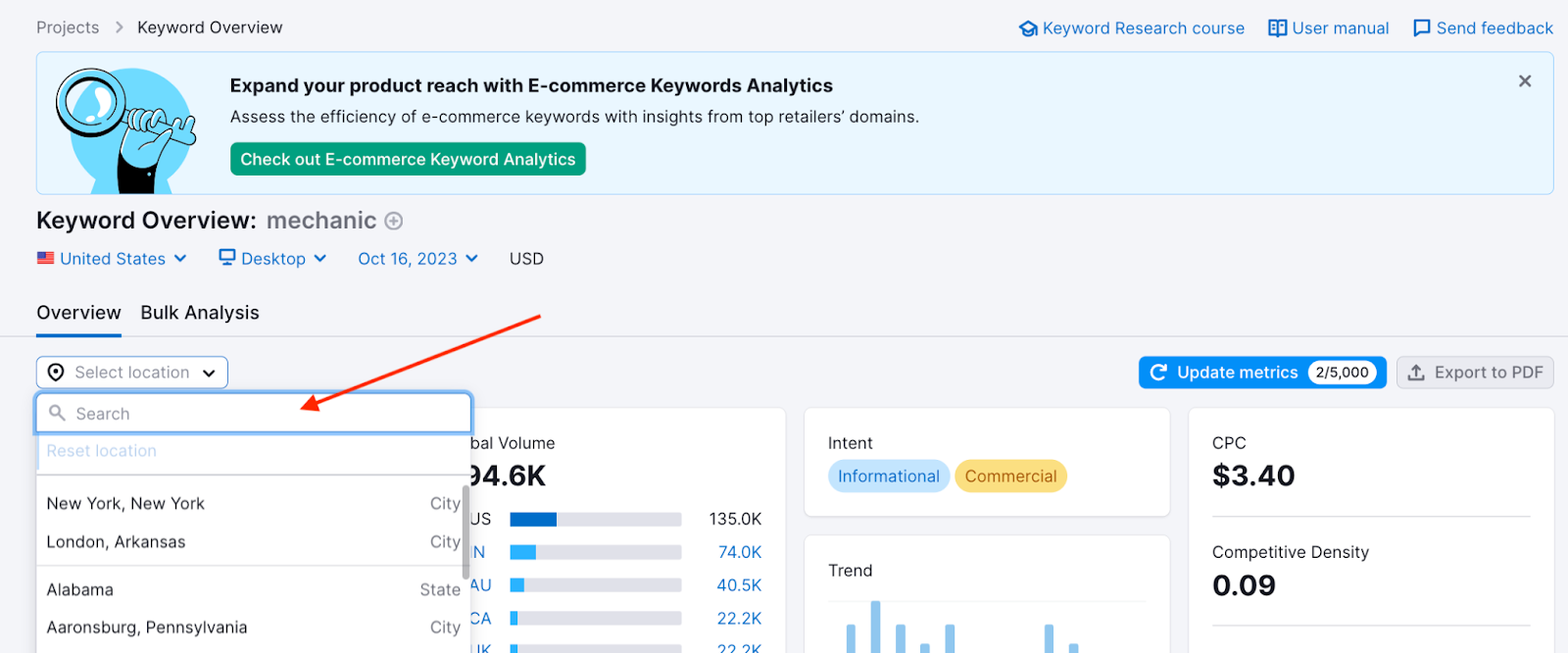
You’ll get local data, as well as the comparative national data. So you can see how easy or difficult it is to rank for your keyword in your exact location.
Note: Some of these widgets show local data (volume, difficulty, SERP analysis, etc.), while others remain national-level (keyword variations, questions, related keywords).
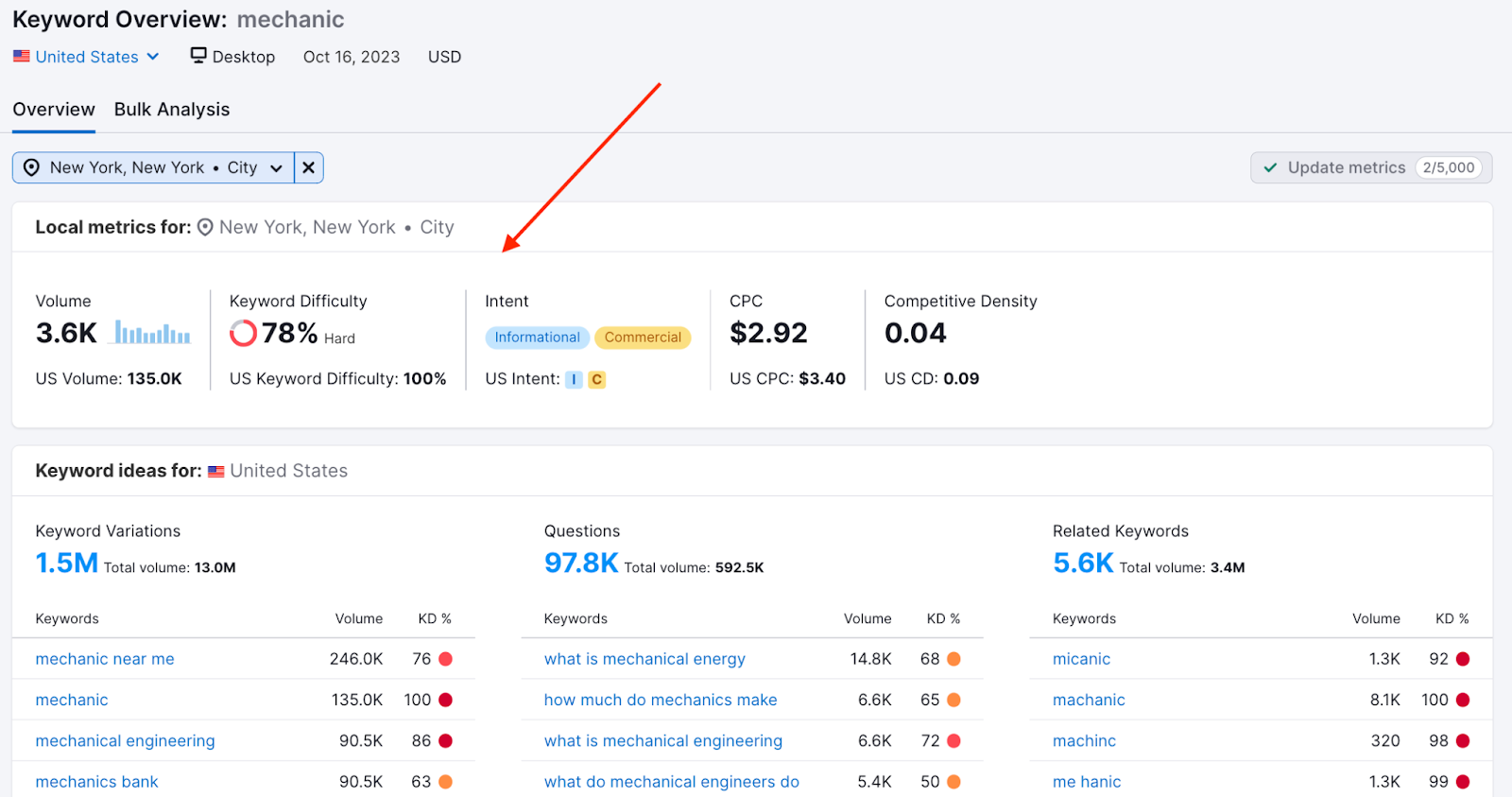
If you’re a business operating at the local level, this is an essential feature to leverage as you’re building your targeted keyword list. Use the data to get an edge over competitors by optimizing your content for your specific area.
Use Google Autocomplete
Google autocomplete is a feature within Google Search that makes it faster to complete searches when you start to type.
Its purpose is to save users time by predicting what they’re going to search for.
And it can help you discover valuable long-tail keywords for local SEO.
That’s because Google’s autocomplete predictions depend partly on your location.
For example, if you’re in Arcadia, California, and you type “best paella in” into the search bar, you’ll see something like this:
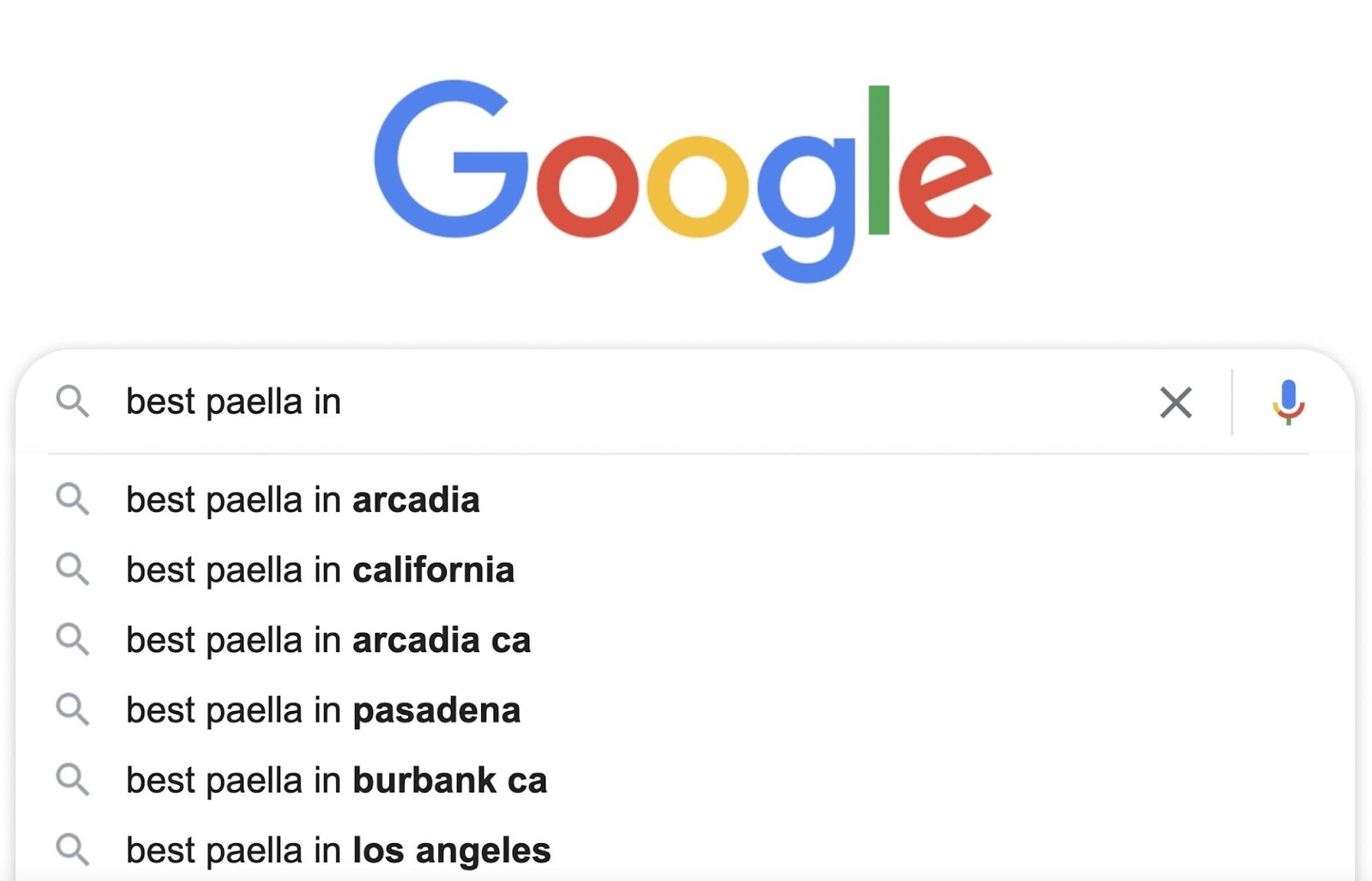
All these locations are near Arcadia or in California.
So, to find valuable local keywords, start typing in keywords related to your business.
For example, if you run a cleaning services business, type in “cleaning services” to get a list of local keyword suggestions.