What Is an Ecommerce Website?

What Is an Ecommerce Website?

An ecommerce website is any site that facilitates the buying and selling of products and services.

Digital marketplaces, online retail stores, and auction sites are considered ecommerce sites because they enable consumers to buy goods. 

Any business owner with a product or service to sell can benefit from an ecommerce site, including the following: 

  • A small business trying to get local customers
  • A freelancer selling their services
  • A large corporation showcasing its products

Pro tip

Grow your online store with Semrush for Ecommerce, an all-in-one solution to optimize your store and promote your products. 

What Is Ecommerce?

Ecommerce, which stands for “electronic commerce,” is the buying and selling of products and services over the internet. This includes all types of industries, such as retail, electronics, grocery, education, entertainment, delivery, and more.

According to Statista, revenue in the U.S. ecommerce market is predicted to grow 43.58% between 2024 and 2028. This increase in growth is forecasted to be worth $462.7 billion U.S. dollars. 
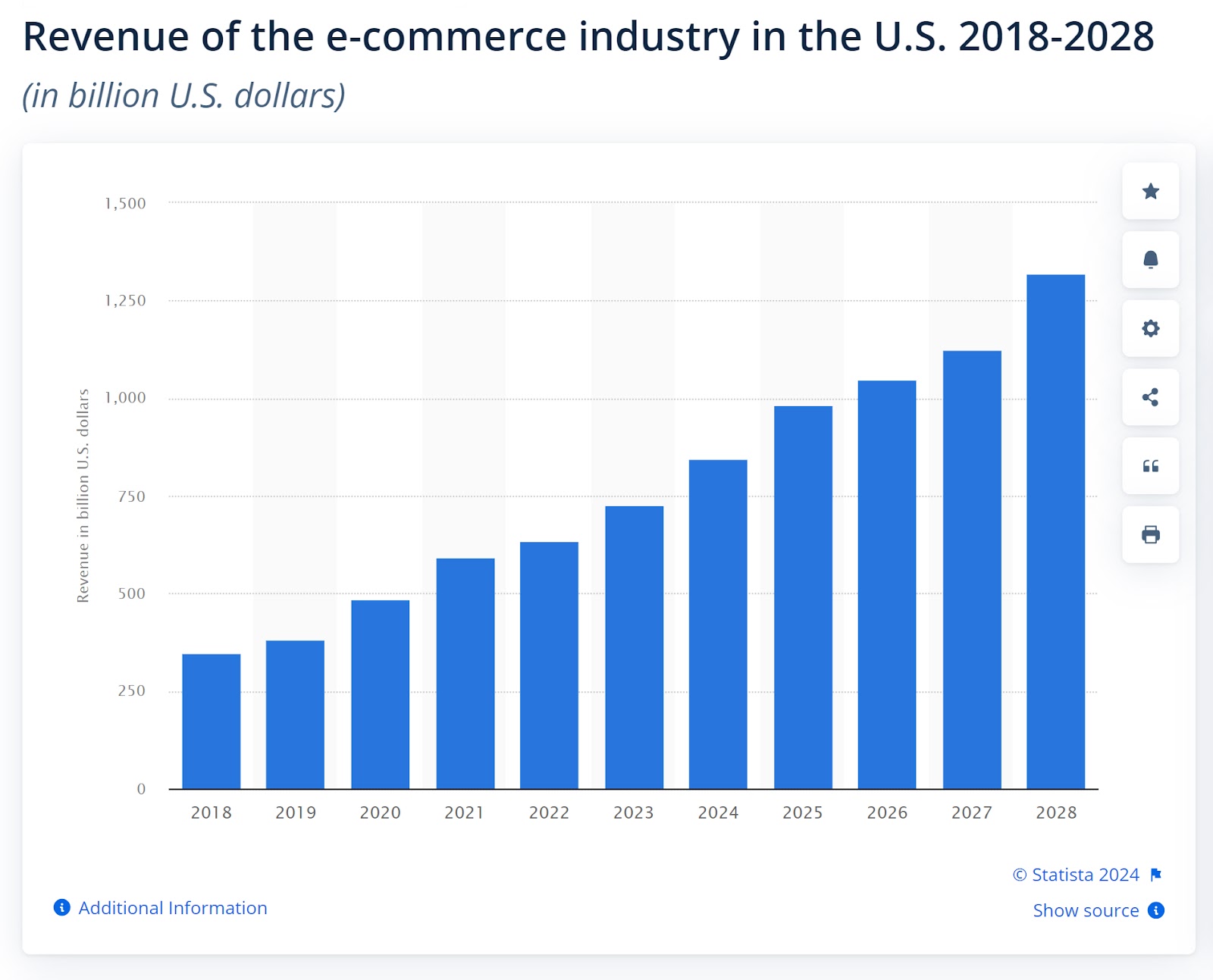
Statista's graph showing revenue in the U.S. ecommerce industry 2018-2028

How Does Ecommerce Work?

Ecommerce works in multiple ways: Merchants can create their own ecommerce site, set up an online store on an ecommerce platform like Shopify or Magento, or create a storefront on a marketplace like Amazon or eBay.

Regardless of the method, all stores must have secure payment gateways to facilitate payments and comply with Payment Card Industry (PCI) Data Security Standards.

Here’s a look at the process: 

  • Shoppers visit an online store or website and browse products using a variety of devices, such as smartphones, laptops, desktops, tablets, and smart TVs and watches. 
  • Customers typically add the products they want to buy to a virtual shopping cart. The shopping cart keeps track of selected items, quantities, and total costs. 
  • When customers are ready to purchase, they proceed to the checkout page. They provide shipping information, select a payment method, and review their order before finalizing the purchase.
  • The seller receives a notification of the order
  • The vendor then prepares the products for shipping to the customer

An excellent example of an ecommerce website is the eBay marketplace. Shoppers search for specific products using the search bar or relevant product categories on the main menu.
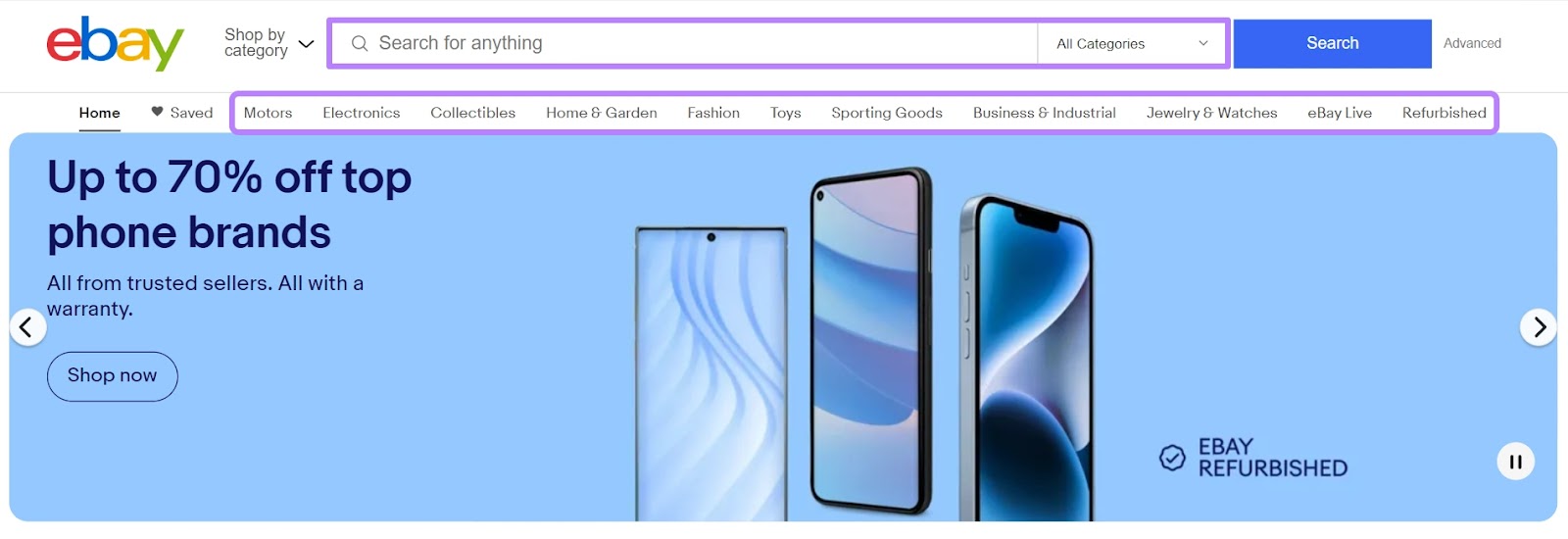
eBay marketplace categories

What Should an Ecommerce Site Do?

A great ecommerce site can do a variety of things, from helping you sell your products to providing an excellent user experience (UX) for customers. 

Here’s a look at what ecommerce sites should have in order to successfully meet website owners’ (and users’) needs:

  • User-friendly interface: Ensure intuitive navigation and easy access to products and services
  • Secure payment gateway: Implement SSL certificates and PCI compliance for safe transactions
  • Product catalog: Organize products into categories with detailed descriptions and high-quality images
  • Shopping cart: Allow users to add, remove, and modify items before checkout
  • Mobile responsiveness: Optimize the site for seamless viewing and functionality across various devices
  • Search functionality: Enable users to quickly find specific products or categories
  • Customer reviews and ratings: Provide social proof and aid in decision-making for potential buyers
  • Order management system: Track orders, manage inventory, and process shipments efficiently
  • Customer support: Offer multiple channels for assistance, such as live chat, email, and phone support
  • Analytics and reporting: Monitor site performance, track user behavior, and gain insights for optimization
  • Legal compliance: Ensure adherence to data protection laws, terms of service, and privacy policies
  • SEO optimization: Optimize content and metadata to improve search engine rankings and visibility
  • Mobile optimizationGoogle recommends that content on mobile pages should load in under 3 seconds.

Google's average speed best practices

Image Source: Think with Google

If business owners don’t have the budget or time to invest in creating a high-quality ecommerce site, established online marketplaces or online stores that provide these features can be a great alternative. 

Further readingUX and SEO: The Best Strategy for Getting Results

Types of Ecommerce Businesses Explained

Ecommerce comes in many forms. Here’s a quick rundown of the major ecommerce business types.

Business-to-Consumer (B2C)

A B2C business is an online business that sells goods or services directly to individual consumers. 

A B2C website example is Alfred, an online coffee shop that sells coffee products. Customers can buy coffee online from this site and even set up subscriptions at their preferred frequency. 
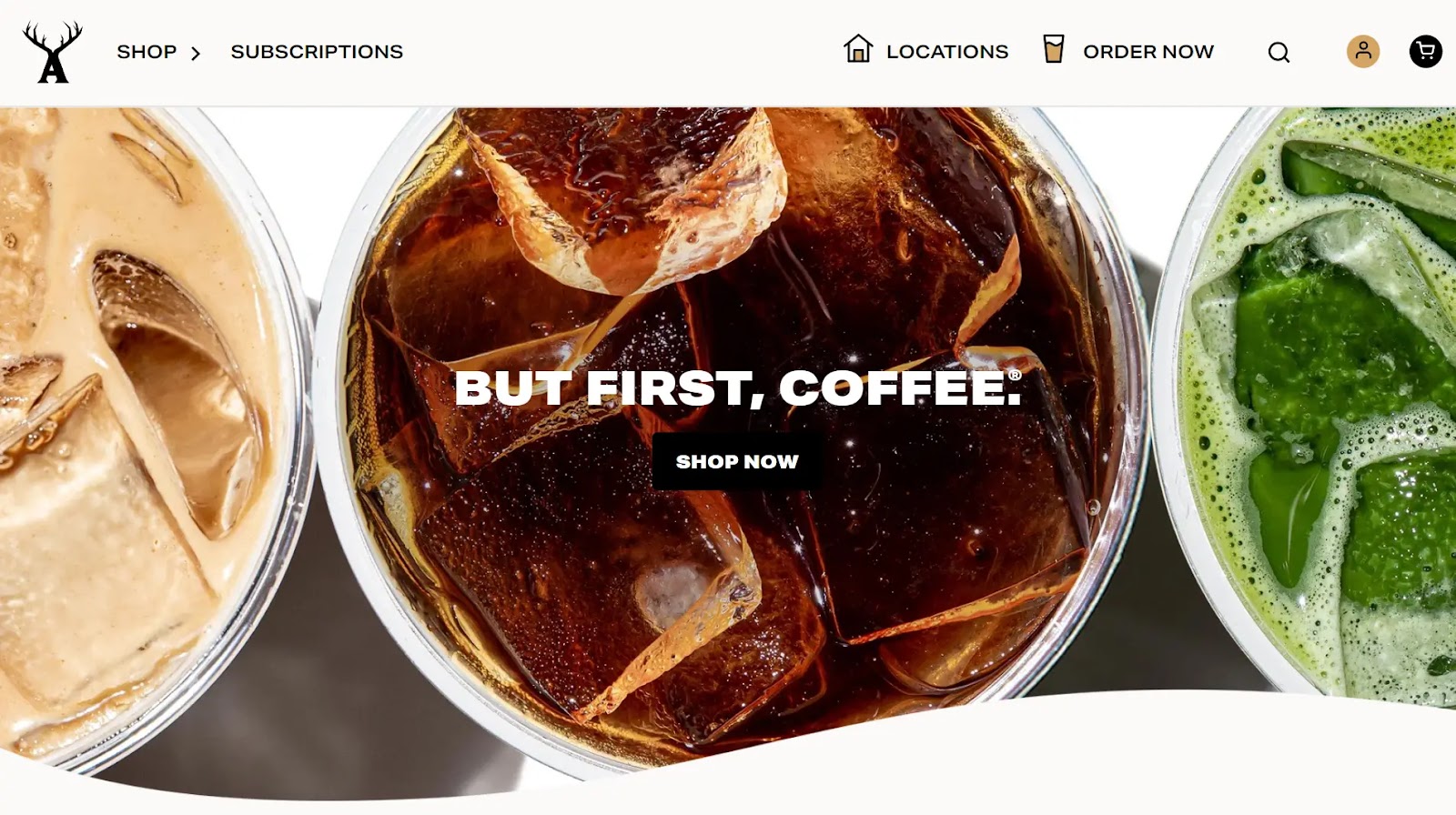
A section of Alfred's homepage

Business-to-Business (B2B)

B2B ecommerce is when a business sells goods or services to another business over the internet. 

B2B transactions are primarily between a wholesaler and a retailer, or a manufacturer and a wholesaler. 

Alibaba is a B2B marketplace that sells clothes, machinery, and consumer electronics to business owners.

Business-to-Government (B2G)

B2G is an ecommerce model where a business sells products to the government (local, county, state, or federal).

Companies place bids to win government contracts.

For example, pharmaceutical and biotechnology giant Pfizer won a billion-dollar deal to supply the U.S. government with COVID-19 vaccines in 2022.

Pfizer's landing page celebrating 175 years of existence

Consumer-to-Consumer (C2C)

C2C is a business model in which consumers sell goods or services to other consumers. 

Online marketplaces provide a platform for consumers to interact and transact in a secure environment.

For instance, consumers can buy and sell baby care products, furniture, mobile phones, and more on Facebook Marketplace.
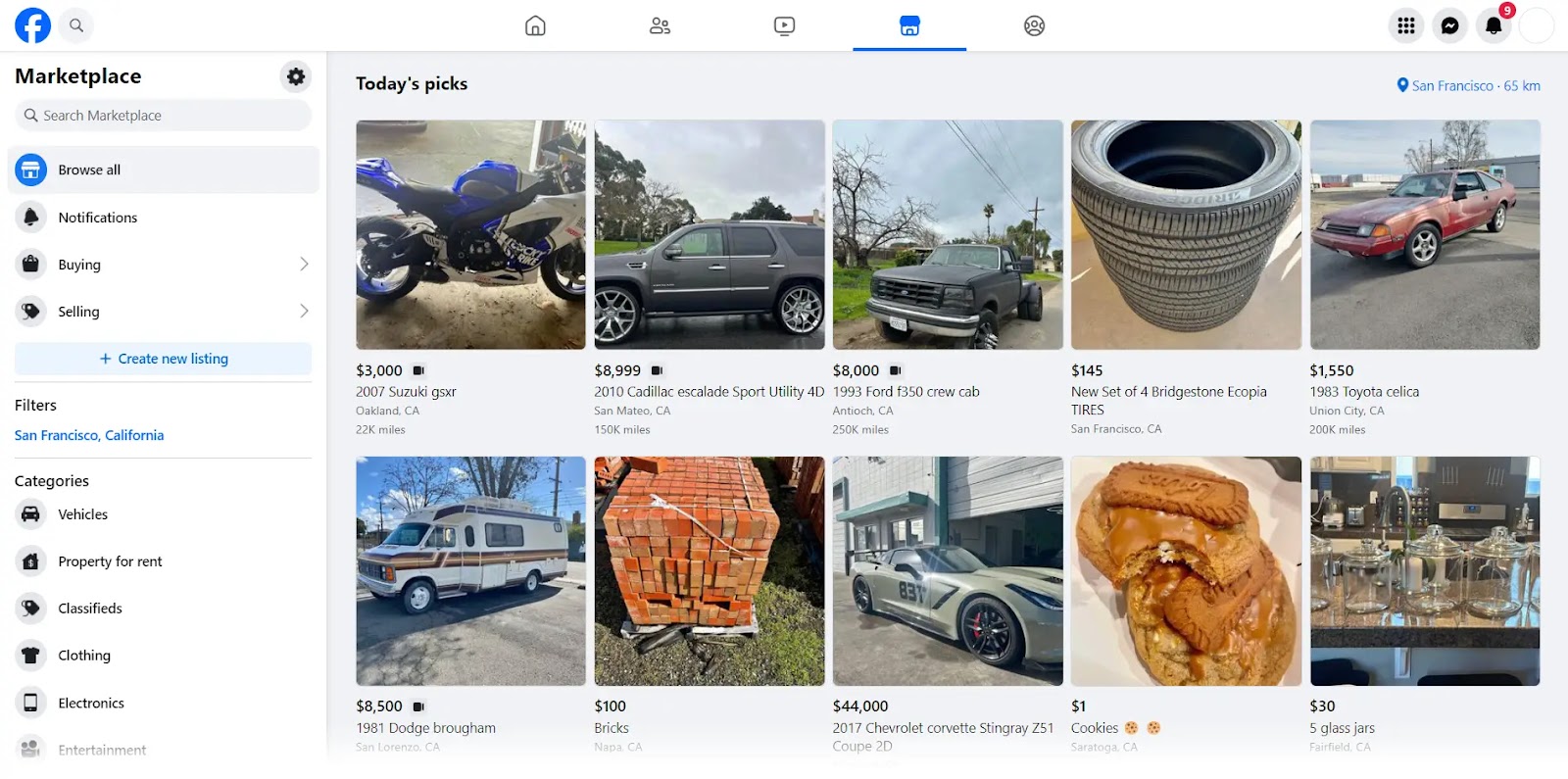
"Today's picks" section of Facebook Marketplace

Consumer-to-Business (C2B)

The C2B model is when an individual sells physical products or services to a company. 

For example, an independent freelance writer can advertise their services (write ebooks, blog posts, or social media content) to businesses on a site like Upwork. Businesses and individuals can then buy these services on the platform. 
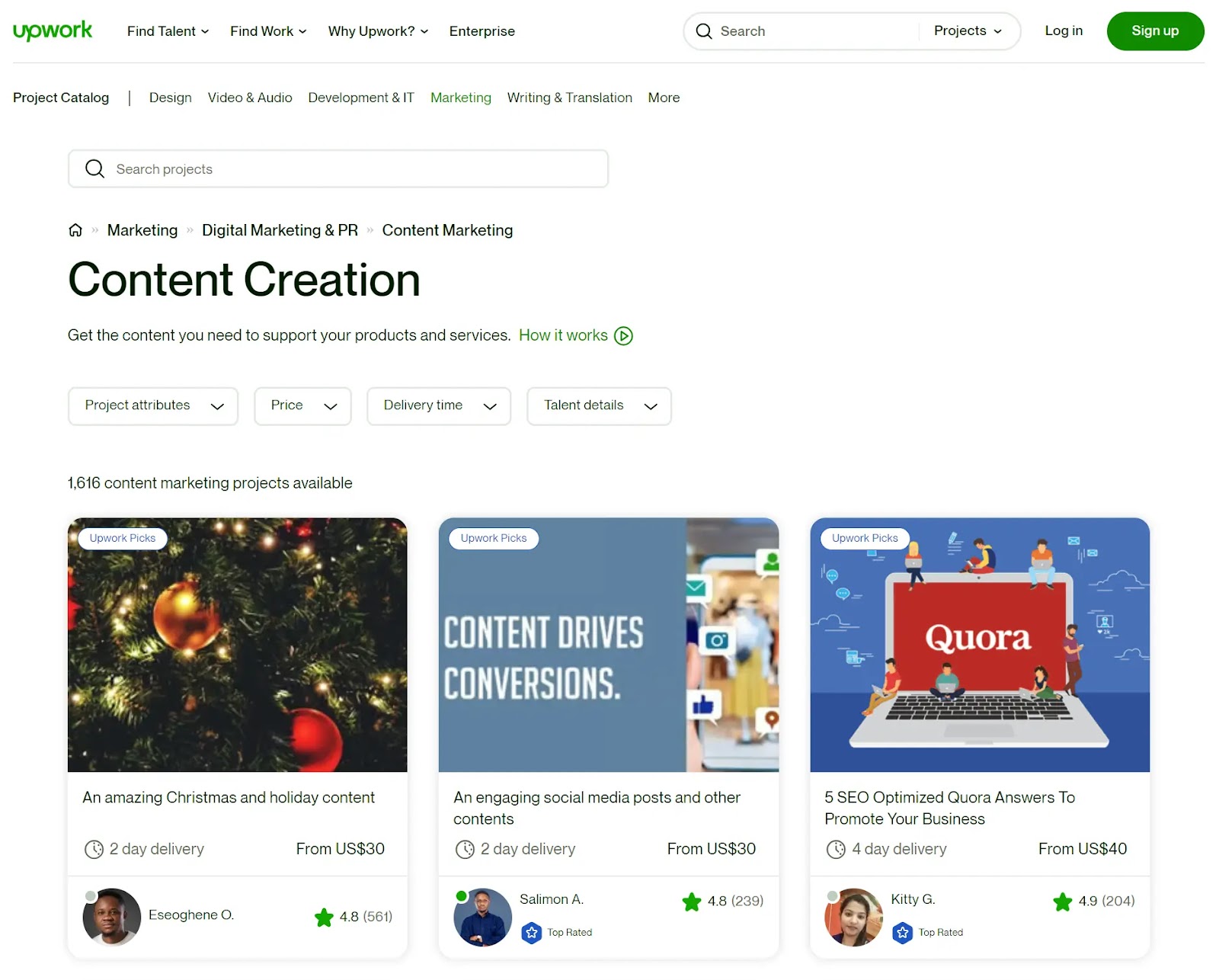
"Content Creation" results on Upwork

Consumer-to-Government (C2G)

C2G ecommerce refers to transactions between a consumer and various government entities.

In the C2G model, consumers interact with government agencies directly and gain access to government services through an online platform.

For example, company owners can register their businesses online on the official U.S. Small Business Administration website. 
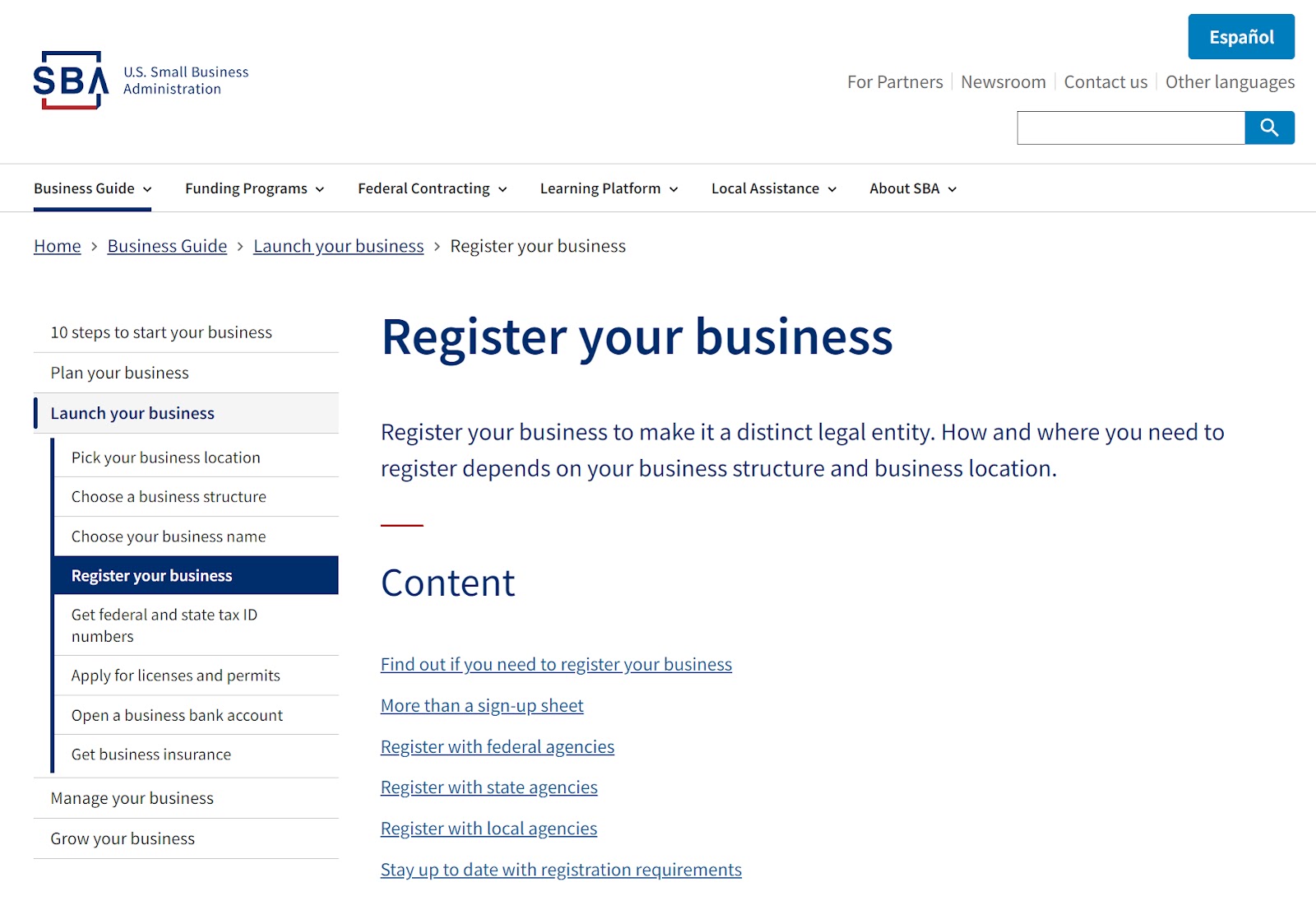
"Register your business" page on U.S. Small Business Administration website

Further reading: 9 Profitable Ecommerce Business Ideas for Your Next Venture

The Benefits of Ecommerce Businesses

Buying and selling goods online has many benefits for both buyers and sellers. 

  • Wider reach: Allows businesses to expand beyond their local area, reaching regional or global markets 
  • Convenience: Offers flexibility and convenience, allowing consumers to shop anytime, anywhere
  • Low costs: Reduces the need for physical space, cutting down on rent, utility bills, and property taxes 
  • Customer data: Provides access to valuable customer data, including purchase history and preferences, helping you choose products and improve the experience
  • Faster service: Speeds up the buying process with smart automation, rapid browsing, and quick ordering systems
  • Payment flexibility: Caters to customer preferences and enhances the shopping experience
  • Affordable marketing and advertising: More cost-effective than traditional advertising methods
  • Facilitates international trade: Breaks down geographical barriers, making it easier for businesses to enter international markets

The Challenges of Ecommerce Businesses 

While ecommerce offers many benefits to business owners, it also comes with challenges. 

  • Ensuring website security: With the increase in online transactions, maintaining a secure platform is vital. This challenge provides an opportunity to earn customers’ trust by implementing robust security measures.
  • Managing inventory: Keeping track of stock levels can be tricky, but it’s also an opportunity to streamline operations and reduce overheads
  • Attracting traffic: Creative marketing strategies, like email and content marketing, can help draw in potential customers.
  • Cart abandonment70.19% is the average shopping cart abandonment rate. Certain marketing tactics, like cart abandonment emails, can help recover these sales. 
  • Retaining customers: Building a loyal customer base can be challenging, but it also means opportunities to engage with customers and create lasting relationships
  • Handling returns and refunds: Although managing returns can be complex, a smooth process can significantly enhance customer satisfaction
  • Dealing with competition: A competitive market pushes businesses to continually evolve and improve their offerings
  • Adapting to market changes: The ever-changing ecommerce landscape requires businesses to stay flexible and adaptable, fostering a culture of innovation and responsiveness.

How to Start a Successful Ecommerce Business 

Starting an ecommerce business consists of a series of steps to set up your online store, source or create your products, and promote your website.

Here’s a step-by-step guide to help you launch your ecommerce venture. 

1. Conduct Market Research

Before you can even think about products or selling, conduct market research on your business idea. Here’s how:

Identify Your Target Market and Niche

Find out who your ideal customers are using tools like Google Analytics and Facebook Audience Insights. These tools can help you discover the size, demographics, interests, and behaviors of your potential market and niche.

Pro tip

Create customized buyer personas with our free templates. Buyer personas help you understand your customers better and inform your marketing strategies and messaging. 

Analyze Competitors

To learn from your competitors’ strengths and weaknesses, use our Competitive Research Toolkit

The toolkit allows you to compare your website to competitors in key areas like traffic, keywords, pages, backlinks, and social media. 

Find opportunities your competitors are missing using the Keyword Gap tool. To see which keywords your competitors are ranking for so you can outrank them. 

Registering a business isn’t mandatory for all types of businesses, but it has many benefits that can help new entrepreneurs. 

For example, registering a business can help you:

  • Open a business bank account and access financial services
  • Get funding from investors
  • Enjoy tax advantages and deductions
  • Protect your personal assets and limit your liability
  • Enhance your reputation and credibility with customers and suppliers
  • Comply with legal and regulatory requirements

Generally, sole proprietorships and partnerships do not need to register their business unless they want to use a trade name or a fictitious name for their business

On the other hand, corporations and limited liability companies (LLCs) must register their business in the state where they operate. These types of businesses have a separate legal entity from their owners and offer more protection and flexibility.

You can register your business online and learn more about the process on the official U.S. Small Business Administration (SBA) website. 

The cost of registering a business varies from state to state, but according to the SBA, it’s typically less than $300. 

You’ll need the following information to register your business: 

  • Business name
  • Business location
  • Ownership, management structure
  • Registered agent information
  • Number and value of shares (for a corporation)

The documents you’ll need vary according to your business type and state. 

3. Buy a Domain Name

Buying a domain name is a crucial step in building your brand and business. It’s how your customers will find and remember you.

Some recommendations for choosing a domain name are:

  • Make it short, simple, and easy to spell and pronounce
  • Use keywords that relate to your niche and products
  • Avoid numbers, hyphens, and trademarked names
  • Choose a suitable extension, such as .com, .store, or .shop

Use a business name generator, like Namelix and Looka, to help you create a business name if you’re having trouble. 

To buy a domain name, follow these steps:

  • Choose a domain name registrar, such as GoDaddy, Namecheap, Cloudflare, or Google Domains. These are online services that sell and manage domain names.
  • Search for the availability of your desired domain name using the registrar’s website. Use tools like Domain Overview to check the domain authority and backlink profile of existing domains.
  • Select the domain name you want to buy and add it to your cart. Consider buying other extensions (.com, .net, .org, etc.) or variations of your domain name to protect your brand identity.
  • Review your order and choose a payment plan. Most registrars offer yearly or multi-year payment plans. You may also get discounts or free services, such as email hosting or SSL certificates, depending on the registrar and the plan you choose.
  • Complete the checkout process and confirm your purchase. You will need to provide your personal and payment information, as well as agree to the registrar’s terms and conditions.
  • Verify your domain ownership and update your DNS settings. You will receive an email from the registrar with instructions on how to verify your domain and point it to your web host. 

4. Decide on Your Ecommerce Platform 

An ecommerce platform is a software application that allows you to create, manage, and run your online store. 

It provides the essential features and functionalities for your ecommerce website, such as a product catalog, shopping cart, checkout, payment processing, order management, and more.

There are many ecommerce platforms to choose from, depending on your budget, preferences, and technical skills. 

Some of the most popular ones are:

  • Shopify: A hosted ecommerce platform that offers a user-friendly interface, a variety of themes and apps, and a free trial. Shopify is ideal for beginners and small to medium-sized businesses.
  • WooCommerce: A free, open-source ecommerce plugin for WordPress that lets you customize every aspect of your online store. WooCommerce is suitable for non-coders who use the WordPress interface. It offers more out-of-the-box themes, plugins, and allows you to have more control and flexibility over your ecommerce site. 
  • Adobe Commerce: A powerful, self-hosted ecommerce platform that offers advanced features, scalability, and security. Adobe Commerce (previously Magento) is best for large enterprises and developers who need a high-performance ecommerce solution.

Deciding on the best ecommerce platform for your business depends on several factors. 

Here’s what you should consider: 

  • Budget: How much can you afford to spend on your ecommerce platform? Some platforms charge monthly fees. Others require upfront or ongoing costs for hosting, development, and maintenance.
  • Technical skills: How comfortable are you with coding and web development? Some platforms are more user-friendly and require little to no technical knowledge. Others are more complex and require some technical know-how.
  • Business needs: What are your goals and expectations for your ecommerce website? Some platforms offer more features and functionalities than others, such as inventory management, marketing tools, analytics, and integrations.
  • Design preferences: How do you want your ecommerce website to look and feel? Platforms like WooCommerce (on WordPress) offer more design options and customization than others, such as themes, templates, and plugins.

5. Source or Create Products

Will you source your products or make them yourself? The method you choose will significantly impact your initial costs and long-term business operations.

Consider the three primary sourcing methods: 

  • Wholesalers: These are suppliers that sell products in bulk at discounted prices. The more you buy, the less expensive each item becomes. You can also have wholesalers package and ship your products, which can save time and money. 
  • Manufacturers: Consider sourcing your products directly from manufacturers. This is like going straight to the source—bypassing any middle-person to get your products at the lowest possible cost.
  • Create your own: Create your own products by hand or outsource the creation to a manufacturer who can execute on your vision. This method offers total control over your product, allowing for uniqueness that can set your ecommerce store apart. 

6. Add Products to Your Ecommerce Site

Once you have your ecommerce platform and product sourcing ready, add your products to your online store. 

To optimize your product pages, pay attention to the following elements:

  • Product titles: Use clear, descriptive, and keyword-rich titles that accurately reflect what you sell. Avoid using generic or vague terms that could confuse customers or search engines. For example, instead of “Shoes,” use “Women’s Leather Ankle Boots.”
  • Product descriptions: Write compelling, informative, and unique product descriptions that highlight product benefits and features. Use bullet points, short paragraphs, and subheadings for easy-to-read and scan descriptions. Include relevant keywords that match your customers’ search intent, but avoid keyword stuffing or copying content.

On-Page SEO: What It Is and How to Do It

On-page SEO (also called on-site SEO) is the process of optimizing webpages and their content for both search engines and users. It can help rank pages higher on Google and drive more organic traffic. 

Common tasks associated with on-page SEO include optimizing for search intent, title tags, internal links, and URLs.

Below, we’ll cover different techniques for optimizing your site for on-page concerns.

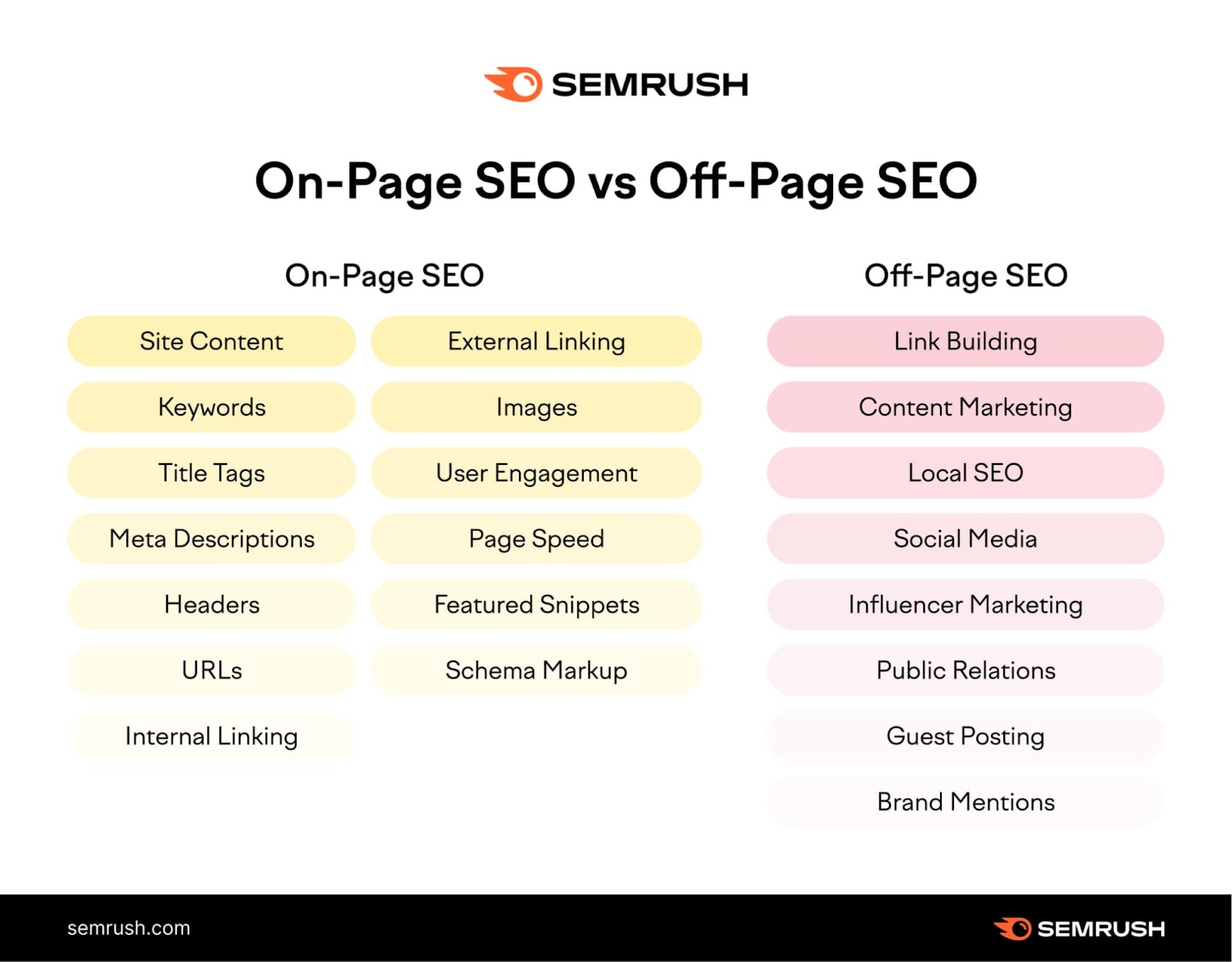
But first, let’s explore the difference between on-page SEO and off-page SEO:

On-Page SEO vs. Off-Page SEO

On-page SEO covers anything you can do on a webpage (or internally) to improve your rankings. 

Off-page SEO covers anything you can optimize outside of your site (or externally) in an attempt to boost your rankings. Backlinks are arguably the biggest off-page SEO factor. Other examples include social media and PR.

Both are important components of any good SEO strategy.

But you have more control over on-page SEO factors. So focusing on those is a good place to start.

On-page SEO vs Off-page SEO

Why Is On-Page SEO Important?

Search engines use keywords and other on-page SEO elements to check whether a page matches a user’s search intent. 

And if the page is relevant and useful, Google serves it to the user.

In other words:

Google pays attention to on-page SEO signals when ranking pages.

The Google algorithm is always changing, but Google continues to prioritize user experience. Google recommends focusing on “people-first content.” 

Meaning creating valuable content that matches user intent is more important than ever.

Now, let’s take a look at how you can update your content to reflect on-page SEO best practices.

Pro tip

To quickly get actionable on-page SEO optimization ideas for your site, run it through On Page SEO Checker.

8PBurtK4KLqV9AYVQTiYYIUUXHukkU562tZAf8cMRcEBtK9gBY4kH-B3T9nHzy3bInYLfEKH62U6_hSibTwGkrzAyS6SqYdrib4WZAKGHeYbPqyxew54dzPayZ9HBCQWOOqsO-5VSRrqwdjgiH_41Mk

9 On-Page SEO Techniques for Your Website

Here are some key on-page optimization techniques you should consider:

  1. Write unique, helpful content 
  2. Place target keywords strategically
  3. Write keyword-rich title tags
  4. Write click-worthy meta descriptions
  5. Use headings and subheadings to structure your page
  6. Optimize URLs
  7. Add internal links
  8. Add external links 
  9. Include and optimize images 

Let’s look at these in more detail.

Tip

Create a free Semrush account (no credit card needed) to follow along with the techniques in this guide. 

1. Write Unique, Helpful Content 

One of the most important on site SEO steps you should take is to create high-quality content that matches your readers’ search intent.

Start by performing keyword research to find relevant topics and target keywords.

For this example, we’ll use the Keyword Magic Tool.

Enter the topic you want to research and click “Search.” We’ll use the keyword “audio book” as our example. 

"audio book" entered into the Keyword Magic Tool search bar

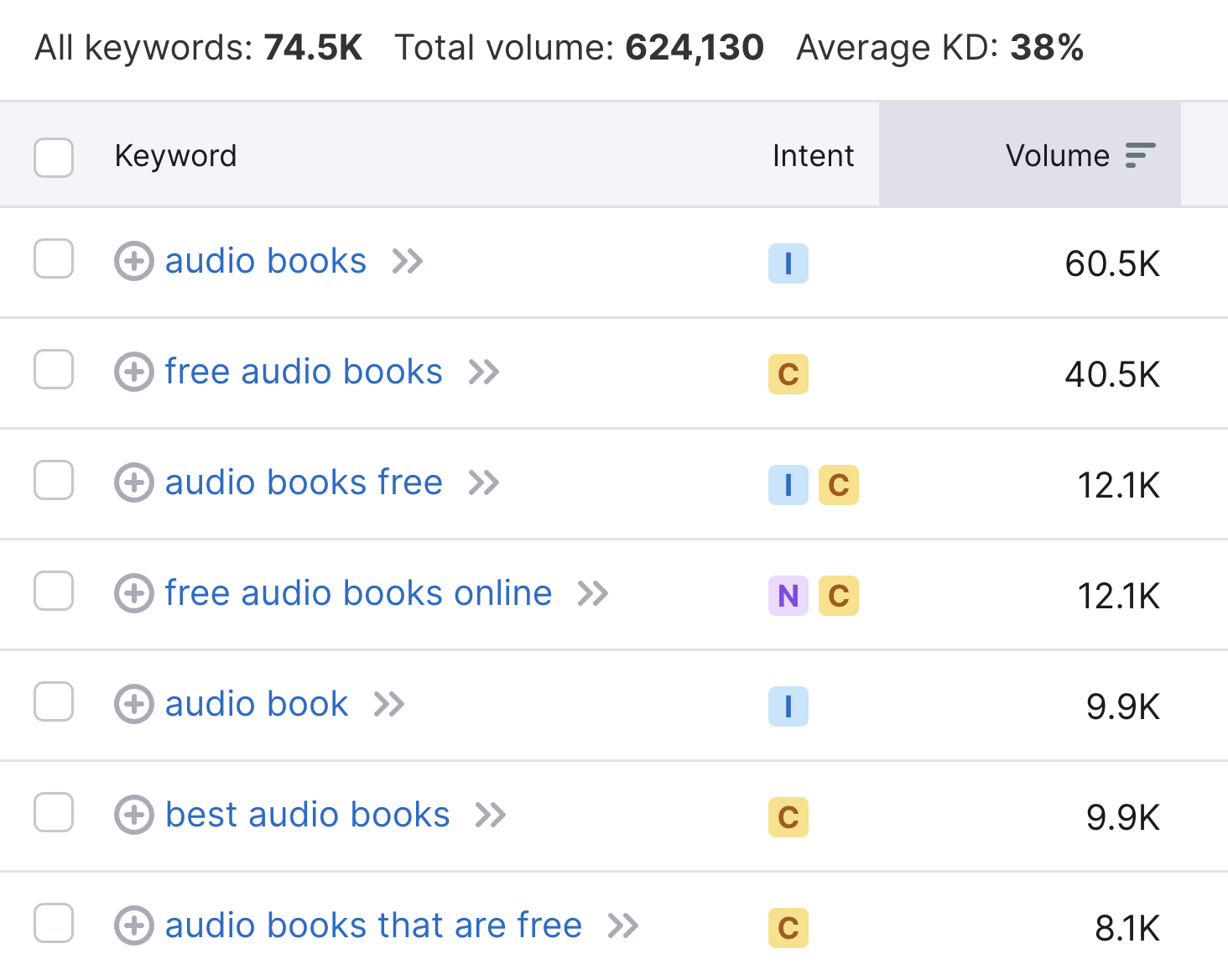
You’ll get a list of keywords related to your seed keyword, sorted by search volume.

A list of keywords related to "audio books"

High search volume can be useful to target. 

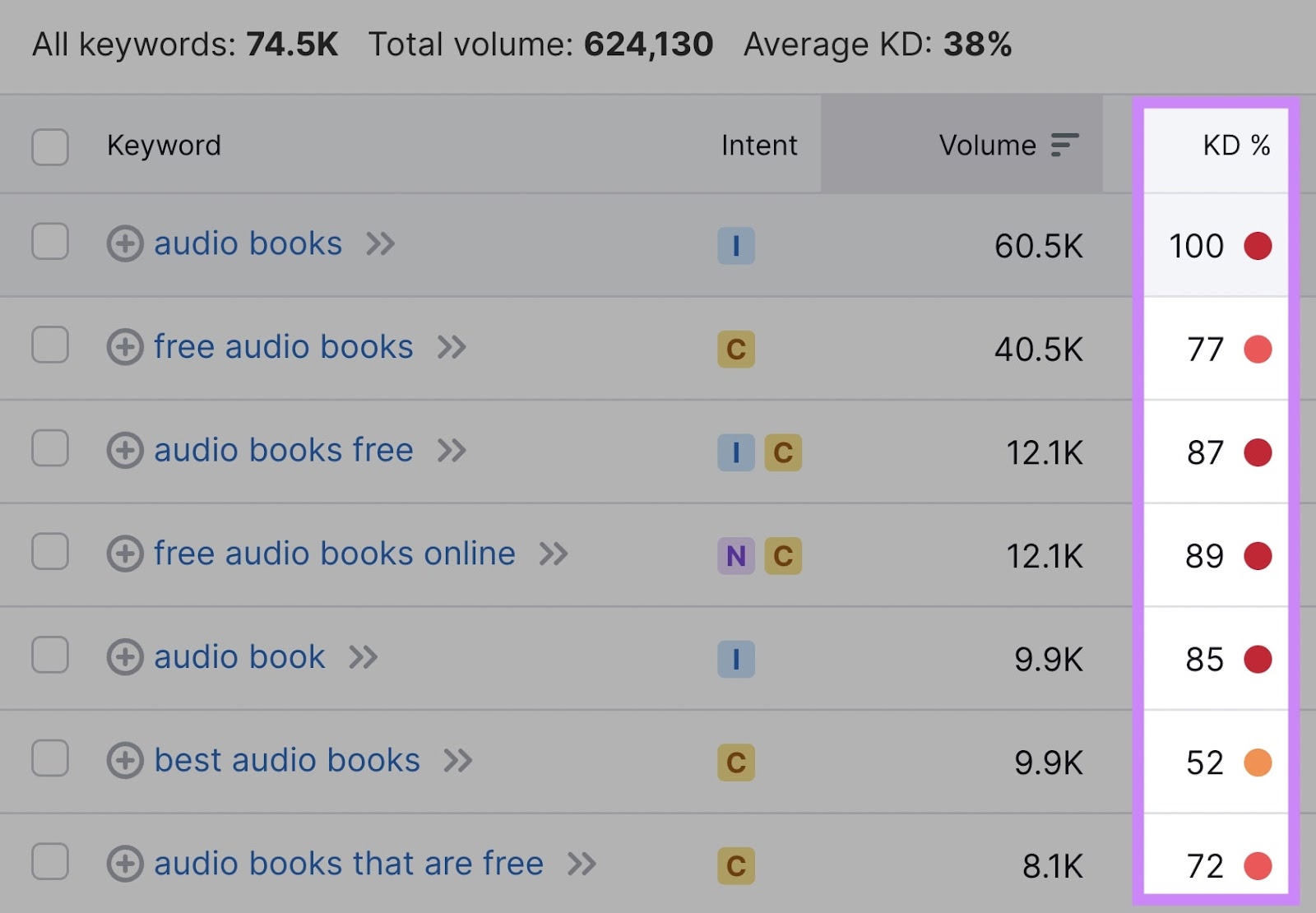
But pay attention to the keyword difficulty (KD %) level, too. It’s much more difficult to rank for more competitive keywords (which have higher KD % scores).

"KD%" column highlighted in keywords list

Target less competitive long-tail keywords, too. 

They often have lower search volume but lower keyword difficulty. Which means they can be easier to rank for.

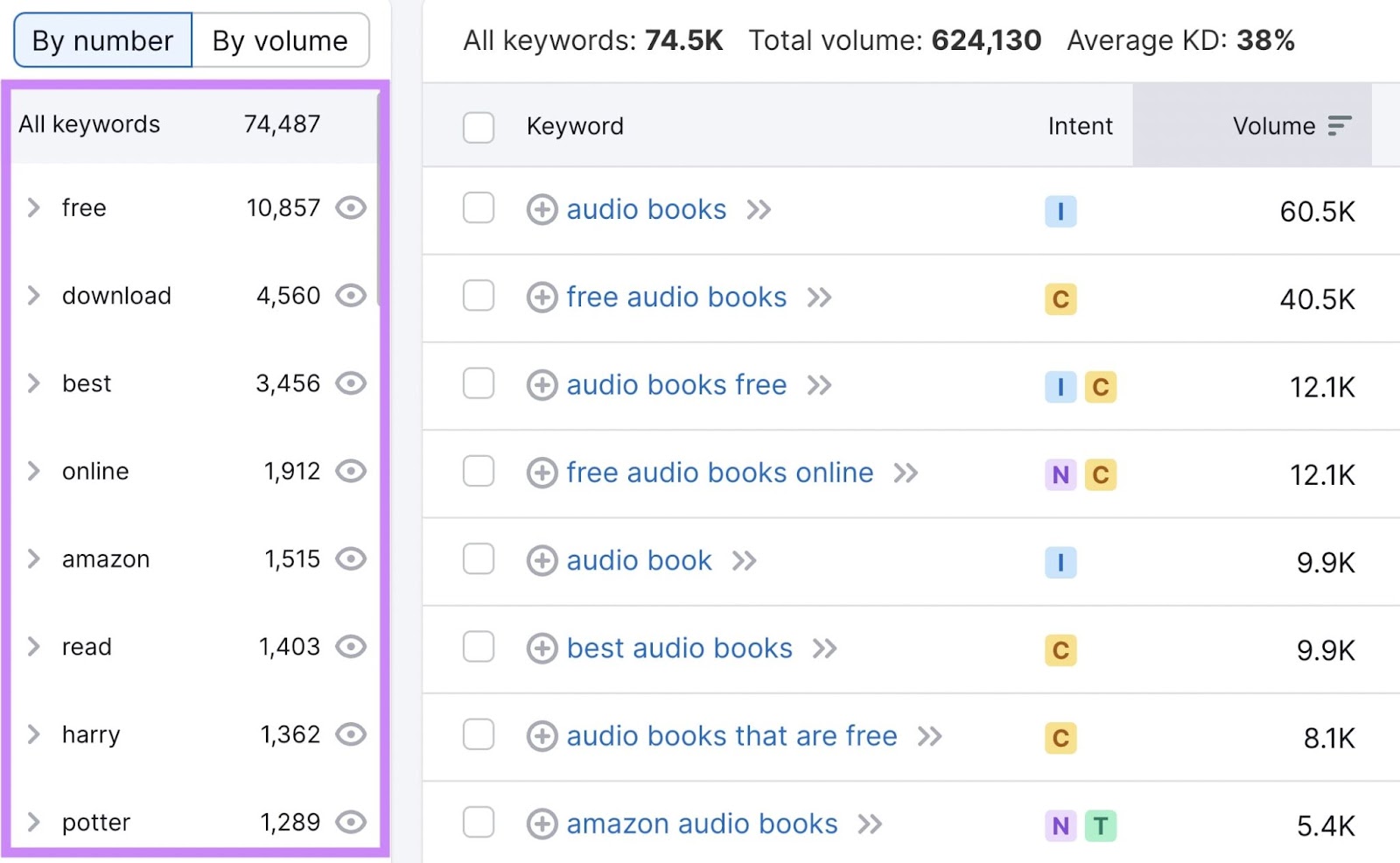
The Keyword Magic Tool automatically sorts related keywords into relevant categories.

They’re located in the left-hand sidebar. You can narrow your research by selecting one.

Here:

Keyword categories highlighted in the left-hand sidebar

Once you’ve selected your keywords, it’s time to create your content.

Read our guide to formatting a blog post when you’re ready to get started.

In the meantime, here are a few best practices to create optimized, high-quality content:

  • Incorporate keywords naturally into your content (and avoid keyword stuffing)
  • Make sure your content matches the search intent of your target keyword
  • Fully answer the query—your content should be useful to users
  • Write unique content that offers something competitors don’t
  • Include visual content (more on that later)

Further reading: What Is Quality Content & How to Create It

2. Place Target Keywords Strategically

So you have your target keywords. Now it’s time to strategically place them in your content. 

Google scans your content to see what a page is about—and readers will likely do the same.

So you should include your target keywords in these key areas:

  • H1
  • First paragraph
  • Subheaders (H2s, H3s, etc.)

This will help Google gain context about the topic of your page. And users will be able to quickly tell whether the page matches their search intent.

You can begin analyzing your content with On Page SEO Checker

Start by configuring the tool for your site.

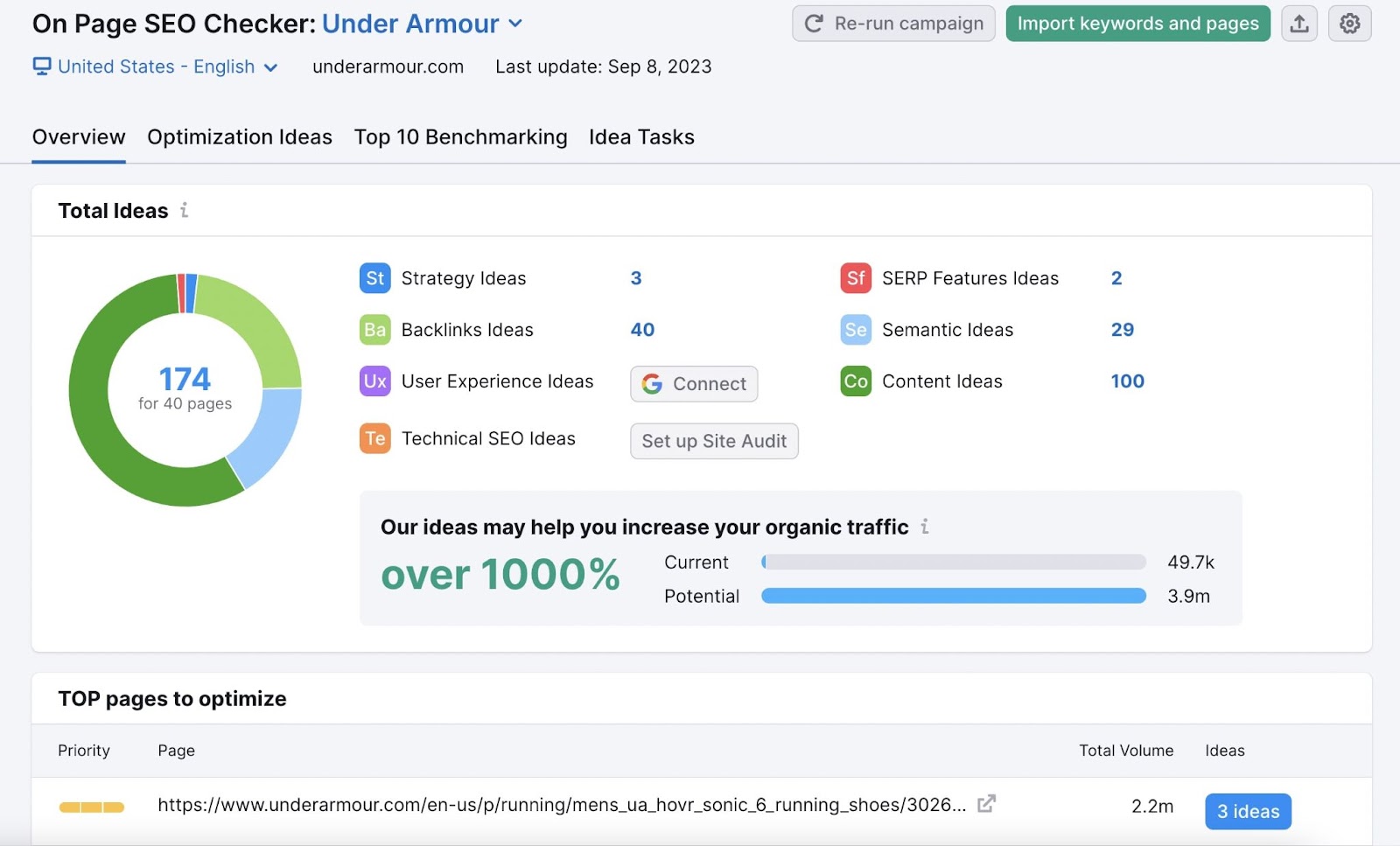
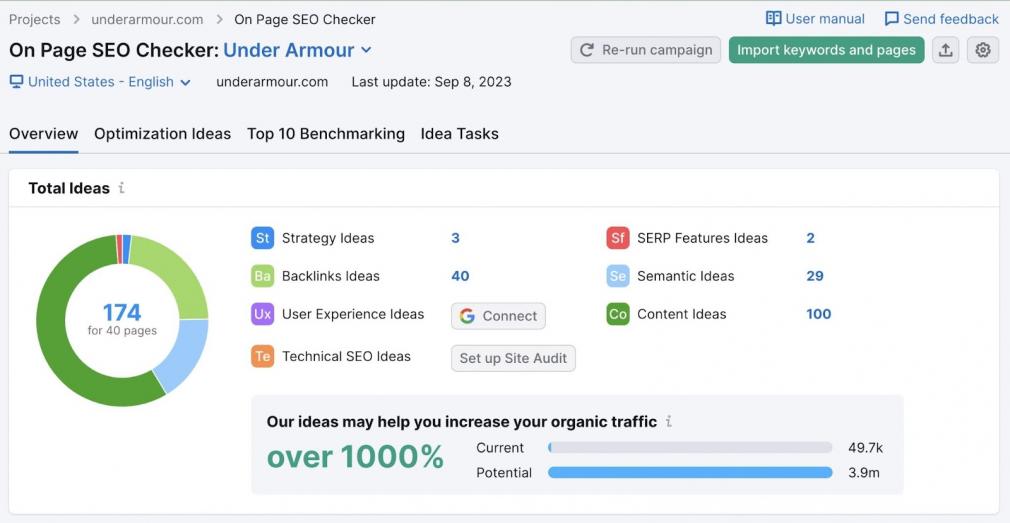
Once you complete the setup, you’ll see a page that looks like this:

On Page SEO Checker overview dashboard

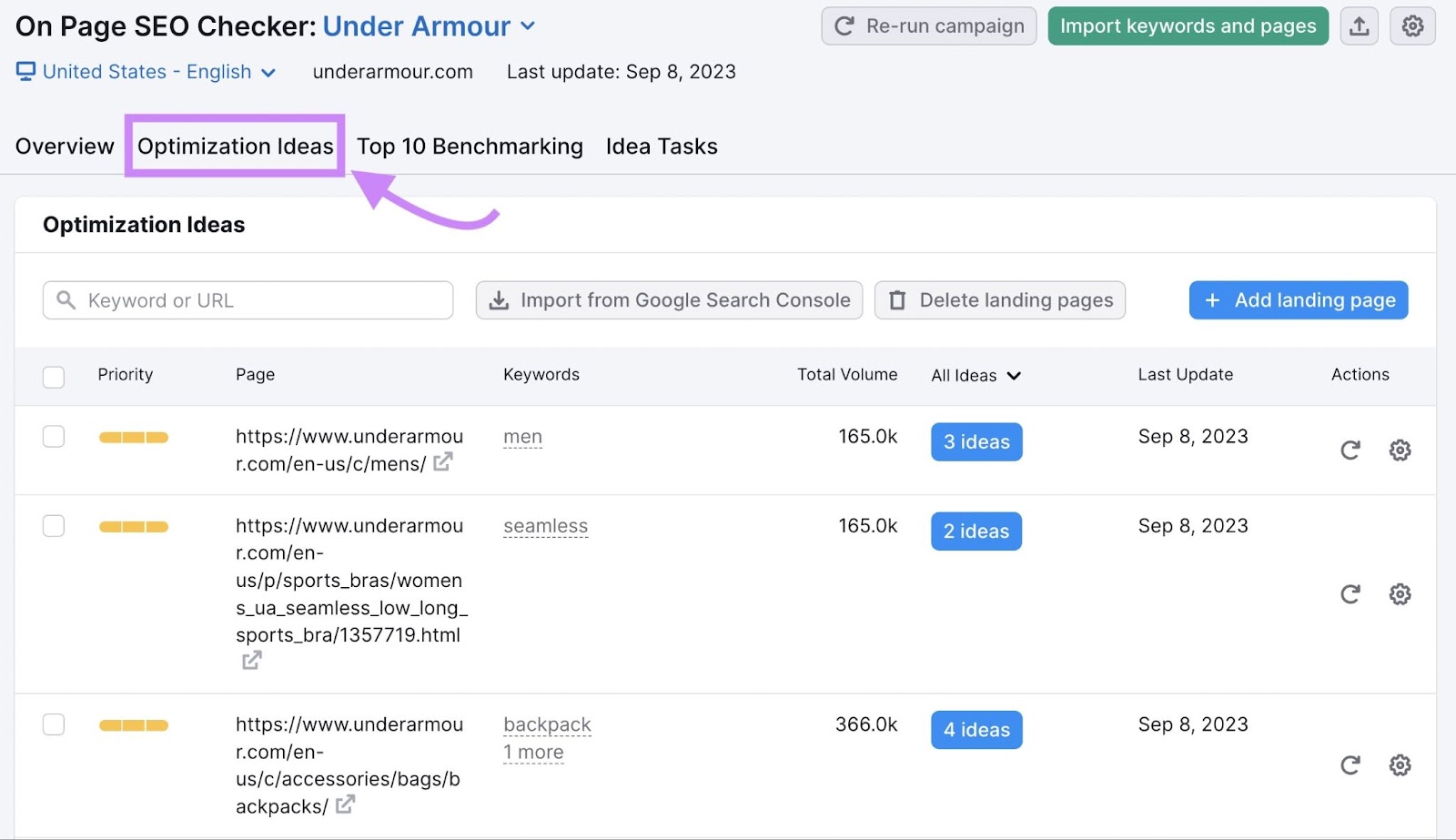
You can click on a specific page from the recommended “TOP pages to optimize” list, or review the “Optimization Ideas” tab for a complete overview.

"Optimization Ideas" tab highlighted in On Page SEO Checker

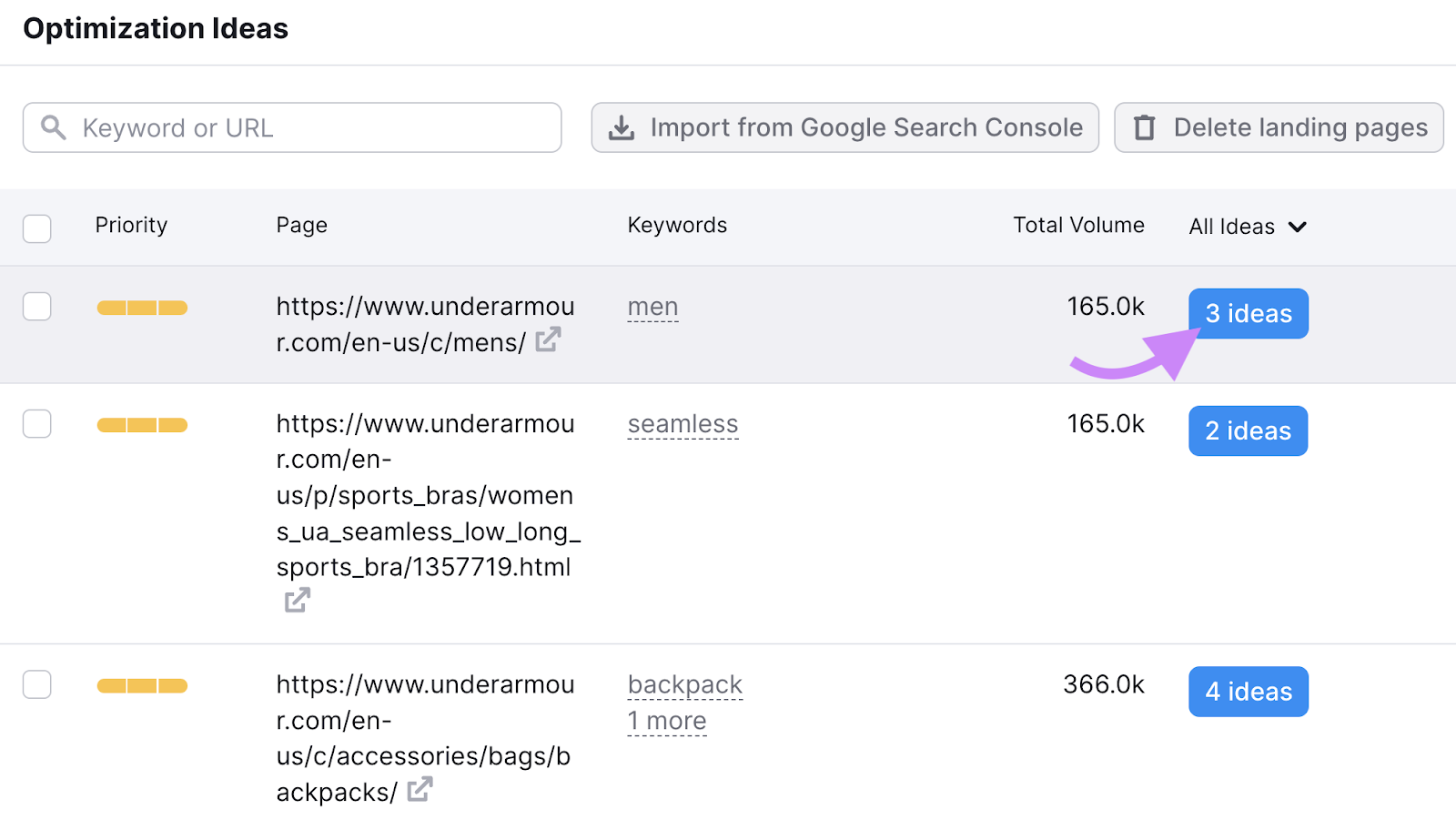
Click on the “# ideas” blue button to see recommendations.

"3 ideas" blue button highlighted under optimization ideas list

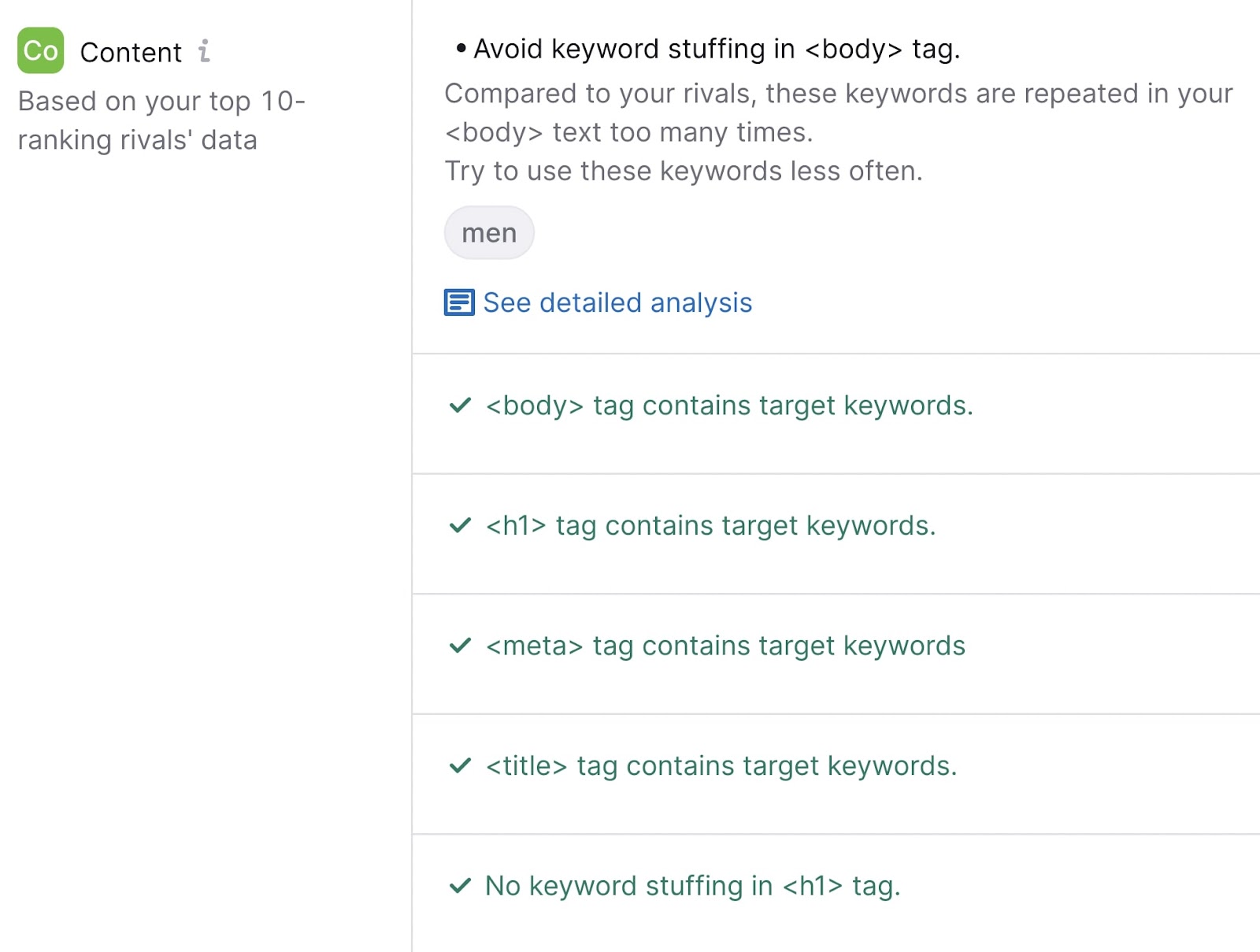
The content section will let you know whether you’ve used your target keywords in key places like the H1 and body of the of the page (and whether keyword stuffing is detected):

"Content" recommendations section in On Page SEO Checker

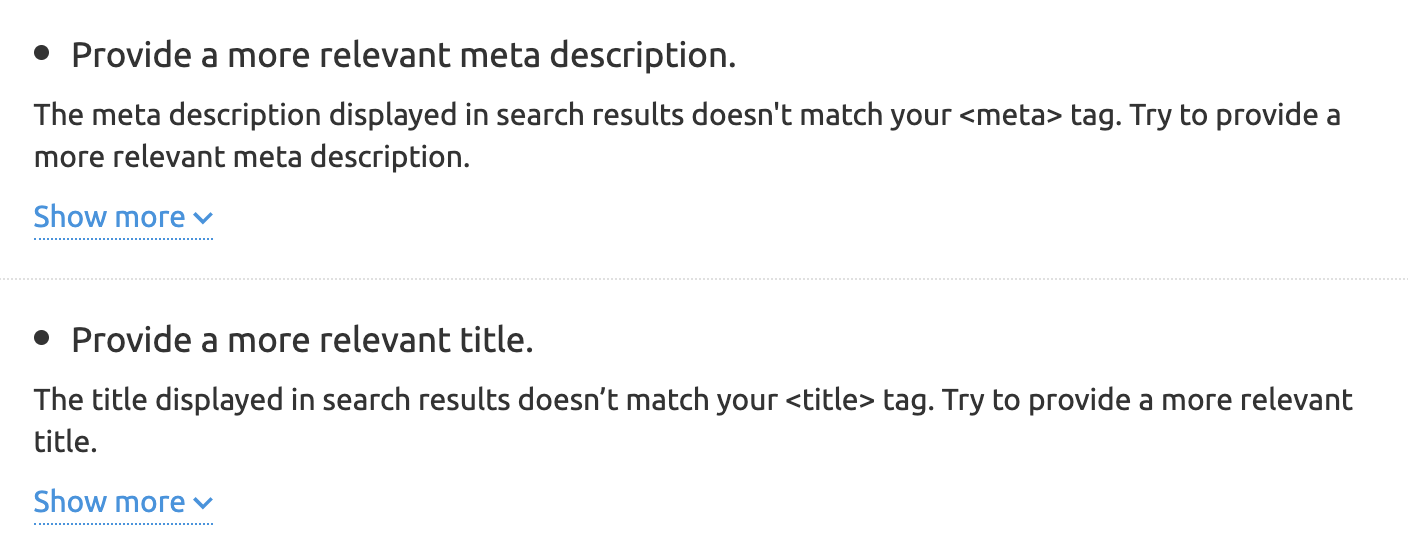
If the tool does detect issues, it will provide recommendations.

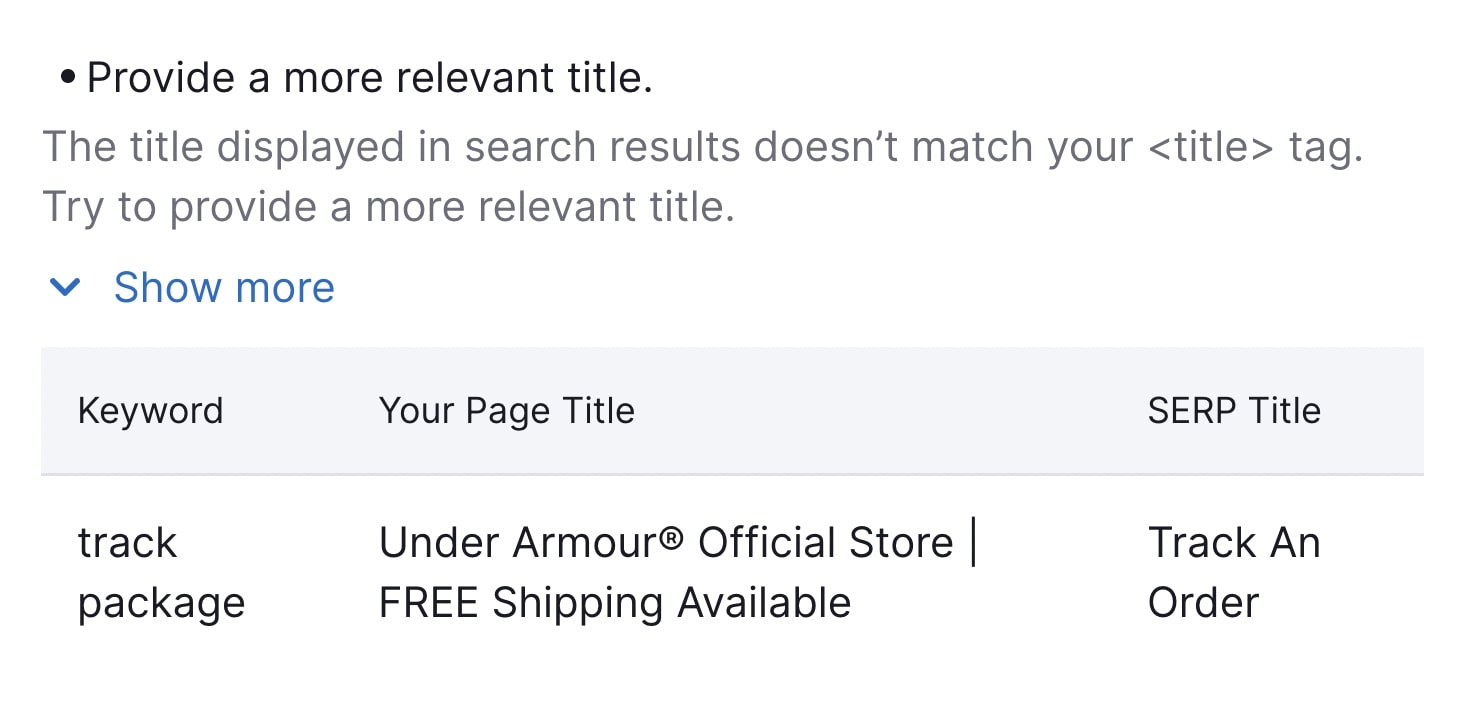
Like this:

"Provide a more relevant meta description," and "Provide a more relevant title" ideas

It also provides helpful information about related keywords you can add to your text to further optimize it.

"Enrich your page content" ideas section

Optimize Your Pages to Rank Better

with the On Page SEO Checker

Try for Free →

ADS illustration

3. Write Keyword-Rich Title Tags

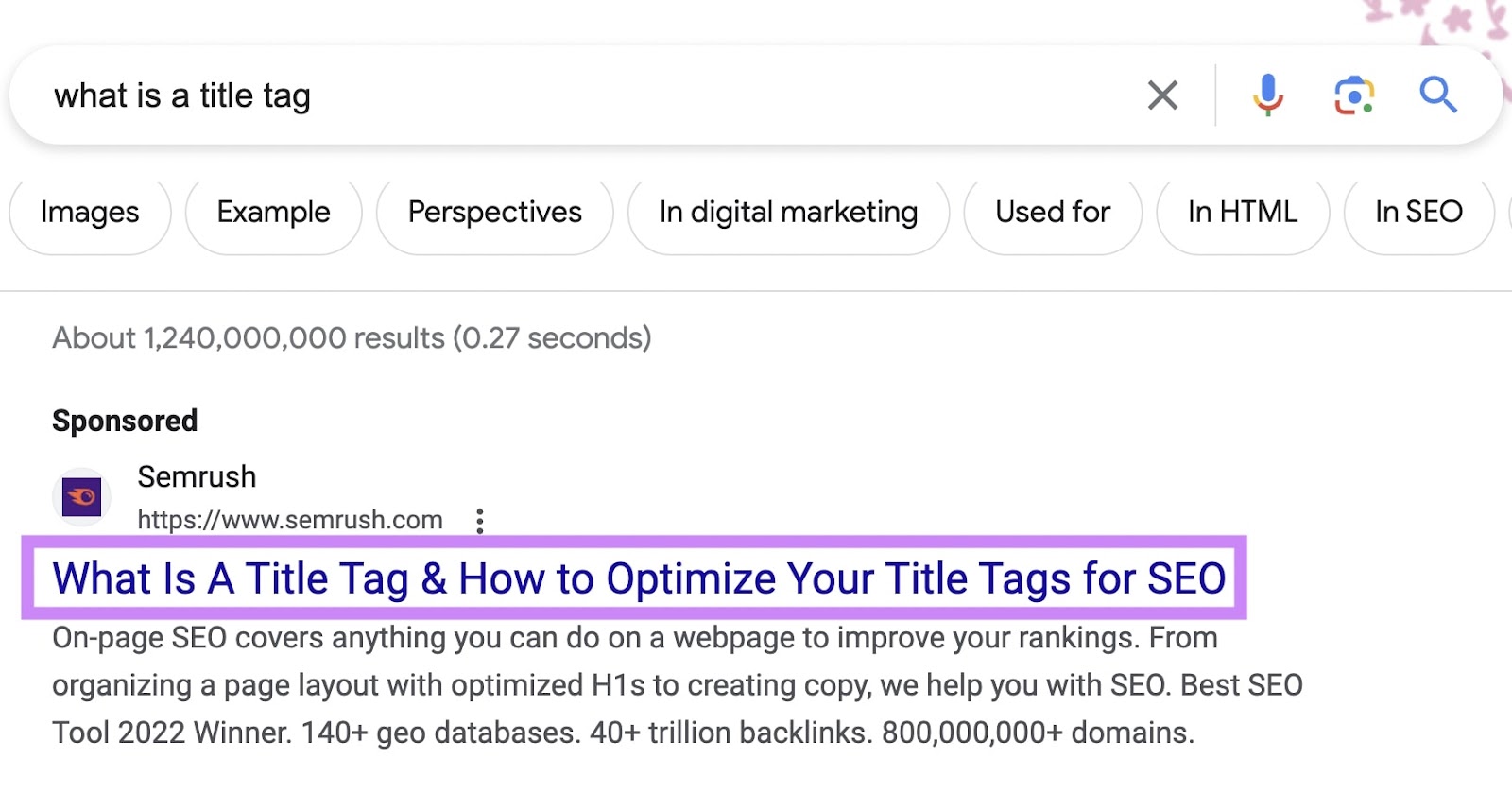
Title tags are pieces of HTML code that indicate what the title of a page is. And display that title in search engines, social media posts, and browser tabs.

Additionally,they can influence whether a user decides to click on your page.

They can look like this on the SERP (search engine results page):

A title tag on SERP that reads "What is a title tag & how to optimize your title tags for SEO"

Here are a few tips to follow when writing your title tags:

  • Keep it brief. We recommend keeping title tags between 50 and 60 characters so Google doesn’t cut them off
  • Include your target keyword. This helps both Google and users determine what your page is about.
  • Be unique. Avoid duplicate title tags so that each individual page’s purpose is clear to Google (and users know what they’re clicking on).

On Page SEO Checker will also provide tips to help you write better title tags. Plus information about what, how, and why to do it. 

"Provide a more relevant title" recommendation section

Further reading: What Is a Title Tag & How to Optimize Title Tags for Google

4. Write Click-Worthy Meta Descriptions

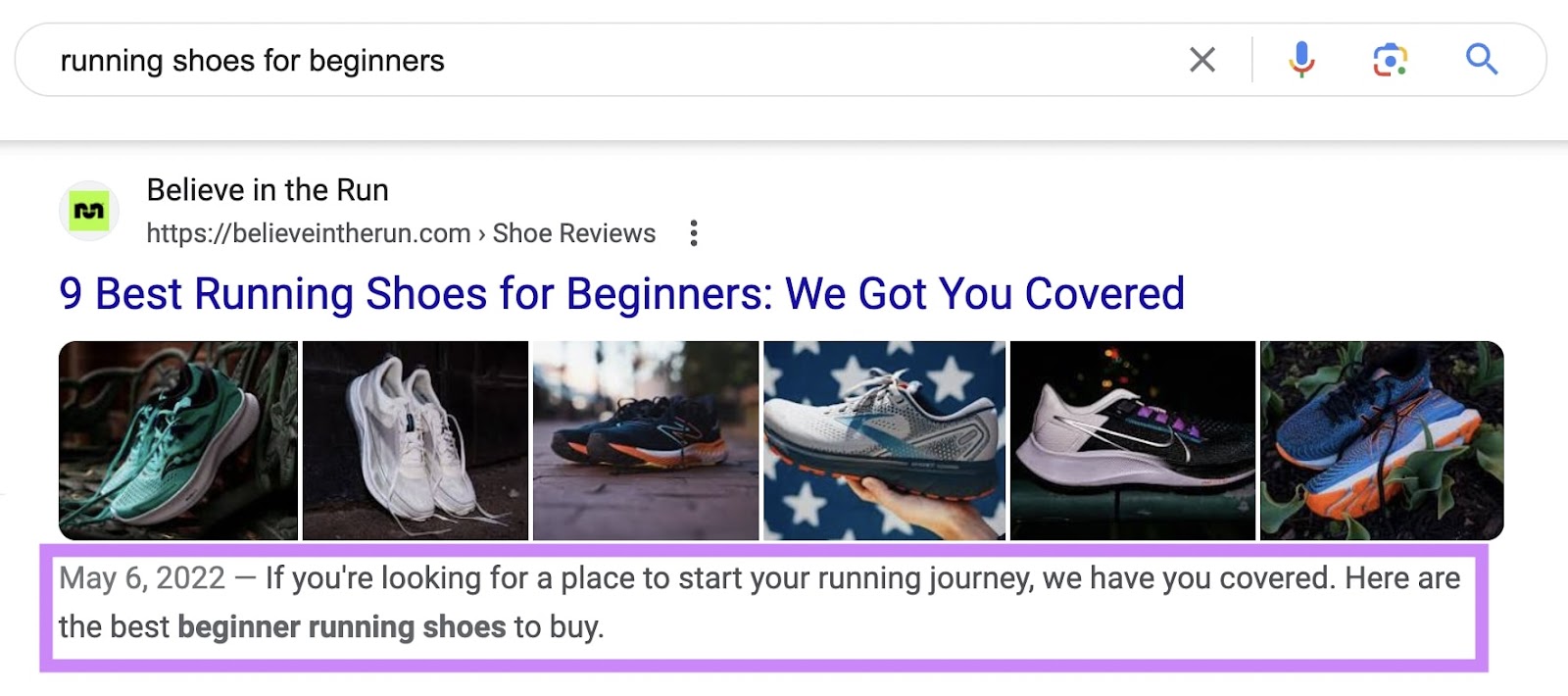
A meta description tag is an HTML element on a site that provides a brief summary of the page. And search engines like Google may use it to generate a snippet (the descriptive text part of a search result). 

It usually shows up on the SERP below your page’s title. Like this:

A meta description on SERP

Meta descriptions don’t directly influence Google rankings. 

Local SEO: What Is It & How to Do It

What Is Local SEO? 

Local SEO is the process of optimizing your online presence to increase local traffic, visibility, and brand awareness. 

Common local SEO tasks include:

  • Optimizing your Google Business Profile
  • Finding local keywords
  • Creating locally relevant content

Among others.

And any business that has a physical location or serves a geographic area can benefit from local SEO. 

This is an example of a local search result on Google:

an example of a local search result on Google

Local SEO can help your business appear in Google results for searches like these.

This article explains why local SEO is important, how it works, and how to do local SEO. 

Tip: create a free Semrush account so you can follow along. 

Why Is Local SEO Important? 

The best way to get your site in front of people in your area is to use local SEO marketing.

Over 75% of consumers in the United States, France, Germany, and the United Kingdom use Google when looking for business information. 

Making it the most dominant search engine for local search in those (and many other) countries. By far. 

And Google Maps searches for “shopping near me” have grown globally by more than 100% year over year. 

Mobile searches for “store open near me” also grew by over 250% in a recent two-year period. And “where to buy” + “near me” keywords by more than 200%. 

That’s hundreds of millions of searches every day. 

How Local SEO Works 

On top of Google’s usual ranking factors, its local search algorithms use three main factors to help find the best match:

  • Relevance (how closely related a Google Business Profile result is to the words a searcher uses in their query)
  • Distance (how far Google believes a user is from a business when they search)
  • Prominence (how important Google thinks a business is to its potential customers)

Then, Google displays two types of search results for local searches.

The “local pack” results (Google Maps and Business Profiles) and organic results. 

Organic results are the “normal” blue link search results we’re all used to seeing on Google. 

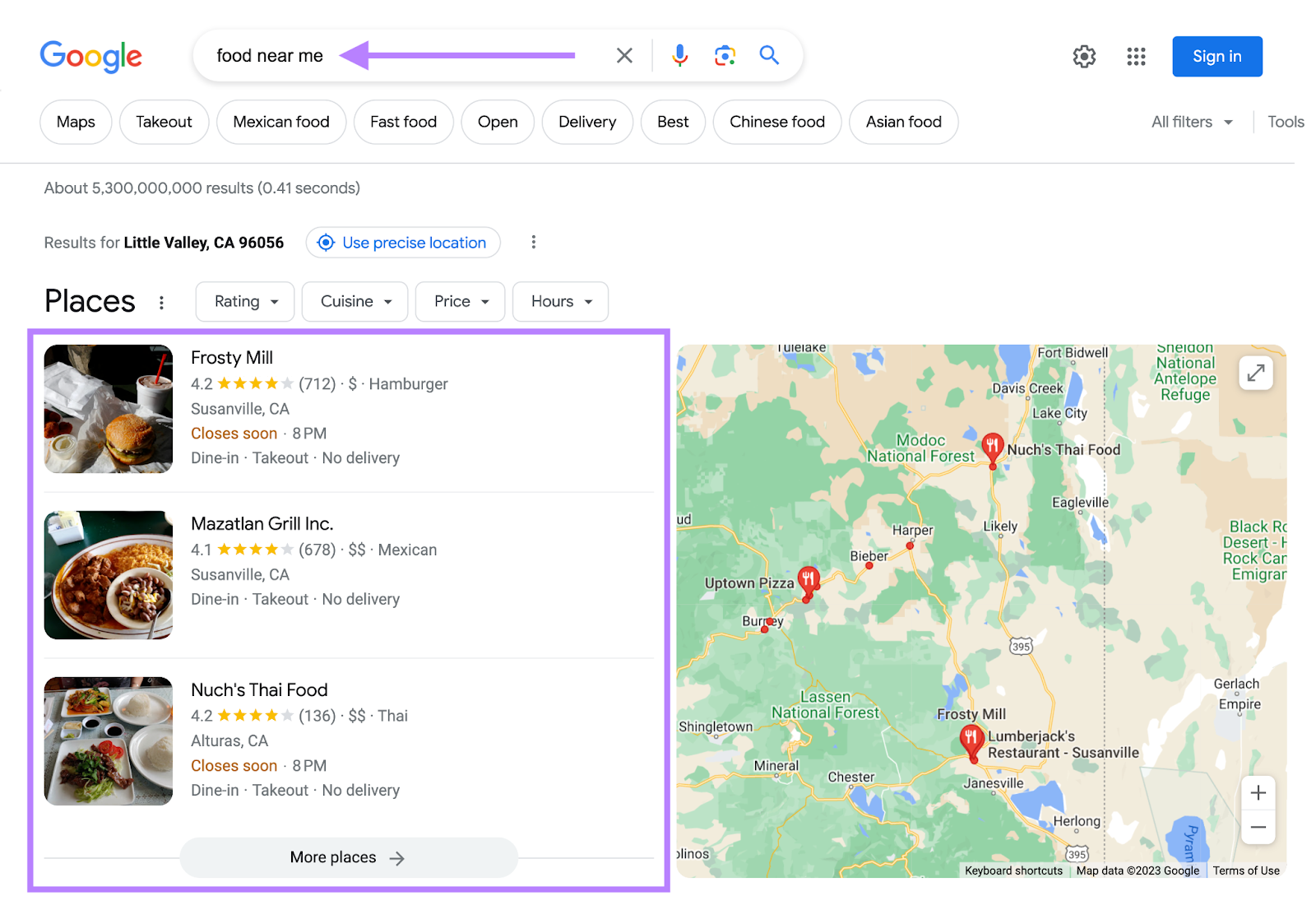
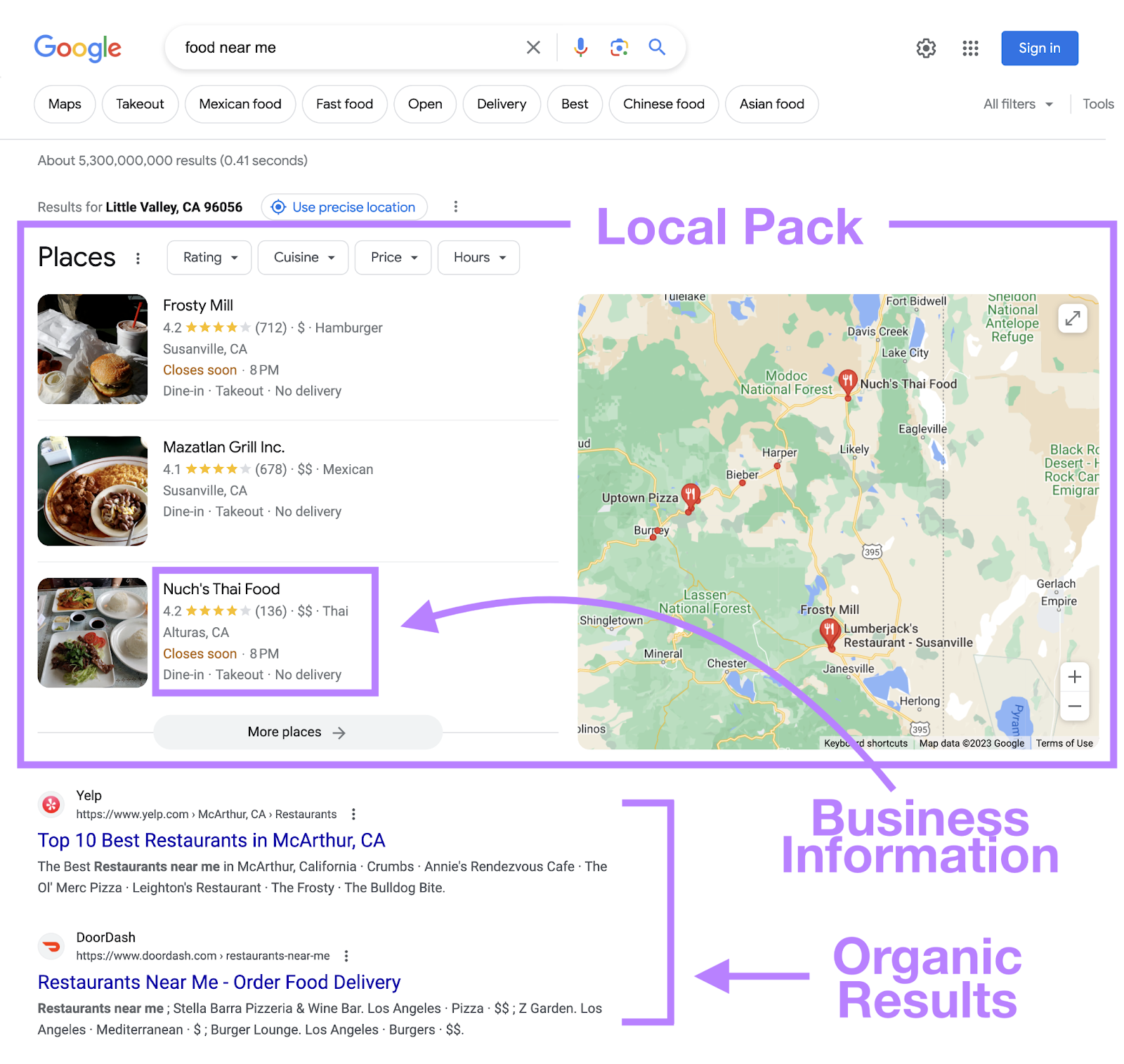
local pack (or map pack) is a Google feature that shows the top local business listings and a map. 

Like this:

local pack in Google search for "food near me"

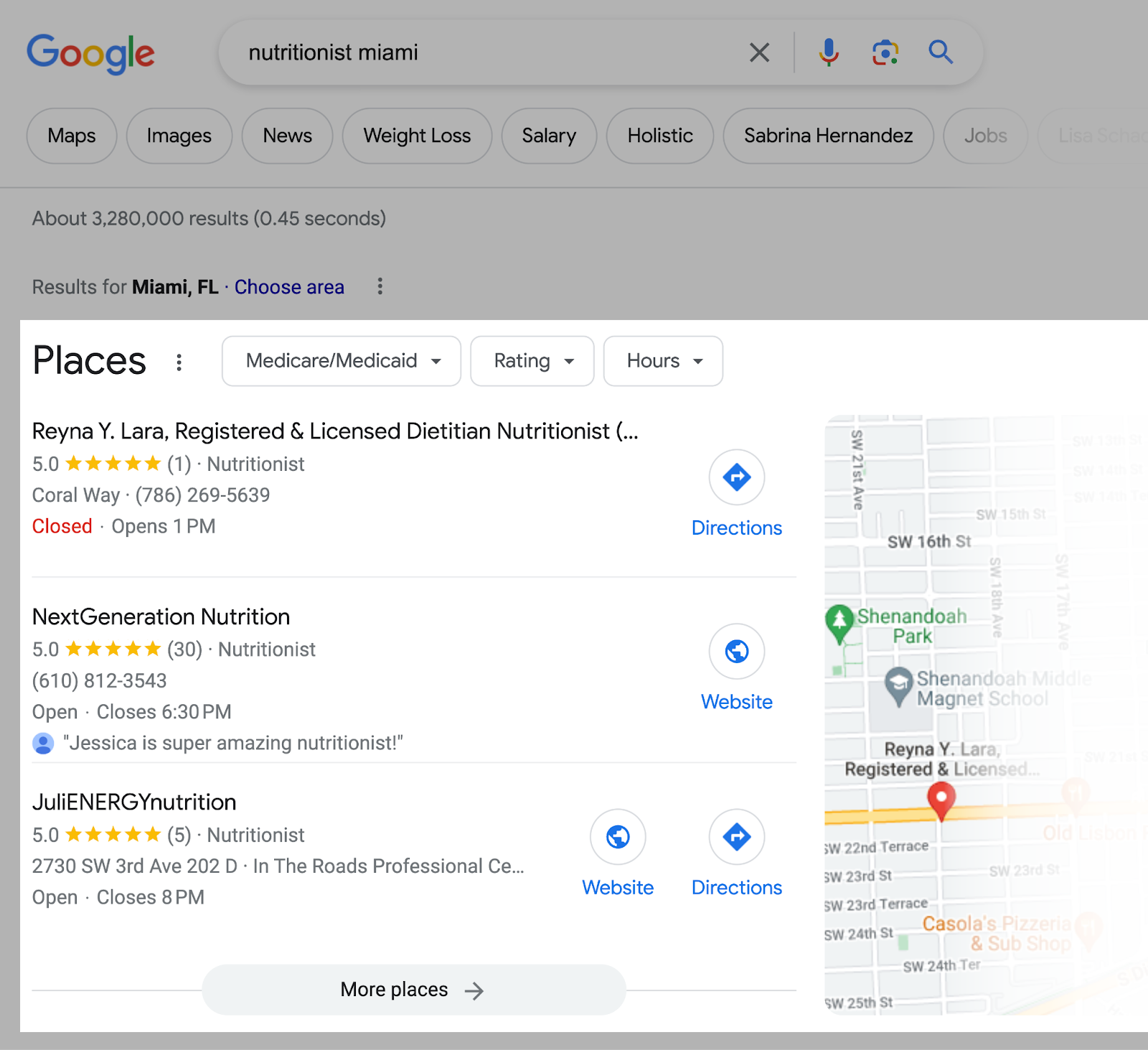
For example, when you search for “nutritionist miami,” Google displays a local pack at the very top.

Google search for “nutritionist miami”

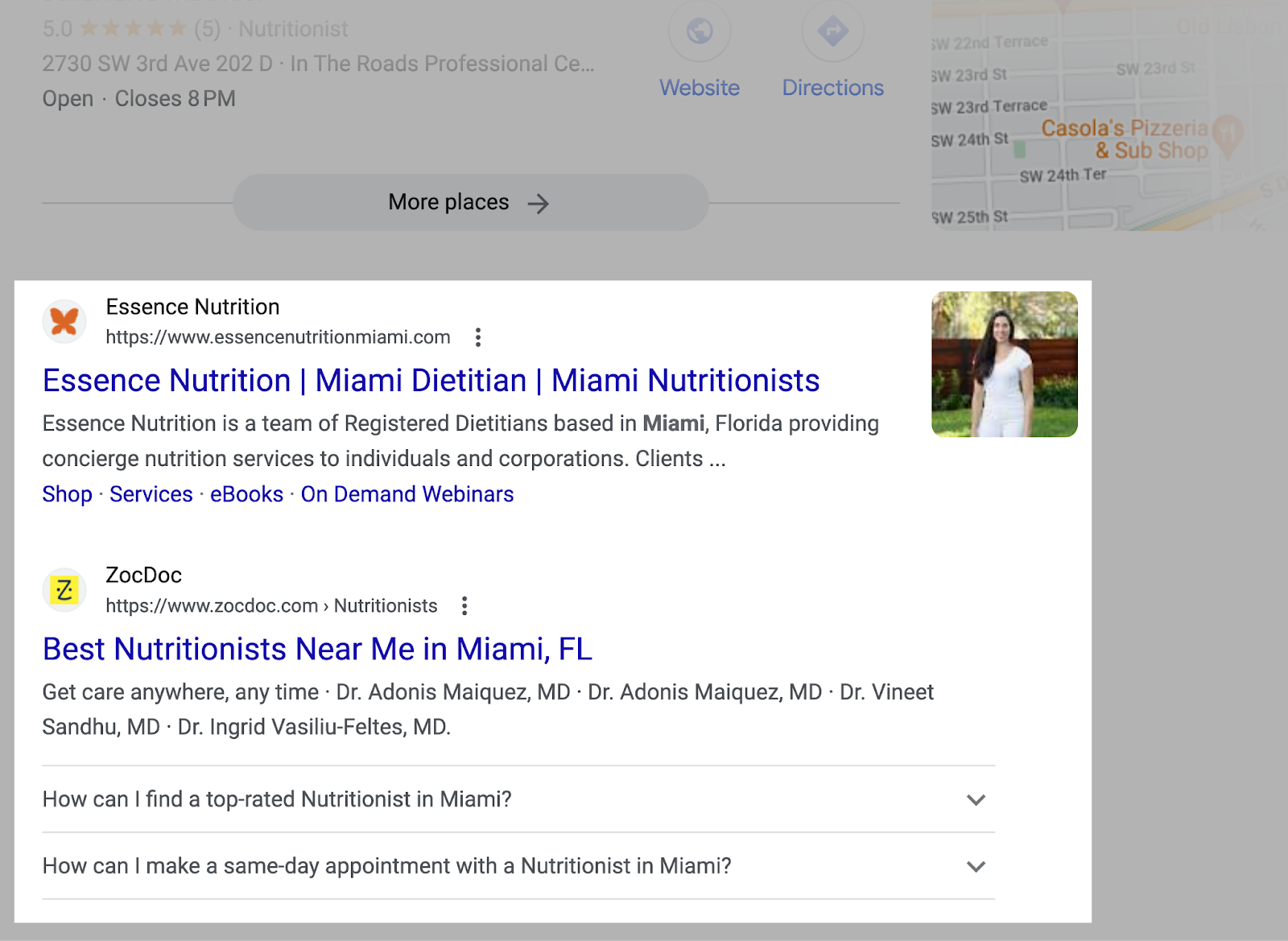
And the “regular” organic results underneath. 

Organic results in Google for “nutritionist miami”

But Google doesn’t just display local results for queries that contain a city, state, or “near me” keyword. 

If Google believes the intent of your search is local, it’ll display local results.

Even if your search isn’t explicitly local. 

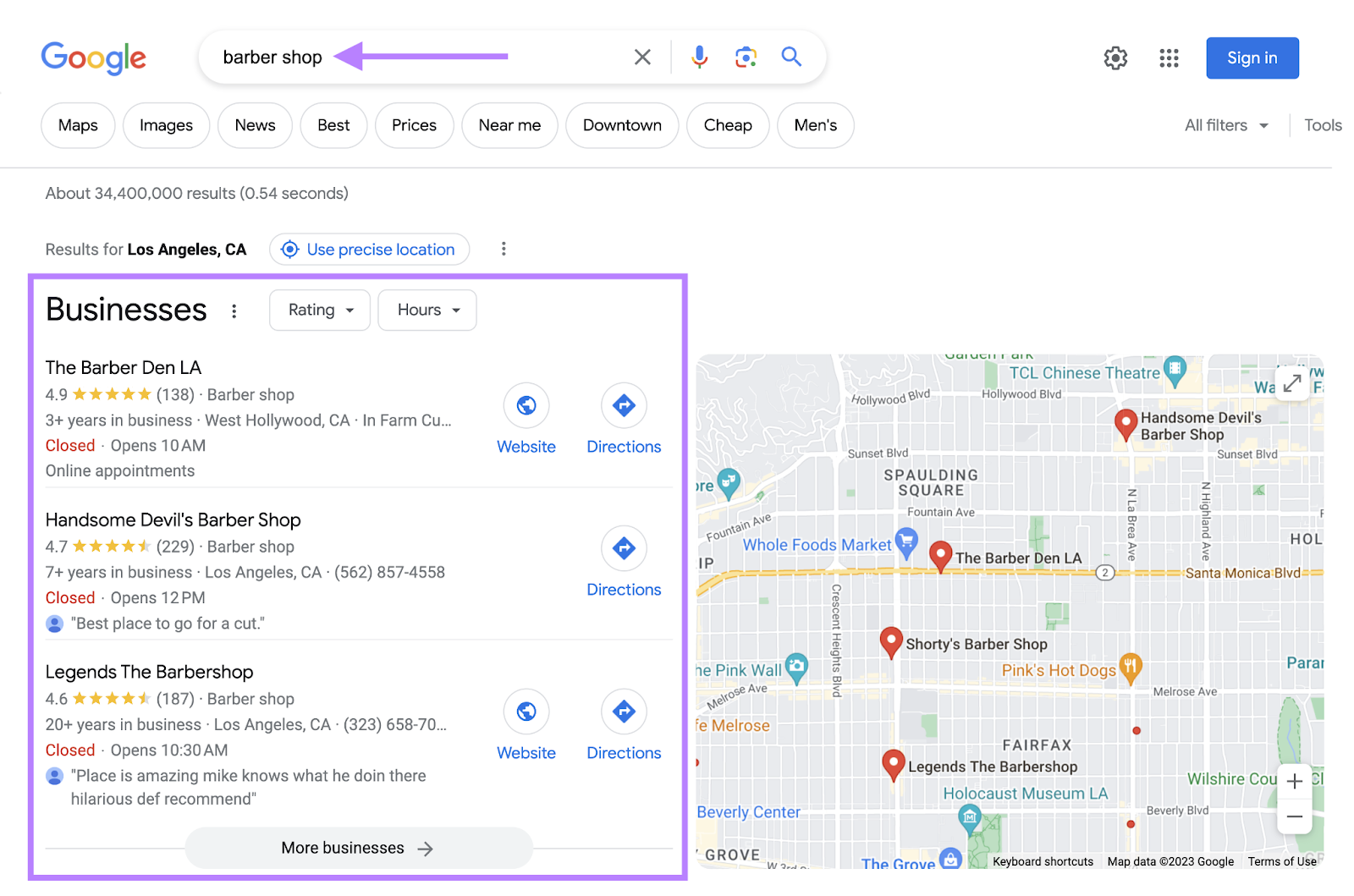
For example, if you were in Los Angeles and searched for “barber shops,” Google would still display a local pack for Los Angeles barber shops. 

Like this:

Google search in Los Angeles for “barber shops”

How to Do Local SEO 

Now it’s time to create a strategy so you can increase your local rankings and boost traffic. The following steps will help you get started. 

Tip: Remember—you can create a free Semrush account to follow along. 

Do Local Keyword Research

Keyword research for local SEO is the process of finding keywords people use when searching for local products and services. 

Ranking for these keywords drives highly targeted local traffic to your site and sends more customers your way. 

To get started, you need a short list of keywords people can use to find your local business. 

Here are a few different ways to start.

Research Your Competitors

Seeing what your competitors are doing is an easy way to start gathering ideas. 

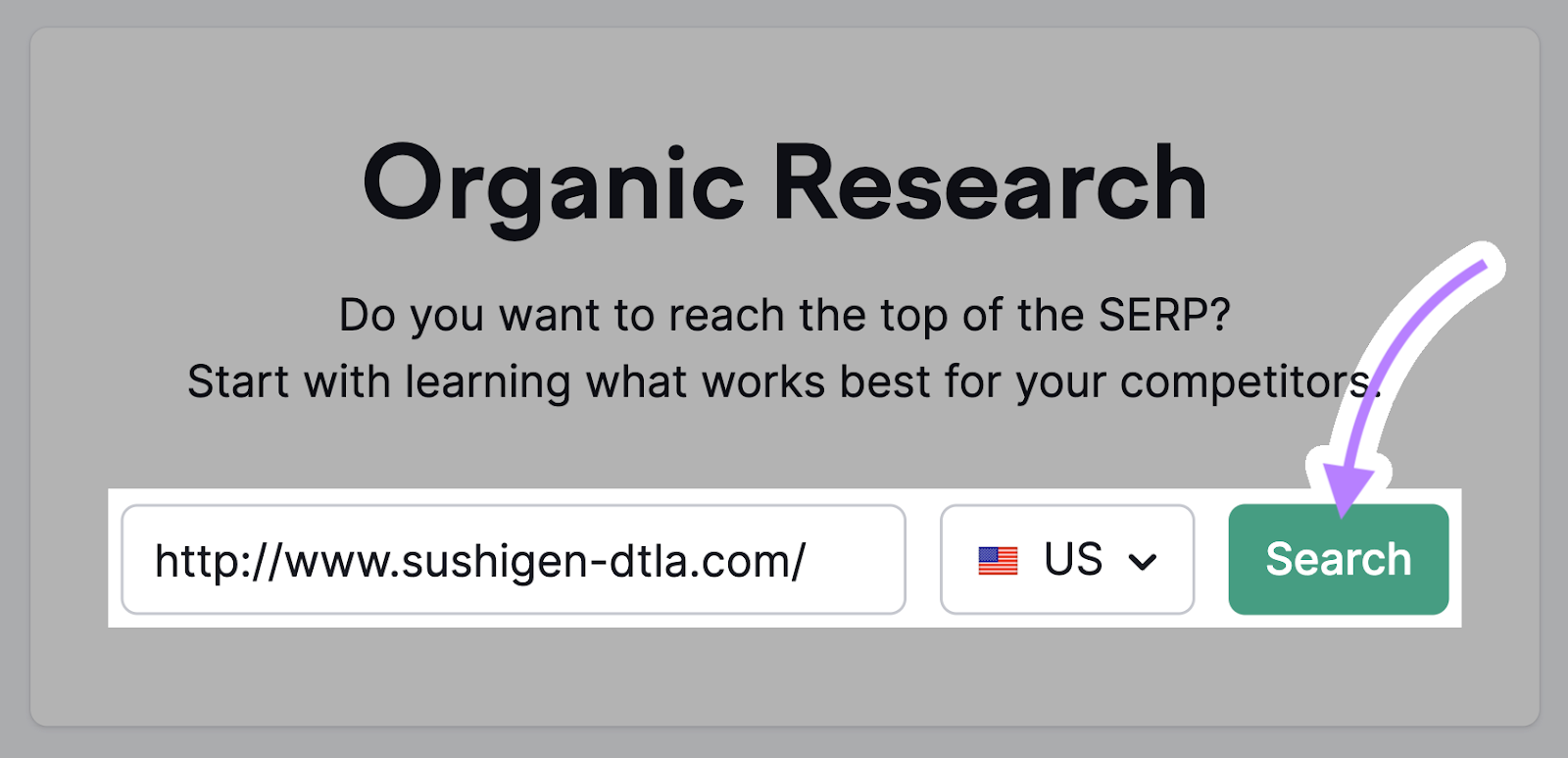
One of the best ways to do that is to use Semrush’s Organic Research tool.

Enter a competing site and click “Search.” 

Like so:

Semrush’s Organic Research tool

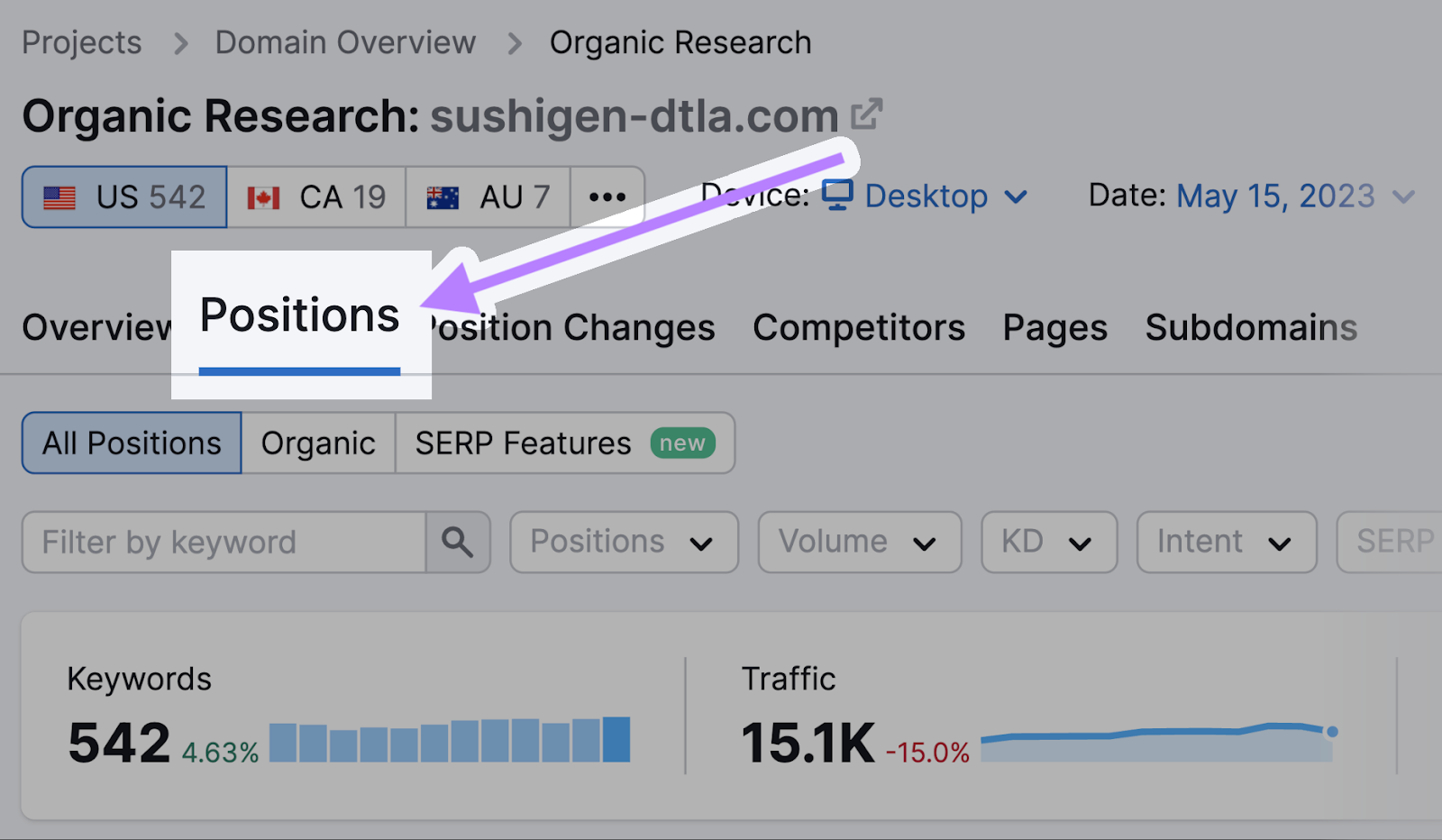
Then, go to the “Positions” tab. 

“Positions” tab

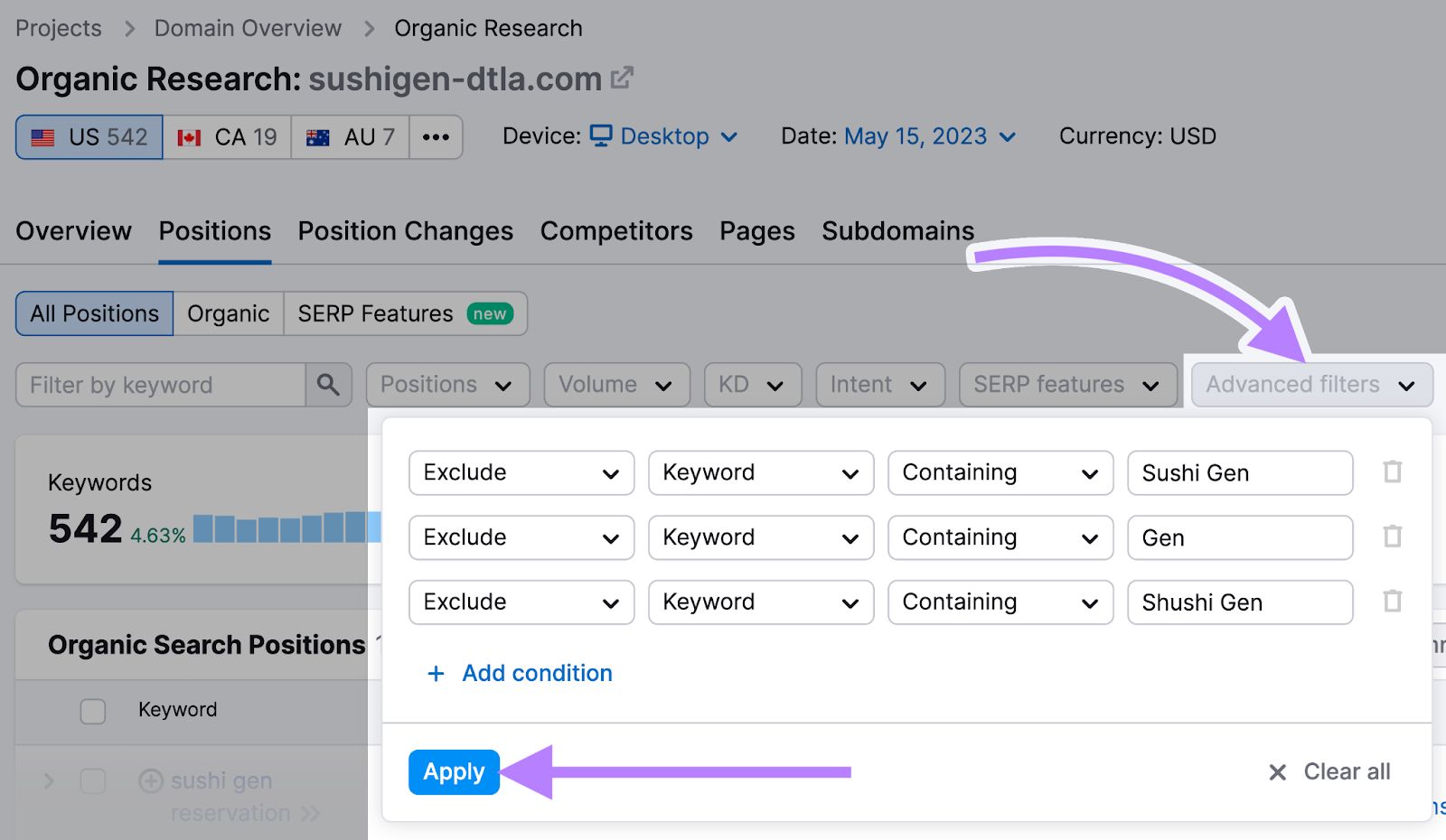
Click on “Advanced filters,” and exclude branded keywords (phrases that contain your competitor’s business name). 

using “Advanced filters” in Organic Research tool

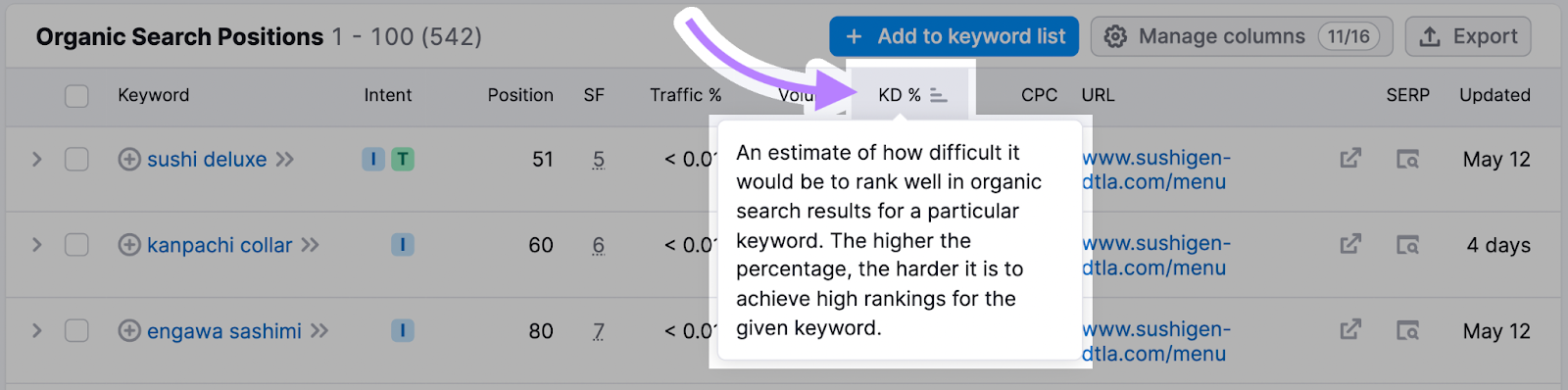
And click the “KD%” column to sort the table by keyword difficulty. 

Like so:

“KD%” column

Now you have a list of keywords you might want to target.

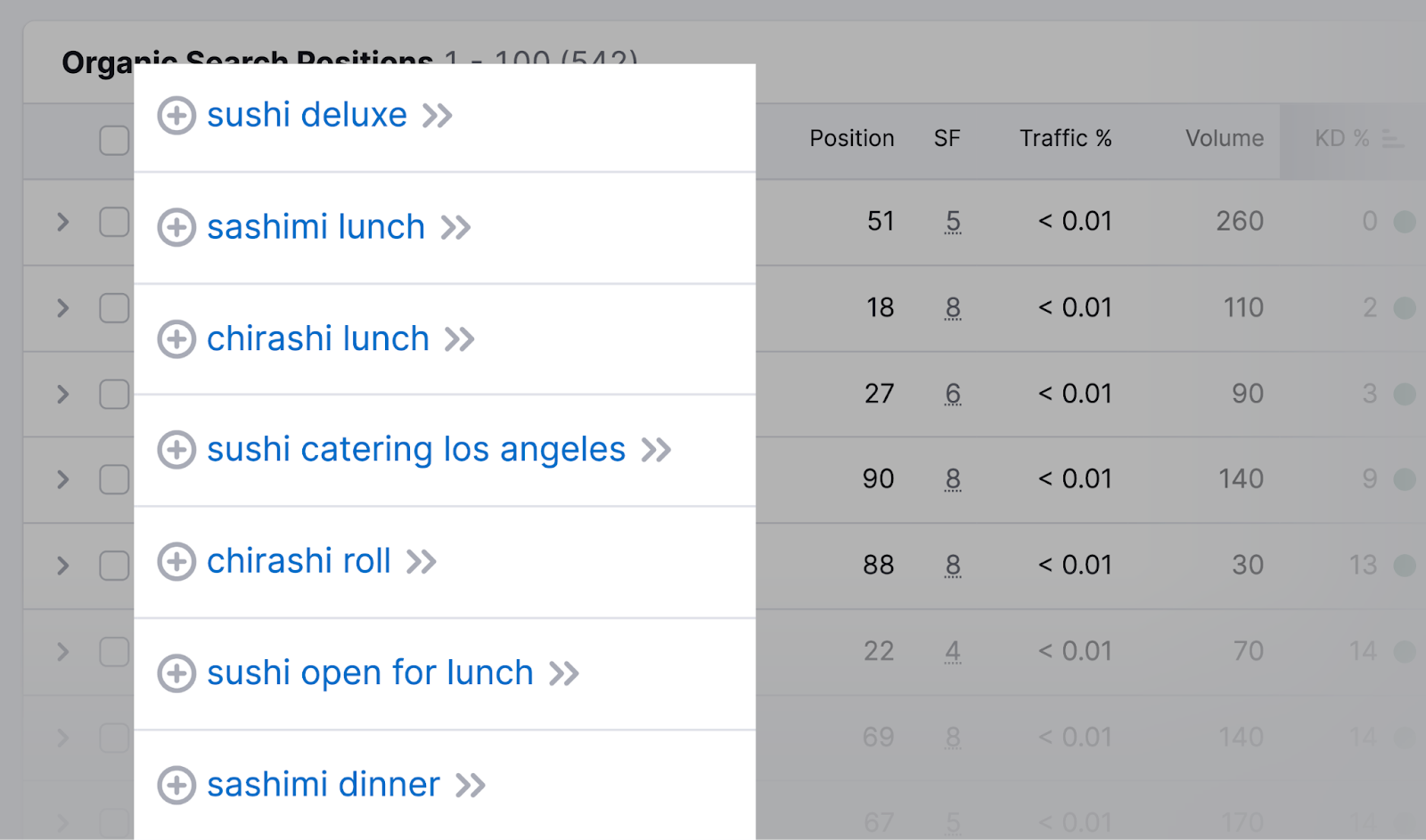
a list of keywords results

If your competitors are targeting these keywords, then they’re likely highly relevant to your business, too. 

Check Local Keyword Volume Metrics 

You’ll also want to get a sense of how difficult it is for your content to rank locally for keywords you choose to target. 

Use the local volume metrics feature in the Keyword Overview tool to identify valuable keywords you’ll want to target in your content. 

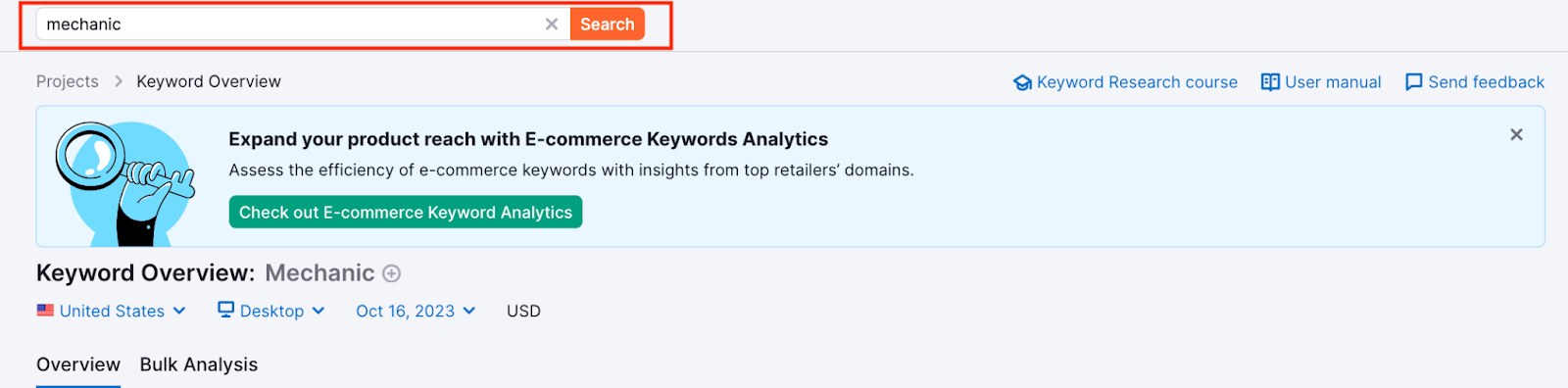
Enter your desired keyword into the search bar at the top of the page and hit “Search.”

ou4RorXHRDM4svf_0XBlmoyvDmdG6ZiaaDcITtX4LMlvNZxWivxzEs1ZHWkJoqnaHSAn60XMTFxNGfPl8AWATXZjVl0DrzHu8rHgjjyzEa_Ib8yIvtfHPQTAr4KGUZPM93lqBeixrZCuBBc6RK2d68k

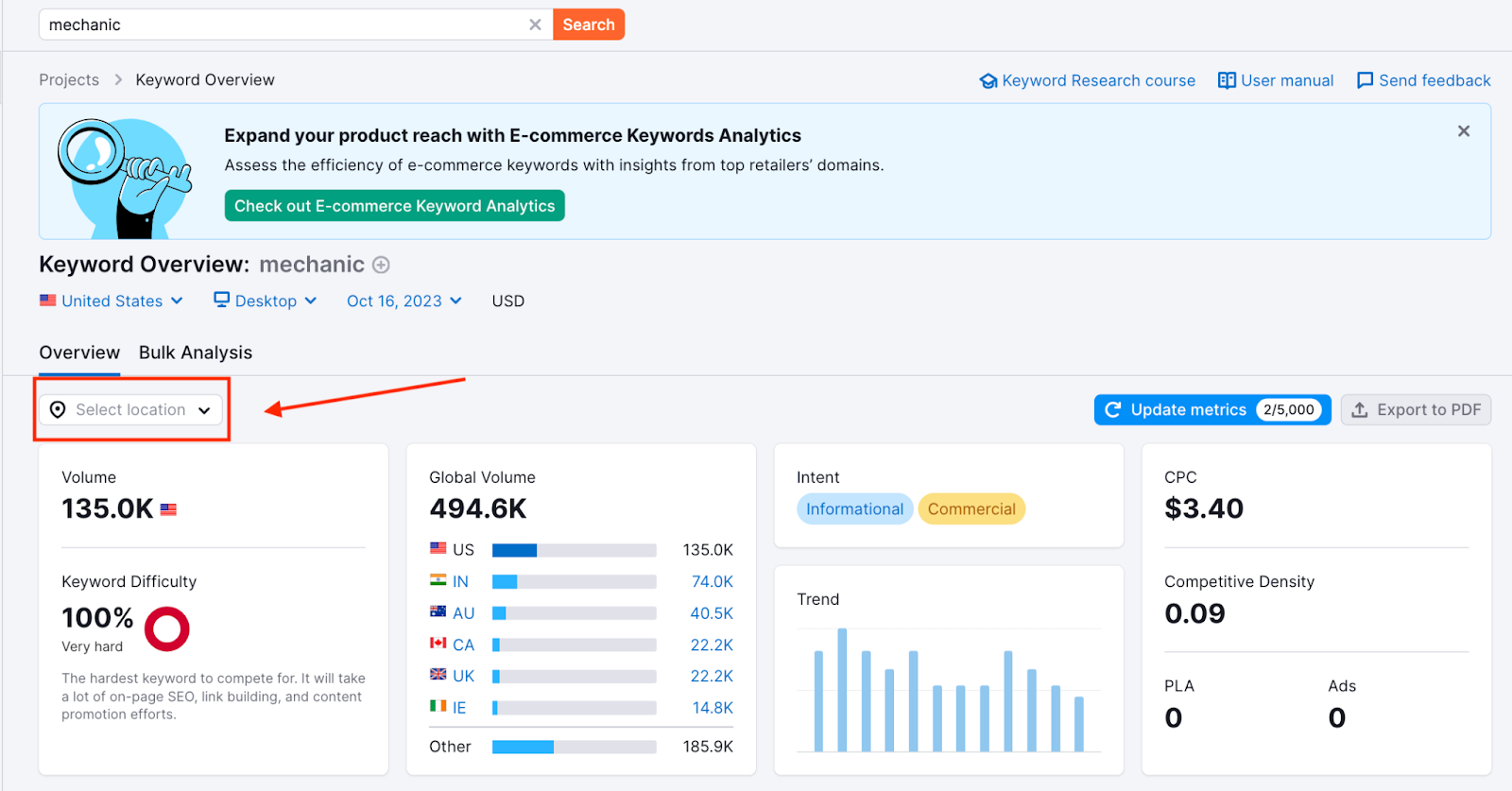
Once the tool delivers the keyword results, click on the drop-down bar labeled “Select location.” 

FvajtJ8WYwtcPnoUMjx9tV10tituXYw_oVRsAVHTuUonlJHsIMD9AiBGE7jVbM_QTyJJppCbz3oPVtOQxIvTLNG69uO2P5UuDy1wDl1XT4bQbkBQMiN0ZusSgegm3htqKs7UzKJnR5ly5NA8ddVgW18

Type in your locale. This could be a state, county, province, city, or municipality. Go as narrow on the location as you wish. 

59Ct9432qkmdX80FXt_27SACwJewRwMvDm2rFJ78NkqnOtv-RNrTxx8d14vPT7-PedwosWoQ5sGx2hrc8nwnuieqUkSkPOvMynXxJ3HrVFbcpB7ne7aQdCpa7XOBzzl9Jj1vz-ixvMVbkuBOuNaNnKw

You’ll get local data, as well as the comparative national data. So you can see how easy or difficult it is to rank for your keyword in your exact location. 

Note: Some of these widgets show local data (volume, difficulty, SERP analysis, etc.), while others remain national-level (keyword variations, questions, related keywords).

tgDQGvFDEnQeiHbKXRYnnFw4Sx94snCTVvElkga2kozl7AlYChTAvYEnH_WWO1RJ_jBlprgGjZ_J7uAKKyqEy7B_9a5ZmocdWe9hLmqti_DEYz75JT8E1SJ-p6O-tTiadlQD7RG7068Crj0zJh2mVSE

If you’re a business operating at the local level, this is an essential feature to leverage as you’re building your targeted keyword list. Use the data to get an edge over competitors by optimizing your content for your specific area.

Use Google Autocomplete

Google autocomplete is a feature within Google Search that makes it faster to complete searches when you start to type. 

Its purpose is to save users time by predicting what they’re going to search for.

And it can help you discover valuable long-tail keywords for local SEO.

That’s because Google’s autocomplete predictions depend partly on your location. 

For example, if you’re in Arcadia, California, and you type “best paella in” into the search bar, you’ll see something like this:

Google Autocomplete suggestions for “best paella in” in Arcadia, California

All these locations are near Arcadia or in California. 

So, to find valuable local keywords, start typing in keywords related to your business. 

For example, if you run a cleaning services business, type in “cleaning services” to get a list of local keyword suggestions.

What Is an Ecommerce Website?

What Is an Ecommerce Website?

An ecommerce website is any site that facilitates the buying and selling of products and services.

Digital marketplaces, online retail stores, and auction sites are considered ecommerce sites because they enable consumers to buy goods. 

Any business owner with a product or service to sell can benefit from an ecommerce site, including the following: 

  • A small business trying to get local customers
  • A freelancer selling their services
  • A large corporation showcasing its products

Pro tip

Grow your online store with Semrush for Ecommerce, an all-in-one solution to optimize your store and promote your products. 

What Is Ecommerce?

Ecommerce, which stands for “electronic commerce,” is the buying and selling of products and services over the internet. This includes all types of industries, such as retail, electronics, grocery, education, entertainment, delivery, and more.

According to Statista, revenue in the U.S. ecommerce market is predicted to grow 43.58% between 2024 and 2028. This increase in growth is forecasted to be worth $462.7 billion U.S. dollars. 

Statista's graph showing revenue in the U.S. ecommerce industry 2018-2028

How Does Ecommerce Work?

Ecommerce works in multiple ways: Merchants can create their own ecommerce site, set up an online store on an ecommerce platform like Shopify or Magento, or create a storefront on a marketplace like Amazon or eBay.

Regardless of the method, all stores must have secure payment gateways to facilitate payments and comply with Payment Card Industry (PCI) Data Security Standards.

Here’s a look at the process: 

  • Shoppers visit an online store or website and browse products using a variety of devices, such as smartphones, laptops, desktops, tablets, and smart TVs and watches. 
  • Customers typically add the products they want to buy to a virtual shopping cart. The shopping cart keeps track of selected items, quantities, and total costs. 
  • When customers are ready to purchase, they proceed to the checkout page. They provide shipping information, select a payment method, and review their order before finalizing the purchase.
  • The seller receives a notification of the order
  • The vendor then prepares the products for shipping to the customer

An excellent example of an ecommerce website is the eBay marketplace. Shoppers search for specific products using the search bar or relevant product categories on the main menu.

eBay marketplace categories

What Should an Ecommerce Site Do?

A great ecommerce site can do a variety of things, from helping you sell your products to providing an excellent user experience (UX) for customers. 

Here’s a look at what ecommerce sites should have in order to successfully meet website owners’ (and users’) needs:

  • User-friendly interface: Ensure intuitive navigation and easy access to products and services
  • Secure payment gateway: Implement SSL certificates and PCI compliance for safe transactions
  • Product catalog: Organize products into categories with detailed descriptions and high-quality images
  • Shopping cart: Allow users to add, remove, and modify items before checkout
  • Mobile responsiveness: Optimize the site for seamless viewing and functionality across various devices
  • Search functionality: Enable users to quickly find specific products or categories
  • Customer reviews and ratings: Provide social proof and aid in decision-making for potential buyers
  • Order management system: Track orders, manage inventory, and process shipments efficiently
  • Customer support: Offer multiple channels for assistance, such as live chat, email, and phone support
  • Analytics and reporting: Monitor site performance, track user behavior, and gain insights for optimization
  • Legal compliance: Ensure adherence to data protection laws, terms of service, and privacy policies
  • SEO optimization: Optimize content and metadata to improve search engine rankings and visibility
  • Mobile optimizationGoogle recommends that content on mobile pages should load in under 3 seconds.
Google's average speed best practices

Image Source: Think with Google

If business owners don’t have the budget or time to invest in creating a high-quality ecommerce site, established online marketplaces or online stores that provide these features can be a great alternative. 

Further readingUX and SEO: The Best Strategy for Getting Results

Types of Ecommerce Businesses Explained

Ecommerce comes in many forms. Here’s a quick rundown of the major ecommerce business types.

Business-to-Consumer (B2C)

A B2C business is an online business that sells goods or services directly to individual consumers. 

A B2C website example is Alfred, an online coffee shop that sells coffee products. Customers can buy coffee online from this site and even set up subscriptions at their preferred frequency. 

A section of Alfred's homepage

Business-to-Business (B2B)

B2B ecommerce is when a business sells goods or services to another business over the internet. 

B2B transactions are primarily between a wholesaler and a retailer, or a manufacturer and a wholesaler. 

Alibaba is a B2B marketplace that sells clothes, machinery, and consumer electronics to business owners.

Business-to-Government (B2G)

B2G is an ecommerce model where a business sells products to the government (local, county, state, or federal).

Companies place bids to win government contracts.

For example, pharmaceutical and biotechnology giant Pfizer won a billion-dollar deal to supply the U.S. government with COVID-19 vaccines in 2022.

Pfizer's landing page celebrating 175 years of existence

Consumer-to-Consumer (C2C)

C2C is a business model in which consumers sell goods or services to other consumers. 

Online marketplaces provide a platform for consumers to interact and transact in a secure environment.

For instance, consumers can buy and sell baby care products, furniture, mobile phones, and more on Facebook Marketplace.

"Today's picks" section of Facebook Marketplace

Consumer-to-Business (C2B)

The C2B model is when an individual sells physical products or services to a company. 

For example, an independent freelance writer can advertise their services (write ebooks, blog posts, or social media content) to businesses on a site like Upwork. Businesses and individuals can then buy these services on the platform. 

"Content Creation" results on Upwork

Consumer-to-Government (C2G)

C2G ecommerce refers to transactions between a consumer and various government entities.

In the C2G model, consumers interact with government agencies directly and gain access to government services through an online platform.

For example, company owners can register their businesses online on the official U.S. Small Business Administration website. 

"Register your business" page on U.S. Small Business Administration website

Further reading: 9 Profitable Ecommerce Business Ideas for Your Next Venture

The Benefits of Ecommerce Businesses

Buying and selling goods online has many benefits for both buyers and sellers. 

  • Wider reach: Allows businesses to expand beyond their local area, reaching regional or global markets 
  • Convenience: Offers flexibility and convenience, allowing consumers to shop anytime, anywhere
  • Low costs: Reduces the need for physical space, cutting down on rent, utility bills, and property taxes 
  • Customer data: Provides access to valuable customer data, including purchase history and preferences, helping you choose products and improve the experience
  • Faster service: Speeds up the buying process with smart automation, rapid browsing, and quick ordering systems
  • Payment flexibility: Caters to customer preferences and enhances the shopping experience
  • Affordable marketing and advertising: More cost-effective than traditional advertising methods
  • Facilitates international trade: Breaks down geographical barriers, making it easier for businesses to enter international markets

The Challenges of Ecommerce Businesses 

While ecommerce offers many benefits to business owners, it also comes with challenges. 

  • Ensuring website security: With the increase in online transactions, maintaining a secure platform is vital. This challenge provides an opportunity to earn customers’ trust by implementing robust security measures.
  • Managing inventory: Keeping track of stock levels can be tricky, but it’s also an opportunity to streamline operations and reduce overheads
  • Attracting traffic: Creative marketing strategies, like email and content marketing, can help draw in potential customers.
  • Cart abandonment70.19% is the average shopping cart abandonment rate. Certain marketing tactics, like cart abandonment emails, can help recover these sales. 
  • Retaining customers: Building a loyal customer base can be challenging, but it also means opportunities to engage with customers and create lasting relationships
  • Handling returns and refunds: Although managing returns can be complex, a smooth process can significantly enhance customer satisfaction
  • Dealing with competition: A competitive market pushes businesses to continually evolve and improve their offerings
  • Adapting to market changes: The ever-changing ecommerce landscape requires businesses to stay flexible and adaptable, fostering a culture of innovation and responsiveness.

How to Start a Successful Ecommerce Business 

Starting an ecommerce business consists of a series of steps to set up your online store, source or create your products, and promote your website.

Here’s a step-by-step guide to help you launch your ecommerce venture. 

1. Conduct Market Research

Before you can even think about products or selling, conduct market research on your business idea. Here’s how:

Identify Your Target Market and Niche

Find out who your ideal customers are using tools like Google Analytics and Facebook Audience Insights. These tools can help you discover the size, demographics, interests, and behaviors of your potential market and niche.

Pro tip

Create customized buyer personas with our free templates. Buyer personas help you understand your customers better and inform your marketing strategies and messaging. 

Analyze Competitors

To learn from your competitors’ strengths and weaknesses, use our Competitive Research Toolkit

The toolkit allows you to compare your website to competitors in key areas like traffic, keywords, pages, backlinks, and social media. 

Find opportunities your competitors are missing using the Keyword Gap tool. To see which keywords your competitors are ranking for so you can outrank them. 

Registering a business isn’t mandatory for all types of businesses, but it has many benefits that can help new entrepreneurs. 

For example, registering a business can help you:

  • Open a business bank account and access financial services
  • Get funding from investors
  • Enjoy tax advantages and deductions
  • Protect your personal assets and limit your liability
  • Enhance your reputation and credibility with customers and suppliers
  • Comply with legal and regulatory requirements

Generally, sole proprietorships and partnerships do not need to register their business unless they want to use a trade name or a fictitious name for their business

On the other hand, corporations and limited liability companies (LLCs) must register their business in the state where they operate. These types of businesses have a separate legal entity from their owners and offer more protection and flexibility.

You can register your business online and learn more about the process on the official U.S. Small Business Administration (SBA) website. 

The cost of registering a business varies from state to state, but according to the SBA, it’s typically less than $300. 

You’ll need the following information to register your business: 

  • Business name
  • Business location
  • Ownership, management structure
  • Registered agent information
  • Number and value of shares (for a corporation)

The documents you’ll need vary according to your business type and state. 

3. Buy a Domain Name

Buying a domain name is a crucial step in building your brand and business. It’s how your customers will find and remember you.

Some recommendations for choosing a domain name are:

  • Make it short, simple, and easy to spell and pronounce
  • Use keywords that relate to your niche and products
  • Avoid numbers, hyphens, and trademarked names
  • Choose a suitable extension, such as .com, .store, or .shop

Use a business name generator, like Namelix and Looka, to help you create a business name if you’re having trouble. 

To buy a domain name, follow these steps:

  • Choose a domain name registrar, such as GoDaddy, Namecheap, Cloudflare, or Google Domains. These are online services that sell and manage domain names.
  • Search for the availability of your desired domain name using the registrar’s website. Use tools like Domain Overview to check the domain authority and backlink profile of existing domains.
  • Select the domain name you want to buy and add it to your cart. Consider buying other extensions (.com, .net, .org, etc.) or variations of your domain name to protect your brand identity.
  • Review your order and choose a payment plan. Most registrars offer yearly or multi-year payment plans. You may also get discounts or free services, such as email hosting or SSL certificates, depending on the registrar and the plan you choose.
  • Complete the checkout process and confirm your purchase. You will need to provide your personal and payment information, as well as agree to the registrar’s terms and conditions.
  • Verify your domain ownership and update your DNS settings. You will receive an email from the registrar with instructions on how to verify your domain and point it to your web host. 

4. Decide on Your Ecommerce Platform 

An ecommerce platform is a software application that allows you to create, manage, and run your online store. 

It provides the essential features and functionalities for your ecommerce website, such as a product catalog, shopping cart, checkout, payment processing, order management, and more.

There are many ecommerce platforms to choose from, depending on your budget, preferences, and technical skills. 

Some of the most popular ones are:

  • Shopify: A hosted ecommerce platform that offers a user-friendly interface, a variety of themes and apps, and a free trial. Shopify is ideal for beginners and small to medium-sized businesses.
  • WooCommerce: A free, open-source ecommerce plugin for WordPress that lets you customize every aspect of your online store. WooCommerce is suitable for non-coders who use the WordPress interface. It offers more out-of-the-box themes, plugins, and allows you to have more control and flexibility over your ecommerce site. 
  • Adobe Commerce: A powerful, self-hosted ecommerce platform that offers advanced features, scalability, and security. Adobe Commerce (previously Magento) is best for large enterprises and developers who need a high-performance ecommerce solution.

Deciding on the best ecommerce platform for your business depends on several factors. 

Here’s what you should consider: 

  • Budget: How much can you afford to spend on your ecommerce platform? Some platforms charge monthly fees. Others require upfront or ongoing costs for hosting, development, and maintenance.
  • Technical skills: How comfortable are you with coding and web development? Some platforms are more user-friendly and require little to no technical knowledge. Others are more complex and require some technical know-how.
  • Business needs: What are your goals and expectations for your ecommerce website? Some platforms offer more features and functionalities than others, such as inventory management, marketing tools, analytics, and integrations.
  • Design preferences: How do you want your ecommerce website to look and feel? Platforms like WooCommerce (on WordPress) offer more design options and customization than others, such as themes, templates, and plugins.

5. Source or Create Products

Will you source your products or make them yourself? The method you choose will significantly impact your initial costs and long-term business operations.

Consider the three primary sourcing methods: 

  • Wholesalers: These are suppliers that sell products in bulk at discounted prices. The more you buy, the less expensive each item becomes. You can also have wholesalers package and ship your products, which can save time and money. 
  • Manufacturers: Consider sourcing your products directly from manufacturers. This is like going straight to the source—bypassing any middle-person to get your products at the lowest possible cost.
  • Create your own: Create your own products by hand or outsource the creation to a manufacturer who can execute on your vision. This method offers total control over your product, allowing for uniqueness that can set your ecommerce store apart. 

6. Add Products to Your Ecommerce Site

Once you have your ecommerce platform and product sourcing ready, add your products to your online store. 

To optimize your product pages, pay attention to the following elements:

  • Product titles: Use clear, descriptive, and keyword-rich titles that accurately reflect what you sell. Avoid using generic or vague terms that could confuse customers or search engines. For example, instead of “Shoes,” use “Women’s Leather Ankle Boots.”
  • Product descriptions: Write compelling, informative, and unique product descriptions that highlight product benefits and features. Use bullet points, short paragraphs, and subheadings for easy-to-read and scan descriptions. Include relevant keywords that match your customers’ search intent, but avoid keyword stuffing or copying content.
On-Page SEO: What It Is and How to Do It

On-page SEO (also called on-site SEO) is the process of optimizing webpages and their content for both search engines and users. It can help rank pages higher on Google and drive more organic traffic. 

Common tasks associated with on-page SEO include optimizing for search intent, title tags, internal links, and URLs.

Below, we’ll cover different techniques for optimizing your site for on-page concerns.

But first, let’s explore the difference between on-page SEO and off-page SEO:

On-Page SEO vs. Off-Page SEO

On-page SEO covers anything you can do on a webpage (or internally) to improve your rankings. 

Off-page SEO covers anything you can optimize outside of your site (or externally) in an attempt to boost your rankings. Backlinks are arguably the biggest off-page SEO factor. Other examples include social media and PR.

Both are important components of any good SEO strategy.

But you have more control over on-page SEO factors. So focusing on those is a good place to start.

On-page SEO vs Off-page SEO

Why Is On-Page SEO Important?

Search engines use keywords and other on-page SEO elements to check whether a page matches a user’s search intent. 

And if the page is relevant and useful, Google serves it to the user.

In other words:

Google pays attention to on-page SEO signals when ranking pages.

The Google algorithm is always changing, but Google continues to prioritize user experience. Google recommends focusing on “people-first content.” 

Meaning creating valuable content that matches user intent is more important than ever.

Now, let’s take a look at how you can update your content to reflect on-page SEO best practices.

Pro tip

To quickly get actionable on-page SEO optimization ideas for your site, run it through On Page SEO Checker.

8PBurtK4KLqV9AYVQTiYYIUUXHukkU562tZAf8cMRcEBtK9gBY4kH-B3T9nHzy3bInYLfEKH62U6_hSibTwGkrzAyS6SqYdrib4WZAKGHeYbPqyxew54dzPayZ9HBCQWOOqsO-5VSRrqwdjgiH_41Mk

9 On-Page SEO Techniques for Your Website

Here are some key on-page optimization techniques you should consider:

  1. Write unique, helpful content 
  2. Place target keywords strategically
  3. Write keyword-rich title tags
  4. Write click-worthy meta descriptions
  5. Use headings and subheadings to structure your page
  6. Optimize URLs
  7. Add internal links
  8. Add external links 
  9. Include and optimize images 

Let’s look at these in more detail.

Tip

Create a free Semrush account (no credit card needed) to follow along with the techniques in this guide. 

1. Write Unique, Helpful Content 

One of the most important on site SEO steps you should take is to create high-quality content that matches your readers’ search intent.

Start by performing keyword research to find relevant topics and target keywords.

For this example, we’ll use the Keyword Magic Tool.

Enter the topic you want to research and click “Search.” We’ll use the keyword “audio book” as our example. 

"audio book" entered into the Keyword Magic Tool search bar

You’ll get a list of keywords related to your seed keyword, sorted by search volume.

A list of keywords related to "audio books"

High search volume can be useful to target. 

But pay attention to the keyword difficulty (KD %) level, too. It’s much more difficult to rank for more competitive keywords (which have higher KD % scores).

"KD%" column highlighted in keywords list

Target less competitive long-tail keywords, too. 

They often have lower search volume but lower keyword difficulty. Which means they can be easier to rank for.

The Keyword Magic Tool automatically sorts related keywords into relevant categories.

They’re located in the left-hand sidebar. You can narrow your research by selecting one.

Here:

Keyword categories highlighted in the left-hand sidebar

Once you’ve selected your keywords, it’s time to create your content.

Read our guide to formatting a blog post when you’re ready to get started.

In the meantime, here are a few best practices to create optimized, high-quality content:

  • Incorporate keywords naturally into your content (and avoid keyword stuffing)
  • Make sure your content matches the search intent of your target keyword
  • Fully answer the query—your content should be useful to users
  • Write unique content that offers something competitors don’t
  • Include visual content (more on that later)

Further reading: What Is Quality Content & How to Create It

2. Place Target Keywords Strategically

So you have your target keywords. Now it’s time to strategically place them in your content. 

Google scans your content to see what a page is about—and readers will likely do the same.

So you should include your target keywords in these key areas:

  • H1
  • First paragraph
  • Subheaders (H2s, H3s, etc.)

This will help Google gain context about the topic of your page. And users will be able to quickly tell whether the page matches their search intent.

You can begin analyzing your content with On Page SEO Checker

Start by configuring the tool for your site.

Once you complete the setup, you’ll see a page that looks like this:

On Page SEO Checker overview dashboard

You can click on a specific page from the recommended “TOP pages to optimize” list, or review the “Optimization Ideas” tab for a complete overview.

"Optimization Ideas" tab highlighted in On Page SEO Checker

Click on the “# ideas” blue button to see recommendations.

"3 ideas" blue button highlighted under optimization ideas list

The content section will let you know whether you’ve used your target keywords in key places like the H1 and body of the of the page (and whether keyword stuffing is detected):

"Content" recommendations section in On Page SEO Checker

If the tool does detect issues, it will provide recommendations.

Like this:

"Provide a more relevant meta description," and "Provide a more relevant title" ideas

It also provides helpful information about related keywords you can add to your text to further optimize it.

"Enrich your page content" ideas section

Optimize Your Pages to Rank Better

with the On Page SEO Checker

Try for Free →

ADS illustration

3. Write Keyword-Rich Title Tags

Title tags are pieces of HTML code that indicate what the title of a page is. And display that title in search engines, social media posts, and browser tabs.

Additionally,they can influence whether a user decides to click on your page.

They can look like this on the SERP (search engine results page):

A title tag on SERP that reads "What is a title tag & how to optimize your title tags for SEO"

Here are a few tips to follow when writing your title tags:

  • Keep it brief. We recommend keeping title tags between 50 and 60 characters so Google doesn’t cut them off
  • Include your target keyword. This helps both Google and users determine what your page is about.
  • Be unique. Avoid duplicate title tags so that each individual page’s purpose is clear to Google (and users know what they’re clicking on).

On Page SEO Checker will also provide tips to help you write better title tags. Plus information about what, how, and why to do it. 

"Provide a more relevant title" recommendation section

Further reading: What Is a Title Tag & How to Optimize Title Tags for Google

4. Write Click-Worthy Meta Descriptions

A meta description tag is an HTML element on a site that provides a brief summary of the page. And search engines like Google may use it to generate a snippet (the descriptive text part of a search result). 

It usually shows up on the SERP below your page’s title. Like this:

A meta description on SERP

Meta descriptions don’t directly influence Google rankings. 

Local SEO: What Is It & How to Do It

What Is Local SEO? 

Local SEO is the process of optimizing your online presence to increase local traffic, visibility, and brand awareness. 

Common local SEO tasks include:

  • Optimizing your Google Business Profile
  • Finding local keywords
  • Creating locally relevant content

Among others.

And any business that has a physical location or serves a geographic area can benefit from local SEO. 

This is an example of a local search result on Google:

an example of a local search result on Google

Local SEO can help your business appear in Google results for searches like these.

This article explains why local SEO is important, how it works, and how to do local SEO. 

Tip: create a free Semrush account so you can follow along. 

Why Is Local SEO Important? 

The best way to get your site in front of people in your area is to use local SEO marketing.

Over 75% of consumers in the United States, France, Germany, and the United Kingdom use Google when looking for business information. 

Making it the most dominant search engine for local search in those (and many other) countries. By far. 

And Google Maps searches for “shopping near me” have grown globally by more than 100% year over year. 

Mobile searches for “store open near me” also grew by over 250% in a recent two-year period. And “where to buy” + “near me” keywords by more than 200%. 

That’s hundreds of millions of searches every day. 

How Local SEO Works 

On top of Google’s usual ranking factors, its local search algorithms use three main factors to help find the best match:

  • Relevance (how closely related a Google Business Profile result is to the words a searcher uses in their query)
  • Distance (how far Google believes a user is from a business when they search)
  • Prominence (how important Google thinks a business is to its potential customers)

Then, Google displays two types of search results for local searches.

The “local pack” results (Google Maps and Business Profiles) and organic results. 

Organic results are the “normal” blue link search results we’re all used to seeing on Google. 

local pack (or map pack) is a Google feature that shows the top local business listings and a map. 

Like this:

local pack in Google search for "food near me"

For example, when you search for “nutritionist miami,” Google displays a local pack at the very top.

Google search for “nutritionist miami”

And the “regular” organic results underneath. 

Organic results in Google for “nutritionist miami”

But Google doesn’t just display local results for queries that contain a city, state, or “near me” keyword. 

If Google believes the intent of your search is local, it’ll display local results.

Even if your search isn’t explicitly local. 

For example, if you were in Los Angeles and searched for “barber shops,” Google would still display a local pack for Los Angeles barber shops. 

Like this:

Google search in Los Angeles for “barber shops”

How to Do Local SEO 

Now it’s time to create a strategy so you can increase your local rankings and boost traffic. The following steps will help you get started. 

Tip: Remember—you can create a free Semrush account to follow along. 

Do Local Keyword Research

Keyword research for local SEO is the process of finding keywords people use when searching for local products and services. 

Ranking for these keywords drives highly targeted local traffic to your site and sends more customers your way. 

To get started, you need a short list of keywords people can use to find your local business. 

Here are a few different ways to start.

Research Your Competitors

Seeing what your competitors are doing is an easy way to start gathering ideas. 

One of the best ways to do that is to use Semrush’s Organic Research tool.

Enter a competing site and click “Search.” 

Like so:

Semrush’s Organic Research tool

Then, go to the “Positions” tab. 

“Positions” tab

Click on “Advanced filters,” and exclude branded keywords (phrases that contain your competitor’s business name). 

using “Advanced filters” in Organic Research tool

And click the “KD%” column to sort the table by keyword difficulty. 

Like so:

“KD%” column

Now you have a list of keywords you might want to target.

a list of keywords results

If your competitors are targeting these keywords, then they’re likely highly relevant to your business, too. 

Check Local Keyword Volume Metrics 

You’ll also want to get a sense of how difficult it is for your content to rank locally for keywords you choose to target. 

Use the local volume metrics feature in the Keyword Overview tool to identify valuable keywords you’ll want to target in your content. 

Enter your desired keyword into the search bar at the top of the page and hit “Search.”

ou4RorXHRDM4svf_0XBlmoyvDmdG6ZiaaDcITtX4LMlvNZxWivxzEs1ZHWkJoqnaHSAn60XMTFxNGfPl8AWATXZjVl0DrzHu8rHgjjyzEa_Ib8yIvtfHPQTAr4KGUZPM93lqBeixrZCuBBc6RK2d68k

Once the tool delivers the keyword results, click on the drop-down bar labeled “Select location.” 

FvajtJ8WYwtcPnoUMjx9tV10tituXYw_oVRsAVHTuUonlJHsIMD9AiBGE7jVbM_QTyJJppCbz3oPVtOQxIvTLNG69uO2P5UuDy1wDl1XT4bQbkBQMiN0ZusSgegm3htqKs7UzKJnR5ly5NA8ddVgW18

Type in your locale. This could be a state, county, province, city, or municipality. Go as narrow on the location as you wish. 

59Ct9432qkmdX80FXt_27SACwJewRwMvDm2rFJ78NkqnOtv-RNrTxx8d14vPT7-PedwosWoQ5sGx2hrc8nwnuieqUkSkPOvMynXxJ3HrVFbcpB7ne7aQdCpa7XOBzzl9Jj1vz-ixvMVbkuBOuNaNnKw

You’ll get local data, as well as the comparative national data. So you can see how easy or difficult it is to rank for your keyword in your exact location. 

Note: Some of these widgets show local data (volume, difficulty, SERP analysis, etc.), while others remain national-level (keyword variations, questions, related keywords).

tgDQGvFDEnQeiHbKXRYnnFw4Sx94snCTVvElkga2kozl7AlYChTAvYEnH_WWO1RJ_jBlprgGjZ_J7uAKKyqEy7B_9a5ZmocdWe9hLmqti_DEYz75JT8E1SJ-p6O-tTiadlQD7RG7068Crj0zJh2mVSE

If you’re a business operating at the local level, this is an essential feature to leverage as you’re building your targeted keyword list. Use the data to get an edge over competitors by optimizing your content for your specific area.

Use Google Autocomplete

Google autocomplete is a feature within Google Search that makes it faster to complete searches when you start to type. 

Its purpose is to save users time by predicting what they’re going to search for.

And it can help you discover valuable long-tail keywords for local SEO.

That’s because Google’s autocomplete predictions depend partly on your location. 

For example, if you’re in Arcadia, California, and you type “best paella in” into the search bar, you’ll see something like this:

Google Autocomplete suggestions for “best paella in” in Arcadia, California

All these locations are near Arcadia or in California. 

So, to find valuable local keywords, start typing in keywords related to your business. 

For example, if you run a cleaning services business, type in “cleaning services” to get a list of local keyword suggestions.

What Is an Ecommerce Website?

What Is an Ecommerce Website?

An ecommerce website is any site that facilitates the buying and selling of products and services.

Digital marketplaces, online retail stores, and auction sites are considered ecommerce sites because they enable consumers to buy goods. 

Any business owner with a product or service to sell can benefit from an ecommerce site, including the following: 

  • A small business trying to get local customers
  • A freelancer selling their services
  • A large corporation showcasing its products

Pro tip

Grow your online store with Semrush for Ecommerce, an all-in-one solution to optimize your store and promote your products. 

What Is Ecommerce?

Ecommerce, which stands for “electronic commerce,” is the buying and selling of products and services over the internet. This includes all types of industries, such as retail, electronics, grocery, education, entertainment, delivery, and more.

According to Statista, revenue in the U.S. ecommerce market is predicted to grow 43.58% between 2024 and 2028. This increase in growth is forecasted to be worth $462.7 billion U.S. dollars. 

Statista's graph showing revenue in the U.S. ecommerce industry 2018-2028

How Does Ecommerce Work?

Ecommerce works in multiple ways: Merchants can create their own ecommerce site, set up an online store on an ecommerce platform like Shopify or Magento, or create a storefront on a marketplace like Amazon or eBay.

Regardless of the method, all stores must have secure payment gateways to facilitate payments and comply with Payment Card Industry (PCI) Data Security Standards.

Here’s a look at the process: 

  • Shoppers visit an online store or website and browse products using a variety of devices, such as smartphones, laptops, desktops, tablets, and smart TVs and watches. 
  • Customers typically add the products they want to buy to a virtual shopping cart. The shopping cart keeps track of selected items, quantities, and total costs. 
  • When customers are ready to purchase, they proceed to the checkout page. They provide shipping information, select a payment method, and review their order before finalizing the purchase.
  • The seller receives a notification of the order
  • The vendor then prepares the products for shipping to the customer

An excellent example of an ecommerce website is the eBay marketplace. Shoppers search for specific products using the search bar or relevant product categories on the main menu.

eBay marketplace categories

What Should an Ecommerce Site Do?

A great ecommerce site can do a variety of things, from helping you sell your products to providing an excellent user experience (UX) for customers. 

Here’s a look at what ecommerce sites should have in order to successfully meet website owners’ (and users’) needs:

  • User-friendly interface: Ensure intuitive navigation and easy access to products and services
  • Secure payment gateway: Implement SSL certificates and PCI compliance for safe transactions
  • Product catalog: Organize products into categories with detailed descriptions and high-quality images
  • Shopping cart: Allow users to add, remove, and modify items before checkout
  • Mobile responsiveness: Optimize the site for seamless viewing and functionality across various devices
  • Search functionality: Enable users to quickly find specific products or categories
  • Customer reviews and ratings: Provide social proof and aid in decision-making for potential buyers
  • Order management system: Track orders, manage inventory, and process shipments efficiently
  • Customer support: Offer multiple channels for assistance, such as live chat, email, and phone support
  • Analytics and reporting: Monitor site performance, track user behavior, and gain insights for optimization
  • Legal compliance: Ensure adherence to data protection laws, terms of service, and privacy policies
  • SEO optimization: Optimize content and metadata to improve search engine rankings and visibility
  • Mobile optimizationGoogle recommends that content on mobile pages should load in under 3 seconds.
Google's average speed best practices

Image Source: Think with Google

If business owners don’t have the budget or time to invest in creating a high-quality ecommerce site, established online marketplaces or online stores that provide these features can be a great alternative. 

Further readingUX and SEO: The Best Strategy for Getting Results

Types of Ecommerce Businesses Explained

Ecommerce comes in many forms. Here’s a quick rundown of the major ecommerce business types.

Business-to-Consumer (B2C)

A B2C business is an online business that sells goods or services directly to individual consumers. 

A B2C website example is Alfred, an online coffee shop that sells coffee products. Customers can buy coffee online from this site and even set up subscriptions at their preferred frequency. 

A section of Alfred's homepage

Business-to-Business (B2B)

B2B ecommerce is when a business sells goods or services to another business over the internet. 

B2B transactions are primarily between a wholesaler and a retailer, or a manufacturer and a wholesaler. 

Alibaba is a B2B marketplace that sells clothes, machinery, and consumer electronics to business owners.

Business-to-Government (B2G)

B2G is an ecommerce model where a business sells products to the government (local, county, state, or federal).

Companies place bids to win government contracts.

For example, pharmaceutical and biotechnology giant Pfizer won a billion-dollar deal to supply the U.S. government with COVID-19 vaccines in 2022.

Pfizer's landing page celebrating 175 years of existence

Consumer-to-Consumer (C2C)

C2C is a business model in which consumers sell goods or services to other consumers. 

Online marketplaces provide a platform for consumers to interact and transact in a secure environment.

For instance, consumers can buy and sell baby care products, furniture, mobile phones, and more on Facebook Marketplace.

"Today's picks" section of Facebook Marketplace

Consumer-to-Business (C2B)

The C2B model is when an individual sells physical products or services to a company. 

For example, an independent freelance writer can advertise their services (write ebooks, blog posts, or social media content) to businesses on a site like Upwork. Businesses and individuals can then buy these services on the platform. 

"Content Creation" results on Upwork

Consumer-to-Government (C2G)

C2G ecommerce refers to transactions between a consumer and various government entities.

In the C2G model, consumers interact with government agencies directly and gain access to government services through an online platform.

For example, company owners can register their businesses online on the official U.S. Small Business Administration website. 

"Register your business" page on U.S. Small Business Administration website

Further reading: 9 Profitable Ecommerce Business Ideas for Your Next Venture

The Benefits of Ecommerce Businesses

Buying and selling goods online has many benefits for both buyers and sellers. 

  • Wider reach: Allows businesses to expand beyond their local area, reaching regional or global markets 
  • Convenience: Offers flexibility and convenience, allowing consumers to shop anytime, anywhere
  • Low costs: Reduces the need for physical space, cutting down on rent, utility bills, and property taxes 
  • Customer data: Provides access to valuable customer data, including purchase history and preferences, helping you choose products and improve the experience
  • Faster service: Speeds up the buying process with smart automation, rapid browsing, and quick ordering systems
  • Payment flexibility: Caters to customer preferences and enhances the shopping experience
  • Affordable marketing and advertising: More cost-effective than traditional advertising methods
  • Facilitates international trade: Breaks down geographical barriers, making it easier for businesses to enter international markets

The Challenges of Ecommerce Businesses 

While ecommerce offers many benefits to business owners, it also comes with challenges. 

  • Ensuring website security: With the increase in online transactions, maintaining a secure platform is vital. This challenge provides an opportunity to earn customers’ trust by implementing robust security measures.
  • Managing inventory: Keeping track of stock levels can be tricky, but it’s also an opportunity to streamline operations and reduce overheads
  • Attracting traffic: Creative marketing strategies, like email and content marketing, can help draw in potential customers.
  • Cart abandonment70.19% is the average shopping cart abandonment rate. Certain marketing tactics, like cart abandonment emails, can help recover these sales. 
  • Retaining customers: Building a loyal customer base can be challenging, but it also means opportunities to engage with customers and create lasting relationships
  • Handling returns and refunds: Although managing returns can be complex, a smooth process can significantly enhance customer satisfaction
  • Dealing with competition: A competitive market pushes businesses to continually evolve and improve their offerings
  • Adapting to market changes: The ever-changing ecommerce landscape requires businesses to stay flexible and adaptable, fostering a culture of innovation and responsiveness.

How to Start a Successful Ecommerce Business 

Starting an ecommerce business consists of a series of steps to set up your online store, source or create your products, and promote your website.

Here’s a step-by-step guide to help you launch your ecommerce venture. 

1. Conduct Market Research

Before you can even think about products or selling, conduct market research on your business idea. Here’s how:

Identify Your Target Market and Niche

Find out who your ideal customers are using tools like Google Analytics and Facebook Audience Insights. These tools can help you discover the size, demographics, interests, and behaviors of your potential market and niche.

Pro tip

Create customized buyer personas with our free templates. Buyer personas help you understand your customers better and inform your marketing strategies and messaging. 

Analyze Competitors

To learn from your competitors’ strengths and weaknesses, use our Competitive Research Toolkit

The toolkit allows you to compare your website to competitors in key areas like traffic, keywords, pages, backlinks, and social media. 

Find opportunities your competitors are missing using the Keyword Gap tool. To see which keywords your competitors are ranking for so you can outrank them. 

Registering a business isn’t mandatory for all types of businesses, but it has many benefits that can help new entrepreneurs. 

For example, registering a business can help you:

  • Open a business bank account and access financial services
  • Get funding from investors
  • Enjoy tax advantages and deductions
  • Protect your personal assets and limit your liability
  • Enhance your reputation and credibility with customers and suppliers
  • Comply with legal and regulatory requirements

Generally, sole proprietorships and partnerships do not need to register their business unless they want to use a trade name or a fictitious name for their business

On the other hand, corporations and limited liability companies (LLCs) must register their business in the state where they operate. These types of businesses have a separate legal entity from their owners and offer more protection and flexibility.

You can register your business online and learn more about the process on the official U.S. Small Business Administration (SBA) website. 

The cost of registering a business varies from state to state, but according to the SBA, it’s typically less than $300. 

You’ll need the following information to register your business: 

  • Business name
  • Business location
  • Ownership, management structure
  • Registered agent information
  • Number and value of shares (for a corporation)

The documents you’ll need vary according to your business type and state. 

3. Buy a Domain Name

Buying a domain name is a crucial step in building your brand and business. It’s how your customers will find and remember you.

Some recommendations for choosing a domain name are:

  • Make it short, simple, and easy to spell and pronounce
  • Use keywords that relate to your niche and products
  • Avoid numbers, hyphens, and trademarked names
  • Choose a suitable extension, such as .com, .store, or .shop

Use a business name generator, like Namelix and Looka, to help you create a business name if you’re having trouble. 

To buy a domain name, follow these steps:

  • Choose a domain name registrar, such as GoDaddy, Namecheap, Cloudflare, or Google Domains. These are online services that sell and manage domain names.
  • Search for the availability of your desired domain name using the registrar’s website. Use tools like Domain Overview to check the domain authority and backlink profile of existing domains.
  • Select the domain name you want to buy and add it to your cart. Consider buying other extensions (.com, .net, .org, etc.) or variations of your domain name to protect your brand identity.
  • Review your order and choose a payment plan. Most registrars offer yearly or multi-year payment plans. You may also get discounts or free services, such as email hosting or SSL certificates, depending on the registrar and the plan you choose.
  • Complete the checkout process and confirm your purchase. You will need to provide your personal and payment information, as well as agree to the registrar’s terms and conditions.
  • Verify your domain ownership and update your DNS settings. You will receive an email from the registrar with instructions on how to verify your domain and point it to your web host. 

4. Decide on Your Ecommerce Platform 

An ecommerce platform is a software application that allows you to create, manage, and run your online store. 

It provides the essential features and functionalities for your ecommerce website, such as a product catalog, shopping cart, checkout, payment processing, order management, and more.

There are many ecommerce platforms to choose from, depending on your budget, preferences, and technical skills. 

Some of the most popular ones are:

  • Shopify: A hosted ecommerce platform that offers a user-friendly interface, a variety of themes and apps, and a free trial. Shopify is ideal for beginners and small to medium-sized businesses.
  • WooCommerce: A free, open-source ecommerce plugin for WordPress that lets you customize every aspect of your online store. WooCommerce is suitable for non-coders who use the WordPress interface. It offers more out-of-the-box themes, plugins, and allows you to have more control and flexibility over your ecommerce site. 
  • Adobe Commerce: A powerful, self-hosted ecommerce platform that offers advanced features, scalability, and security. Adobe Commerce (previously Magento) is best for large enterprises and developers who need a high-performance ecommerce solution.

Deciding on the best ecommerce platform for your business depends on several factors. 

Here’s what you should consider: 

  • Budget: How much can you afford to spend on your ecommerce platform? Some platforms charge monthly fees. Others require upfront or ongoing costs for hosting, development, and maintenance.
  • Technical skills: How comfortable are you with coding and web development? Some platforms are more user-friendly and require little to no technical knowledge. Others are more complex and require some technical know-how.
  • Business needs: What are your goals and expectations for your ecommerce website? Some platforms offer more features and functionalities than others, such as inventory management, marketing tools, analytics, and integrations.
  • Design preferences: How do you want your ecommerce website to look and feel? Platforms like WooCommerce (on WordPress) offer more design options and customization than others, such as themes, templates, and plugins.

5. Source or Create Products

Will you source your products or make them yourself? The method you choose will significantly impact your initial costs and long-term business operations.

Consider the three primary sourcing methods: 

  • Wholesalers: These are suppliers that sell products in bulk at discounted prices. The more you buy, the less expensive each item becomes. You can also have wholesalers package and ship your products, which can save time and money. 
  • Manufacturers: Consider sourcing your products directly from manufacturers. This is like going straight to the source—bypassing any middle-person to get your products at the lowest possible cost.
  • Create your own: Create your own products by hand or outsource the creation to a manufacturer who can execute on your vision. This method offers total control over your product, allowing for uniqueness that can set your ecommerce store apart. 

6. Add Products to Your Ecommerce Site

Once you have your ecommerce platform and product sourcing ready, add your products to your online store. 

To optimize your product pages, pay attention to the following elements:

  • Product titles: Use clear, descriptive, and keyword-rich titles that accurately reflect what you sell. Avoid using generic or vague terms that could confuse customers or search engines. For example, instead of “Shoes,” use “Women’s Leather Ankle Boots.”
  • Product descriptions: Write compelling, informative, and unique product descriptions that highlight product benefits and features. Use bullet points, short paragraphs, and subheadings for easy-to-read and scan descriptions. Include relevant keywords that match your customers’ search intent, but avoid keyword stuffing or copying content.
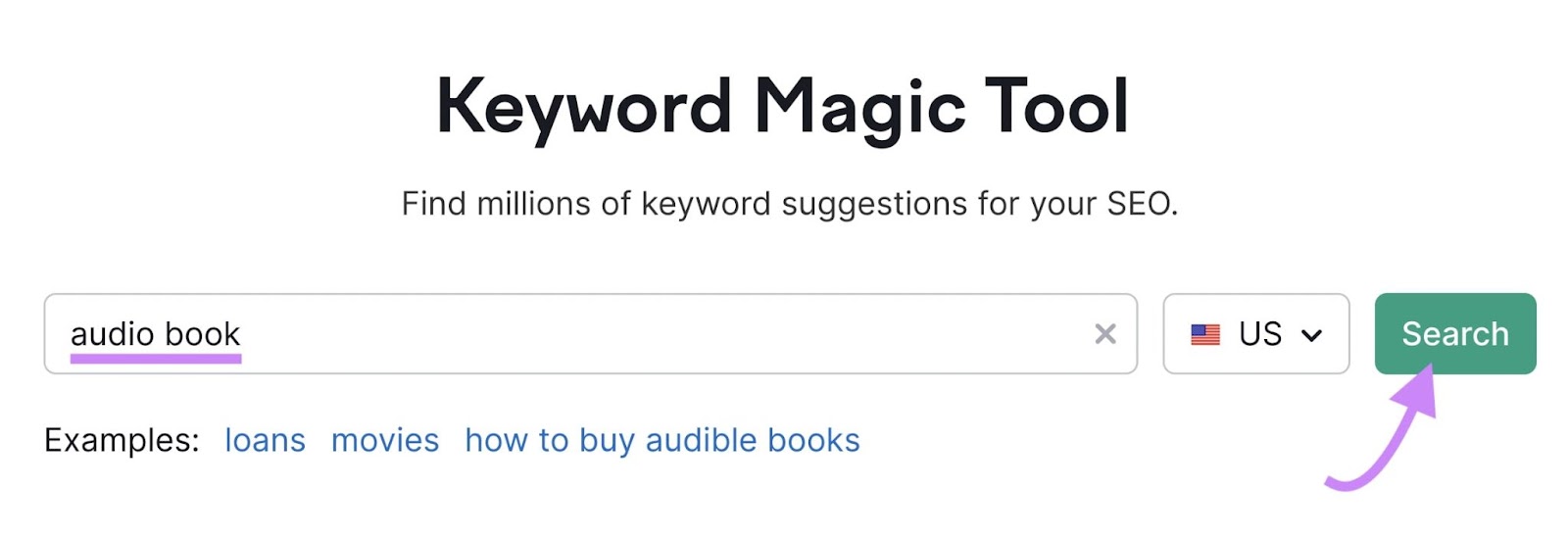
On-Page SEO: What It Is and How to Do It

On-page SEO (also called on-site SEO) is the process of optimizing webpages and their content for both search engines and users. It can help rank pages higher on Google and drive more organic traffic. 

Common tasks associated with on-page SEO include optimizing for search intent, title tags, internal links, and URLs.

Below, we’ll cover different techniques for optimizing your site for on-page concerns.

But first, let’s explore the difference between on-page SEO and off-page SEO:

On-Page SEO vs. Off-Page SEO

On-page SEO covers anything you can do on a webpage (or internally) to improve your rankings. 

Off-page SEO covers anything you can optimize outside of your site (or externally) in an attempt to boost your rankings. Backlinks are arguably the biggest off-page SEO factor. Other examples include social media and PR.

Both are important components of any good SEO strategy.

But you have more control over on-page SEO factors. So focusing on those is a good place to start.

On-page SEO vs Off-page SEO

Why Is On-Page SEO Important?

Search engines use keywords and other on-page SEO elements to check whether a page matches a user’s search intent. 

And if the page is relevant and useful, Google serves it to the user.

In other words:

Google pays attention to on-page SEO signals when ranking pages.

The Google algorithm is always changing, but Google continues to prioritize user experience. Google recommends focusing on “people-first content.” 

Meaning creating valuable content that matches user intent is more important than ever.

Now, let’s take a look at how you can update your content to reflect on-page SEO best practices.

Pro tip

To quickly get actionable on-page SEO optimization ideas for your site, run it through On Page SEO Checker.

8PBurtK4KLqV9AYVQTiYYIUUXHukkU562tZAf8cMRcEBtK9gBY4kH-B3T9nHzy3bInYLfEKH62U6_hSibTwGkrzAyS6SqYdrib4WZAKGHeYbPqyxew54dzPayZ9HBCQWOOqsO-5VSRrqwdjgiH_41Mk

9 On-Page SEO Techniques for Your Website

Here are some key on-page optimization techniques you should consider:

  1. Write unique, helpful content 
  2. Place target keywords strategically
  3. Write keyword-rich title tags
  4. Write click-worthy meta descriptions
  5. Use headings and subheadings to structure your page
  6. Optimize URLs
  7. Add internal links
  8. Add external links 
  9. Include and optimize images 

Let’s look at these in more detail.

Tip

Create a free Semrush account (no credit card needed) to follow along with the techniques in this guide. 

1. Write Unique, Helpful Content 

One of the most important on site SEO steps you should take is to create high-quality content that matches your readers’ search intent.

Start by performing keyword research to find relevant topics and target keywords.

For this example, we’ll use the Keyword Magic Tool.

Enter the topic you want to research and click “Search.” We’ll use the keyword “audio book” as our example. 

"audio book" entered into the Keyword Magic Tool search bar

You’ll get a list of keywords related to your seed keyword, sorted by search volume.

A list of keywords related to "audio books"

High search volume can be useful to target. 

But pay attention to the keyword difficulty (KD %) level, too. It’s much more difficult to rank for more competitive keywords (which have higher KD % scores).

"KD%" column highlighted in keywords list

Target less competitive long-tail keywords, too. 

They often have lower search volume but lower keyword difficulty. Which means they can be easier to rank for.

The Keyword Magic Tool automatically sorts related keywords into relevant categories.

They’re located in the left-hand sidebar. You can narrow your research by selecting one.

Here:

Keyword categories highlighted in the left-hand sidebar

Once you’ve selected your keywords, it’s time to create your content.
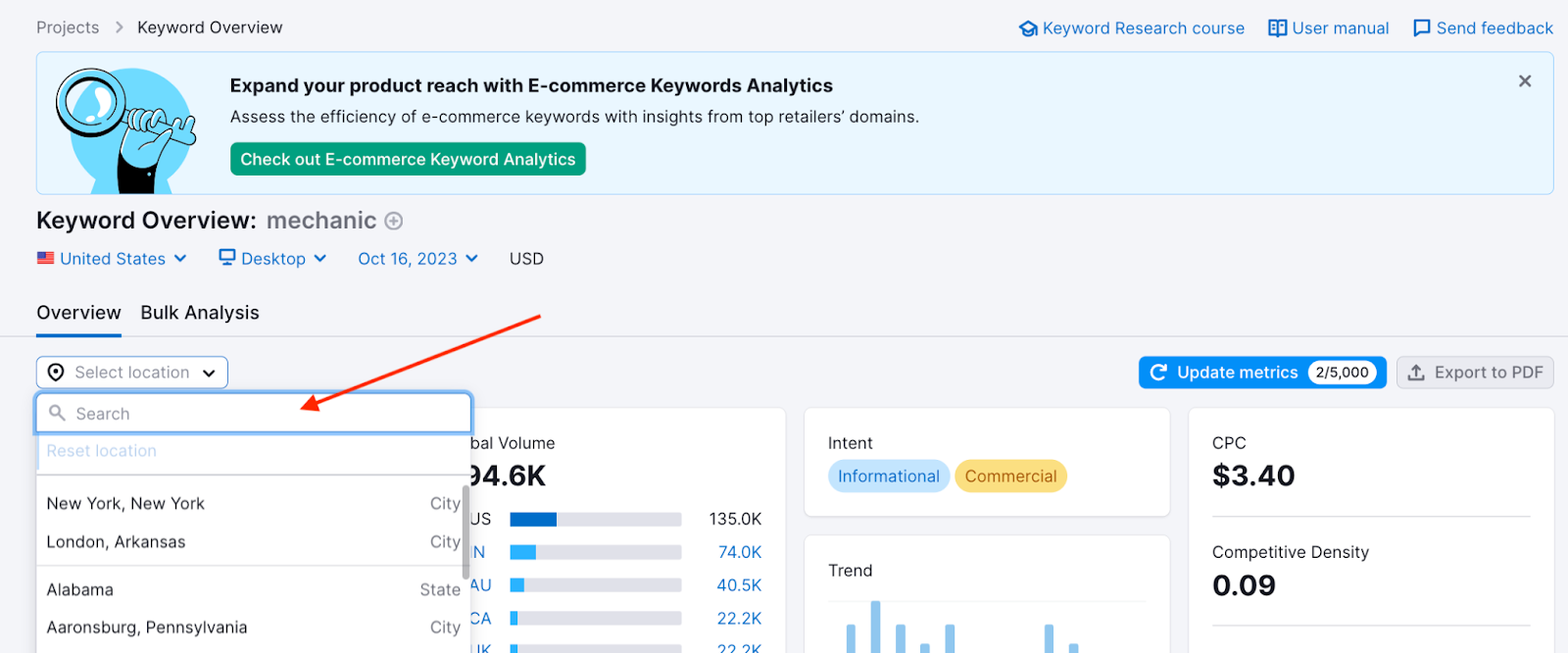
Read our guide to formatting a blog post when you’re ready to get started.

In the meantime, here are a few best practices to create optimized, high-quality content:

  • Incorporate keywords naturally into your content (and avoid keyword stuffing)
  • Make sure your content matches the search intent of your target keyword
  • Fully answer the query—your content should be useful to users
  • Write unique content that offers something competitors don’t
  • Include visual content (more on that later)

Further reading: What Is Quality Content & How to Create It

2. Place Target Keywords Strategically

So you have your target keywords. Now it’s time to strategically place them in your content. 
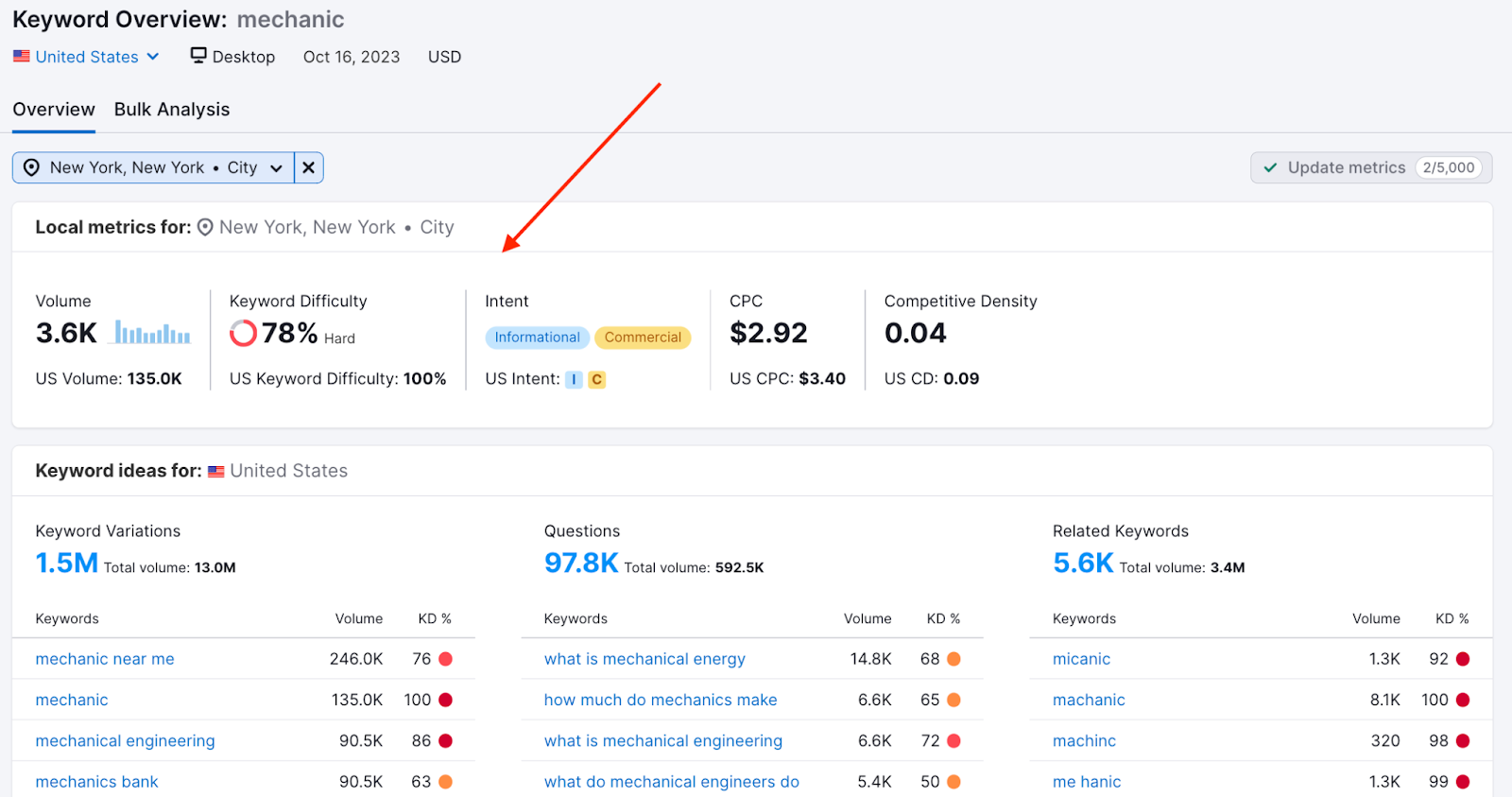
Google scans your content to see what a page is about—and readers will likely do the same.

So you should include your target keywords in these key areas:

  • H1
  • First paragraph
  • Subheaders (H2s, H3s, etc.)

This will help Google gain context about the topic of your page. And users will be able to quickly tell whether the page matches their search intent.

You can begin analyzing your content with On Page SEO Checker

Start by configuring the tool for your site.

Once you complete the setup, you’ll see a page that looks like this:

On Page SEO Checker overview dashboard

You can click on a specific page from the recommended “TOP pages to optimize” list, or review the “Optimization Ideas” tab for a complete overview.

"Optimization Ideas" tab highlighted in On Page SEO Checker

Click on the “# ideas” blue button to see recommendations.

"3 ideas" blue button highlighted under optimization ideas list

The content section will let you know whether you’ve used your target keywords in key places like the H1 and body of the of the page (and whether keyword stuffing is detected):

"Content" recommendations section in On Page SEO Checker

If the tool does detect issues, it will provide recommendations.

Like this:

"Provide a more relevant meta description," and "Provide a more relevant title" ideas

It also provides helpful information about related keywords you can add to your text to further optimize it.

"Enrich your page content" ideas section

Optimize Your Pages to Rank Better

with the On Page SEO Checker

Try for Free →

ADS illustration

3. Write Keyword-Rich Title Tags

Title tags are pieces of HTML code that indicate what the title of a page is. And display that title in search engines, social media posts, and browser tabs.

Additionally,they can influence whether a user decides to click on your page.

They can look like this on the SERP (search engine results page):

A title tag on SERP that reads "What is a title tag & how to optimize your title tags for SEO"

Here are a few tips to follow when writing your title tags:

  • Keep it brief. We recommend keeping title tags between 50 and 60 characters so Google doesn’t cut them off
  • Include your target keyword. This helps both Google and users determine what your page is about.
  • Be unique. Avoid duplicate title tags so that each individual page’s purpose is clear to Google (and users know what they’re clicking on).

On Page SEO Checker will also provide tips to help you write better title tags. Plus information about what, how, and why to do it. 

"Provide a more relevant title" recommendation section

Further reading: What Is a Title Tag & How to Optimize Title Tags for Google

4. Write Click-Worthy Meta Descriptions

A meta description tag is an HTML element on a site that provides a brief summary of the page. And search engines like Google may use it to generate a snippet (the descriptive text part of a search result). 

It usually shows up on the SERP below your page’s title. Like this:

A meta description on SERP

Meta descriptions don’t directly influence Google rankings. 

Local SEO: What Is It & How to Do It

What Is Local SEO? 

Local SEO is the process of optimizing your online presence to increase local traffic, visibility, and brand awareness. 

Common local SEO tasks include:

  • Optimizing your Google Business Profile
  • Finding local keywords
  • Creating locally relevant content

Among others.

And any business that has a physical location or serves a geographic area can benefit from local SEO. 

This is an example of a local search result on Google:

an example of a local search result on Google

Local SEO can help your business appear in Google results for searches like these.

This article explains why local SEO is important, how it works, and how to do local SEO. 

Tip: create a free Semrush account so you can follow along. 

Why Is Local SEO Important? 

The best way to get your site in front of people in your area is to use local SEO marketing.

Over 75% of consumers in the United States, France, Germany, and the United Kingdom use Google when looking for business information. 

Making it the most dominant search engine for local search in those (and many other) countries. By far. 

And Google Maps searches for “shopping near me” have grown globally by more than 100% year over year. 

Mobile searches for “store open near me” also grew by over 250% in a recent two-year period. And “where to buy” + “near me” keywords by more than 200%. 

That’s hundreds of millions of searches every day. 

How Local SEO Works 

On top of Google’s usual ranking factors, its local search algorithms use three main factors to help find the best match:

  • Relevance (how closely related a Google Business Profile result is to the words a searcher uses in their query)
  • Distance (how far Google believes a user is from a business when they search)
  • Prominence (how important Google thinks a business is to its potential customers)

Then, Google displays two types of search results for local searches.

The “local pack” results (Google Maps and Business Profiles) and organic results. 

Organic results are the “normal” blue link search results we’re all used to seeing on Google. 

local pack (or map pack) is a Google feature that shows the top local business listings and a map. 

Like this:

local pack in Google search for "food near me"

For example, when you search for “nutritionist miami,” Google displays a local pack at the very top.

Google search for “nutritionist miami”

And the “regular” organic results underneath. 

Organic results in Google for “nutritionist miami”

But Google doesn’t just display local results for queries that contain a city, state, or “near me” keyword. 

If Google believes the intent of your search is local, it’ll display local results.

Even if your search isn’t explicitly local. 

For example, if you were in Los Angeles and searched for “barber shops,” Google would still display a local pack for Los Angeles barber shops. 

Like this:

Google search in Los Angeles for “barber shops”

How to Do Local SEO 

Now it’s time to create a strategy so you can increase your local rankings and boost traffic. The following steps will help you get started. 

Tip: Remember—you can create a free Semrush account to follow along. 

Do Local Keyword Research

Keyword research for local SEO is the process of finding keywords people use when searching for local products and services. 

Ranking for these keywords drives highly targeted local traffic to your site and sends more customers your way. 

To get started, you need a short list of keywords people can use to find your local business. 

Here are a few different ways to start.

Research Your Competitors

Seeing what your competitors are doing is an easy way to start gathering ideas. 

One of the best ways to do that is to use Semrush’s Organic Research tool.

Enter a competing site and click “Search.” 

Like so:

Semrush’s Organic Research tool

Then, go to the “Positions” tab. 

“Positions” tab

Click on “Advanced filters,” and exclude branded keywords (phrases that contain your competitor’s business name). 

using “Advanced filters” in Organic Research tool

And click the “KD%” column to sort the table by keyword difficulty. 

Like so:

“KD%” column

Now you have a list of keywords you might want to target.

a list of keywords results

If your competitors are targeting these keywords, then they’re likely highly relevant to your business, too. 

Check Local Keyword Volume Metrics 

You’ll also want to get a sense of how difficult it is for your content to rank locally for keywords you choose to target. 

Use the local volume metrics feature in the Keyword Overview tool to identify valuable keywords you’ll want to target in your content. 
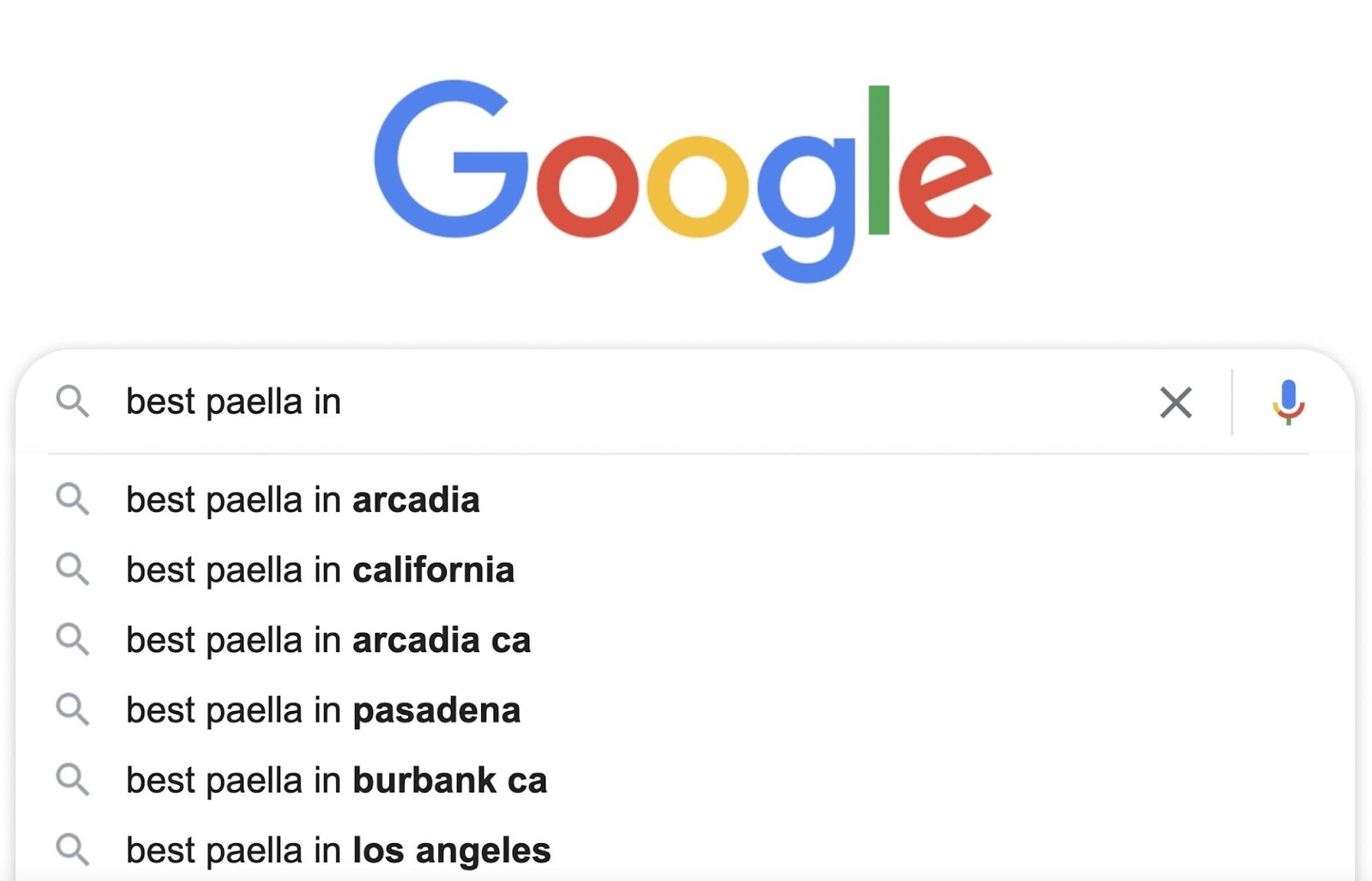
Enter your desired keyword into the search bar at the top of the page and hit “Search.”

ou4RorXHRDM4svf_0XBlmoyvDmdG6ZiaaDcITtX4LMlvNZxWivxzEs1ZHWkJoqnaHSAn60XMTFxNGfPl8AWATXZjVl0DrzHu8rHgjjyzEa_Ib8yIvtfHPQTAr4KGUZPM93lqBeixrZCuBBc6RK2d68k

Once the tool delivers the keyword results, click on the drop-down bar labeled “Select location.” 

FvajtJ8WYwtcPnoUMjx9tV10tituXYw_oVRsAVHTuUonlJHsIMD9AiBGE7jVbM_QTyJJppCbz3oPVtOQxIvTLNG69uO2P5UuDy1wDl1XT4bQbkBQMiN0ZusSgegm3htqKs7UzKJnR5ly5NA8ddVgW18

Type in your locale. This could be a state, county, province, city, or municipality. Go as narrow on the location as you wish. 

59Ct9432qkmdX80FXt_27SACwJewRwMvDm2rFJ78NkqnOtv-RNrTxx8d14vPT7-PedwosWoQ5sGx2hrc8nwnuieqUkSkPOvMynXxJ3HrVFbcpB7ne7aQdCpa7XOBzzl9Jj1vz-ixvMVbkuBOuNaNnKw

You’ll get local data, as well as the comparative national data. So you can see how easy or difficult it is to rank for your keyword in your exact location. 

Note: Some of these widgets show local data (volume, difficulty, SERP analysis, etc.), while others remain national-level (keyword variations, questions, related keywords).

tgDQGvFDEnQeiHbKXRYnnFw4Sx94snCTVvElkga2kozl7AlYChTAvYEnH_WWO1RJ_jBlprgGjZ_J7uAKKyqEy7B_9a5ZmocdWe9hLmqti_DEYz75JT8E1SJ-p6O-tTiadlQD7RG7068Crj0zJh2mVSE

If you’re a business operating at the local level, this is an essential feature to leverage as you’re building your targeted keyword list. Use the data to get an edge over competitors by optimizing your content for your specific area.

Use Google Autocomplete

Google autocomplete is a feature within Google Search that makes it faster to complete searches when you start to type. 

Its purpose is to save users time by predicting what they’re going to search for.

And it can help you discover valuable long-tail keywords for local SEO.

That’s because Google’s autocomplete predictions depend partly on your location. 

For example, if you’re in Arcadia, California, and you type “best paella in” into the search bar, you’ll see something like this:

Google Autocomplete suggestions for “best paella in” in Arcadia, California

All these locations are near Arcadia or in California. 

So, to find valuable local keywords, start typing in keywords related to your business. 

For example, if you run a cleaning services business, type in “cleaning services” to get a list of local keyword suggestions.

Local SEO: What Is It & How to Do It

What Is Local SEO? 

Local SEO is the process of optimizing your online presence to increase local traffic, visibility, and brand awareness. 

Common local SEO tasks include:

  • Optimizing your Google Business Profile
  • Finding local keywords
  • Creating locally relevant content

Among others.

And any business that has a physical location or serves a geographic area can benefit from local SEO. 

This is an example of a local search result on Google:

an example of a local search result on Google

Local SEO can help your business appear in Google results for searches like these.

This article explains why local SEO is important, how it works, and how to do local SEO. 

Tip: create a free Semrush account so you can follow along. 

Why Is Local SEO Important? 

The best way to get your site in front of people in your area is to use local SEO marketing.

Over 75% of consumers in the United States, France, Germany, and the United Kingdom use Google when looking for business information. 

Making it the most dominant search engine for local search in those (and many other) countries. By far. 

And Google Maps searches for “shopping near me” have grown globally by more than 100% year over year. 

Mobile searches for “store open near me” also grew by over 250% in a recent two-year period. And “where to buy” + “near me” keywords by more than 200%. 

That’s hundreds of millions of searches every day. 

How Local SEO Works 

On top of Google’s usual ranking factors, its local search algorithms use three main factors to help find the best match:

  • Relevance (how closely related a Google Business Profile result is to the words a searcher uses in their query)
  • Distance (how far Google believes a user is from a business when they search)
  • Prominence (how important Google thinks a business is to its potential customers)

Then, Google displays two types of search results for local searches.

The “local pack” results (Google Maps and Business Profiles) and organic results. 

Organic results are the “normal” blue link search results we’re all used to seeing on Google. 

local pack (or map pack) is a Google feature that shows the top local business listings and a map. 

Like this:

local pack in Google search for "food near me"

For example, when you search for “nutritionist miami,” Google displays a local pack at the very top.

Google search for “nutritionist miami”

And the “regular” organic results underneath. 

Organic results in Google for “nutritionist miami”

But Google doesn’t just display local results for queries that contain a city, state, or “near me” keyword. 

If Google believes the intent of your search is local, it’ll display local results.

Even if your search isn’t explicitly local. 

For example, if you were in Los Angeles and searched for “barber shops,” Google would still display a local pack for Los Angeles barber shops. 

Like this:

Google search in Los Angeles for “barber shops”

How to Do Local SEO 

Now it’s time to create a strategy so you can increase your local rankings and boost traffic. The following steps will help you get started. 

Tip: Remember—you can create a free Semrush account to follow along. 

Do Local Keyword Research

Keyword research for local SEO is the process of finding keywords people use when searching for local products and services. 

Ranking for these keywords drives highly targeted local traffic to your site and sends more customers your way. 

To get started, you need a short list of keywords people can use to find your local business. 

Here are a few different ways to start.

Research Your Competitors

Seeing what your competitors are doing is an easy way to start gathering ideas. 

One of the best ways to do that is to use Semrush’s Organic Research tool.

Enter a competing site and click “Search.” 

Like so:

Semrush’s Organic Research tool

Then, go to the “Positions” tab. 

“Positions” tab

Click on “Advanced filters,” and exclude branded keywords (phrases that contain your competitor’s business name). 

using “Advanced filters” in Organic Research tool

And click the “KD%” column to sort the table by keyword difficulty. 

Like so:

“KD%” column

Now you have a list of keywords you might want to target.

a list of keywords results

If your competitors are targeting these keywords, then they’re likely highly relevant to your business, too. 

Check Local Keyword Volume Metrics 

You’ll also want to get a sense of how difficult it is for your content to rank locally for keywords you choose to target. 

Use the local volume metrics feature in the Keyword Overview tool to identify valuable keywords you’ll want to target in your content. 

Enter your desired keyword into the search bar at the top of the page and hit “Search.”

ou4RorXHRDM4svf_0XBlmoyvDmdG6ZiaaDcITtX4LMlvNZxWivxzEs1ZHWkJoqnaHSAn60XMTFxNGfPl8AWATXZjVl0DrzHu8rHgjjyzEa_Ib8yIvtfHPQTAr4KGUZPM93lqBeixrZCuBBc6RK2d68k

Once the tool delivers the keyword results, click on the drop-down bar labeled “Select location.” 

FvajtJ8WYwtcPnoUMjx9tV10tituXYw_oVRsAVHTuUonlJHsIMD9AiBGE7jVbM_QTyJJppCbz3oPVtOQxIvTLNG69uO2P5UuDy1wDl1XT4bQbkBQMiN0ZusSgegm3htqKs7UzKJnR5ly5NA8ddVgW18

Type in your locale. This could be a state, county, province, city, or municipality. Go as narrow on the location as you wish. 

59Ct9432qkmdX80FXt_27SACwJewRwMvDm2rFJ78NkqnOtv-RNrTxx8d14vPT7-PedwosWoQ5sGx2hrc8nwnuieqUkSkPOvMynXxJ3HrVFbcpB7ne7aQdCpa7XOBzzl9Jj1vz-ixvMVbkuBOuNaNnKw

You’ll get local data, as well as the comparative national data. So you can see how easy or difficult it is to rank for your keyword in your exact location. 

Note: Some of these widgets show local data (volume, difficulty, SERP analysis, etc.), while others remain national-level (keyword variations, questions, related keywords).

tgDQGvFDEnQeiHbKXRYnnFw4Sx94snCTVvElkga2kozl7AlYChTAvYEnH_WWO1RJ_jBlprgGjZ_J7uAKKyqEy7B_9a5ZmocdWe9hLmqti_DEYz75JT8E1SJ-p6O-tTiadlQD7RG7068Crj0zJh2mVSE

If you’re a business operating at the local level, this is an essential feature to leverage as you’re building your targeted keyword list. Use the data to get an edge over competitors by optimizing your content for your specific area.

Use Google Autocomplete

Google autocomplete is a feature within Google Search that makes it faster to complete searches when you start to type. 

Its purpose is to save users time by predicting what they’re going to search for.

And it can help you discover valuable long-tail keywords for local SEO.

That’s because Google’s autocomplete predictions depend partly on your location. 

For example, if you’re in Arcadia, California, and you type “best paella in” into the search bar, you’ll see something like this:

Google Autocomplete suggestions for “best paella in” in Arcadia, California

All these locations are near Arcadia or in California. 

So, to find valuable local keywords, start typing in keywords related to your business. 

For example, if you run a cleaning services business, type in “cleaning services” to get a list of local keyword suggestions.

On-Page SEO: What It Is and How to Do It

On-page SEO (also called on-site SEO) is the process of optimizing webpages and their content for both search engines and users. It can help rank pages higher on Google and drive more organic traffic. 

Common tasks associated with on-page SEO include optimizing for search intent, title tags, internal links, and URLs.

Below, we’ll cover different techniques for optimizing your site for on-page concerns.

But first, let’s explore the difference between on-page SEO and off-page SEO:

On-Page SEO vs. Off-Page SEO

On-page SEO covers anything you can do on a webpage (or internally) to improve your rankings. 

Off-page SEO covers anything you can optimize outside of your site (or externally) in an attempt to boost your rankings. Backlinks are arguably the biggest off-page SEO factor. Other examples include social media and PR.

Both are important components of any good SEO strategy.

But you have more control over on-page SEO factors. So focusing on those is a good place to start.

On-page SEO vs Off-page SEO

Why Is On-Page SEO Important?

Search engines use keywords and other on-page SEO elements to check whether a page matches a user’s search intent. 

And if the page is relevant and useful, Google serves it to the user.

In other words:

Google pays attention to on-page SEO signals when ranking pages.

The Google algorithm is always changing, but Google continues to prioritize user experience. Google recommends focusing on “people-first content.” 

Meaning creating valuable content that matches user intent is more important than ever.

Now, let’s take a look at how you can update your content to reflect on-page SEO best practices.

Pro tip

To quickly get actionable on-page SEO optimization ideas for your site, run it through On Page SEO Checker.

8PBurtK4KLqV9AYVQTiYYIUUXHukkU562tZAf8cMRcEBtK9gBY4kH-B3T9nHzy3bInYLfEKH62U6_hSibTwGkrzAyS6SqYdrib4WZAKGHeYbPqyxew54dzPayZ9HBCQWOOqsO-5VSRrqwdjgiH_41Mk

9 On-Page SEO Techniques for Your Website

Here are some key on-page optimization techniques you should consider:

  1. Write unique, helpful content 
  2. Place target keywords strategically
  3. Write keyword-rich title tags
  4. Write click-worthy meta descriptions
  5. Use headings and subheadings to structure your page
  6. Optimize URLs
  7. Add internal links
  8. Add external links 
  9. Include and optimize images 

Let’s look at these in more detail.

Tip

Create a free Semrush account (no credit card needed) to follow along with the techniques in this guide. 

1. Write Unique, Helpful Content 

One of the most important on site SEO steps you should take is to create high-quality content that matches your readers’ search intent.

Start by performing keyword research to find relevant topics and target keywords.

For this example, we’ll use the Keyword Magic Tool.

Enter the topic you want to research and click “Search.” We’ll use the keyword “audio book” as our example. 

"audio book" entered into the Keyword Magic Tool search bar

You’ll get a list of keywords related to your seed keyword, sorted by search volume.

A list of keywords related to "audio books"

High search volume can be useful to target. 

But pay attention to the keyword difficulty (KD %) level, too. It’s much more difficult to rank for more competitive keywords (which have higher KD % scores).

"KD%" column highlighted in keywords list

Target less competitive long-tail keywords, too. 

They often have lower search volume but lower keyword difficulty. Which means they can be easier to rank for.

The Keyword Magic Tool automatically sorts related keywords into relevant categories.

They’re located in the left-hand sidebar. You can narrow your research by selecting one.

Here:

Keyword categories highlighted in the left-hand sidebar

Once you’ve selected your keywords, it’s time to create your content.

Read our guide to formatting a blog post when you’re ready to get started.

In the meantime, here are a few best practices to create optimized, high-quality content:

  • Incorporate keywords naturally into your content (and avoid keyword stuffing)
  • Make sure your content matches the search intent of your target keyword
  • Fully answer the query—your content should be useful to users
  • Write unique content that offers something competitors don’t
  • Include visual content (more on that later)

Further reading: What Is Quality Content & How to Create It

2. Place Target Keywords Strategically

So you have your target keywords. Now it’s time to strategically place them in your content. 

Google scans your content to see what a page is about—and readers will likely do the same.

So you should include your target keywords in these key areas:

  • H1
  • First paragraph
  • Subheaders (H2s, H3s, etc.)

This will help Google gain context about the topic of your page. And users will be able to quickly tell whether the page matches their search intent.

You can begin analyzing your content with On Page SEO Checker

Start by configuring the tool for your site.

Once you complete the setup, you’ll see a page that looks like this:

On Page SEO Checker overview dashboard

You can click on a specific page from the recommended “TOP pages to optimize” list, or review the “Optimization Ideas” tab for a complete overview.

"Optimization Ideas" tab highlighted in On Page SEO Checker

Click on the “# ideas” blue button to see recommendations.

"3 ideas" blue button highlighted under optimization ideas list

The content section will let you know whether you’ve used your target keywords in key places like the H1 and body of the of the page (and whether keyword stuffing is detected):

"Content" recommendations section in On Page SEO Checker

If the tool does detect issues, it will provide recommendations.

Like this:

"Provide a more relevant meta description," and "Provide a more relevant title" ideas

It also provides helpful information about related keywords you can add to your text to further optimize it.

"Enrich your page content" ideas section

Optimize Your Pages to Rank Better

with the On Page SEO Checker

Try for Free →

ADS illustration

3. Write Keyword-Rich Title Tags

Title tags are pieces of HTML code that indicate what the title of a page is. And display that title in search engines, social media posts, and browser tabs.

Additionally,they can influence whether a user decides to click on your page.

They can look like this on the SERP (search engine results page):

A title tag on SERP that reads "What is a title tag & how to optimize your title tags for SEO"

Here are a few tips to follow when writing your title tags:

  • Keep it brief. We recommend keeping title tags between 50 and 60 characters so Google doesn’t cut them off
  • Include your target keyword. This helps both Google and users determine what your page is about.
  • Be unique. Avoid duplicate title tags so that each individual page’s purpose is clear to Google (and users know what they’re clicking on).

On Page SEO Checker will also provide tips to help you write better title tags. Plus information about what, how, and why to do it. 

"Provide a more relevant title" recommendation section

Further reading: What Is a Title Tag & How to Optimize Title Tags for Google

4. Write Click-Worthy Meta Descriptions

A meta description tag is an HTML element on a site that provides a brief summary of the page. And search engines like Google may use it to generate a snippet (the descriptive text part of a search result). 

It usually shows up on the SERP below your page’s title. Like this:

A meta description on SERP

Meta descriptions don’t directly influence Google rankings. 

Local SEO: What Is It & How to Do It

What Is Local SEO? 

Local SEO is the process of optimizing your online presence to increase local traffic, visibility, and brand awareness. 

Common local SEO tasks include:

  • Optimizing your Google Business Profile
  • Finding local keywords
  • Creating locally relevant content

Among others.

And any business that has a physical location or serves a geographic area can benefit from local SEO. 

This is an example of a local search result on Google:

an example of a local search result on Google

Local SEO can help your business appear in Google results for searches like these.

This article explains why local SEO is important, how it works, and how to do local SEO. 

Tip: create a free Semrush account so you can follow along. 

Why Is Local SEO Important? 

The best way to get your site in front of people in your area is to use local SEO marketing.

Over 75% of consumers in the United States, France, Germany, and the United Kingdom use Google when looking for business information. 

Making it the most dominant search engine for local search in those (and many other) countries. By far. 

And Google Maps searches for “shopping near me” have grown globally by more than 100% year over year. 

Mobile searches for “store open near me” also grew by over 250% in a recent two-year period. And “where to buy” + “near me” keywords by more than 200%. 

That’s hundreds of millions of searches every day. 

How Local SEO Works 

On top of Google’s usual ranking factors, its local search algorithms use three main factors to help find the best match:

  • Relevance (how closely related a Google Business Profile result is to the words a searcher uses in their query)
  • Distance (how far Google believes a user is from a business when they search)
  • Prominence (how important Google thinks a business is to its potential customers)

Then, Google displays two types of search results for local searches.

The “local pack” results (Google Maps and Business Profiles) and organic results. 

Organic results are the “normal” blue link search results we’re all used to seeing on Google. 

local pack (or map pack) is a Google feature that shows the top local business listings and a map. 

Like this:

local pack in Google search for "food near me"

For example, when you search for “nutritionist miami,” Google displays a local pack at the very top.

Google search for “nutritionist miami”

And the “regular” organic results underneath. 

Organic results in Google for “nutritionist miami”

But Google doesn’t just display local results for queries that contain a city, state, or “near me” keyword. 

If Google believes the intent of your search is local, it’ll display local results.

Even if your search isn’t explicitly local. 

For example, if you were in Los Angeles and searched for “barber shops,” Google would still display a local pack for Los Angeles barber shops. 

Like this:

Google search in Los Angeles for “barber shops”

How to Do Local SEO 

Now it’s time to create a strategy so you can increase your local rankings and boost traffic. The following steps will help you get started. 

Tip: Remember—you can create a free Semrush account to follow along. 

Do Local Keyword Research

Keyword research for local SEO is the process of finding keywords people use when searching for local products and services. 

Ranking for these keywords drives highly targeted local traffic to your site and sends more customers your way. 

To get started, you need a short list of keywords people can use to find your local business. 

Here are a few different ways to start.

Research Your Competitors

Seeing what your competitors are doing is an easy way to start gathering ideas. 

One of the best ways to do that is to use Semrush’s Organic Research tool.

Enter a competing site and click “Search.” 

Like so:

Semrush’s Organic Research tool

Then, go to the “Positions” tab. 

“Positions” tab

Click on “Advanced filters,” and exclude branded keywords (phrases that contain your competitor’s business name). 

using “Advanced filters” in Organic Research tool

And click the “KD%” column to sort the table by keyword difficulty. 

Like so:

“KD%” column

Now you have a list of keywords you might want to target.

a list of keywords results

If your competitors are targeting these keywords, then they’re likely highly relevant to your business, too. 

Check Local Keyword Volume Metrics 

You’ll also want to get a sense of how difficult it is for your content to rank locally for keywords you choose to target. 

Use the local volume metrics feature in the Keyword Overview tool to identify valuable keywords you’ll want to target in your content. 

Enter your desired keyword into the search bar at the top of the page and hit “Search.”

ou4RorXHRDM4svf_0XBlmoyvDmdG6ZiaaDcITtX4LMlvNZxWivxzEs1ZHWkJoqnaHSAn60XMTFxNGfPl8AWATXZjVl0DrzHu8rHgjjyzEa_Ib8yIvtfHPQTAr4KGUZPM93lqBeixrZCuBBc6RK2d68k

Once the tool delivers the keyword results, click on the drop-down bar labeled “Select location.” 

FvajtJ8WYwtcPnoUMjx9tV10tituXYw_oVRsAVHTuUonlJHsIMD9AiBGE7jVbM_QTyJJppCbz3oPVtOQxIvTLNG69uO2P5UuDy1wDl1XT4bQbkBQMiN0ZusSgegm3htqKs7UzKJnR5ly5NA8ddVgW18

Type in your locale. This could be a state, county, province, city, or municipality. Go as narrow on the location as you wish. 

59Ct9432qkmdX80FXt_27SACwJewRwMvDm2rFJ78NkqnOtv-RNrTxx8d14vPT7-PedwosWoQ5sGx2hrc8nwnuieqUkSkPOvMynXxJ3HrVFbcpB7ne7aQdCpa7XOBzzl9Jj1vz-ixvMVbkuBOuNaNnKw

You’ll get local data, as well as the comparative national data. So you can see how easy or difficult it is to rank for your keyword in your exact location. 

Note: Some of these widgets show local data (volume, difficulty, SERP analysis, etc.), while others remain national-level (keyword variations, questions, related keywords).

tgDQGvFDEnQeiHbKXRYnnFw4Sx94snCTVvElkga2kozl7AlYChTAvYEnH_WWO1RJ_jBlprgGjZ_J7uAKKyqEy7B_9a5ZmocdWe9hLmqti_DEYz75JT8E1SJ-p6O-tTiadlQD7RG7068Crj0zJh2mVSE

If you’re a business operating at the local level, this is an essential feature to leverage as you’re building your targeted keyword list. Use the data to get an edge over competitors by optimizing your content for your specific area.

Use Google Autocomplete

Google autocomplete is a feature within Google Search that makes it faster to complete searches when you start to type. 

Its purpose is to save users time by predicting what they’re going to search for.

And it can help you discover valuable long-tail keywords for local SEO.

That’s because Google’s autocomplete predictions depend partly on your location. 

For example, if you’re in Arcadia, California, and you type “best paella in” into the search bar, you’ll see something like this:

Google Autocomplete suggestions for “best paella in” in Arcadia, California

All these locations are near Arcadia or in California. 

So, to find valuable local keywords, start typing in keywords related to your business. 

For example, if you run a cleaning services business, type in “cleaning services” to get a list of local keyword suggestions.