Local SEO: What Is It & How to Do It

What Is Local SEO? 

Local SEO is the process of optimizing your online presence to increase local traffic, visibility, and brand awareness. 

Common local SEO tasks include:

  • Optimizing your Google Business Profile
  • Finding local keywords
  • Creating locally relevant content

Among others.

And any business that has a physical location or serves a geographic area can benefit from local SEO. 

This is an example of a local search result on Google:
an example of a local search result on Google

Local SEO can help your business appear in Google results for searches like these.

This article explains why local SEO is important, how it works, and how to do local SEO. 

Tip: create a free Semrush account so you can follow along. 

Why Is Local SEO Important? 

The best way to get your site in front of people in your area is to use local SEO marketing.

Over 75% of consumers in the United States, France, Germany, and the United Kingdom use Google when looking for business information. 

Making it the most dominant search engine for local search in those (and many other) countries. By far. 

And Google Maps searches for “shopping near me” have grown globally by more than 100% year over year. 

Mobile searches for “store open near me” also grew by over 250% in a recent two-year period. And “where to buy” + “near me” keywords by more than 200%. 

That’s hundreds of millions of searches every day. 

How Local SEO Works 

On top of Google’s usual ranking factors, its local search algorithms use three main factors to help find the best match:

  • Relevance (how closely related a Google Business Profile result is to the words a searcher uses in their query)
  • Distance (how far Google believes a user is from a business when they search)
  • Prominence (how important Google thinks a business is to its potential customers)

Then, Google displays two types of search results for local searches.

The “local pack” results (Google Maps and Business Profiles) and organic results. 

Organic results are the “normal” blue link search results we’re all used to seeing on Google. 

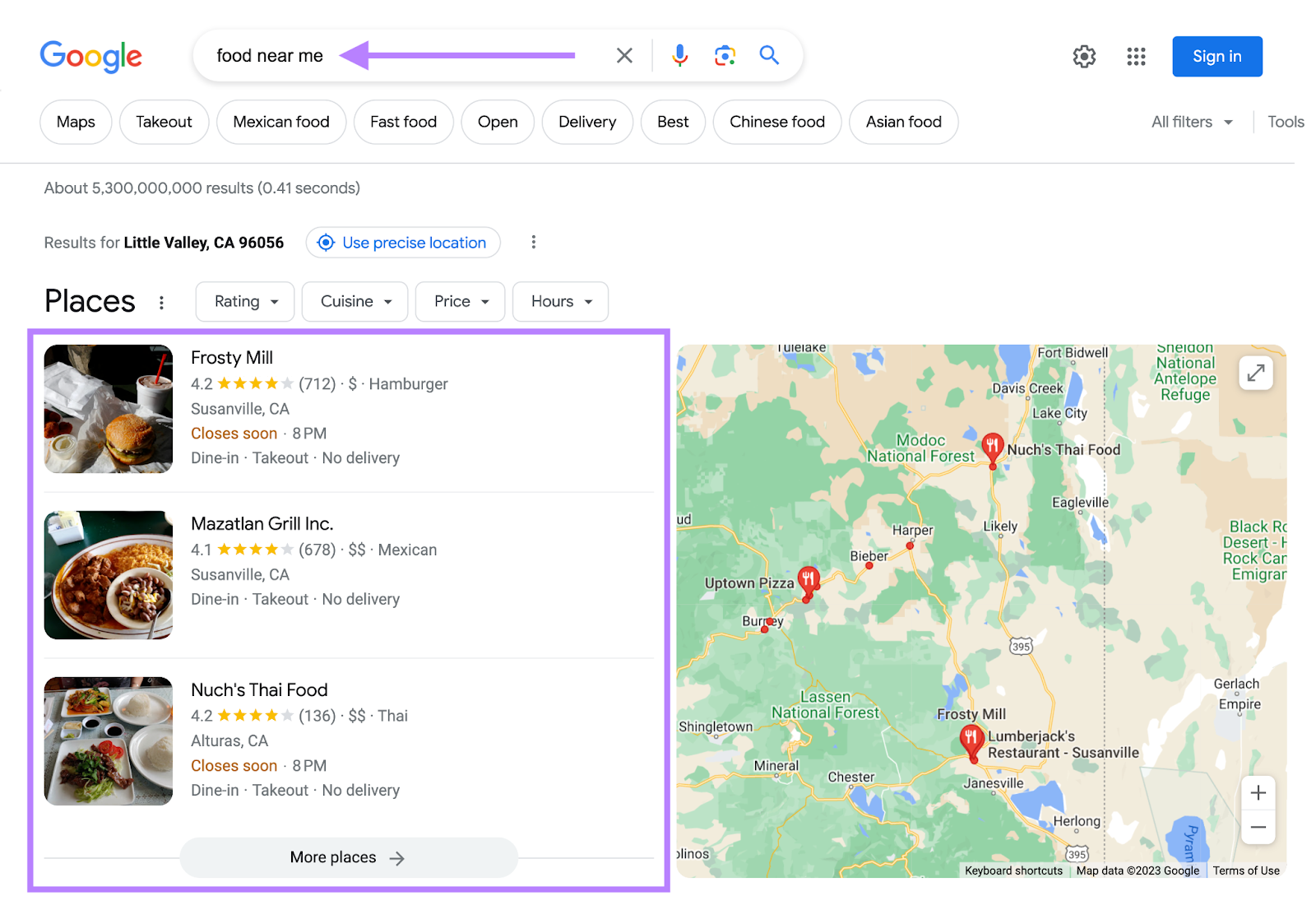
local pack (or map pack) is a Google feature that shows the top local business listings and a map. 

Like this:
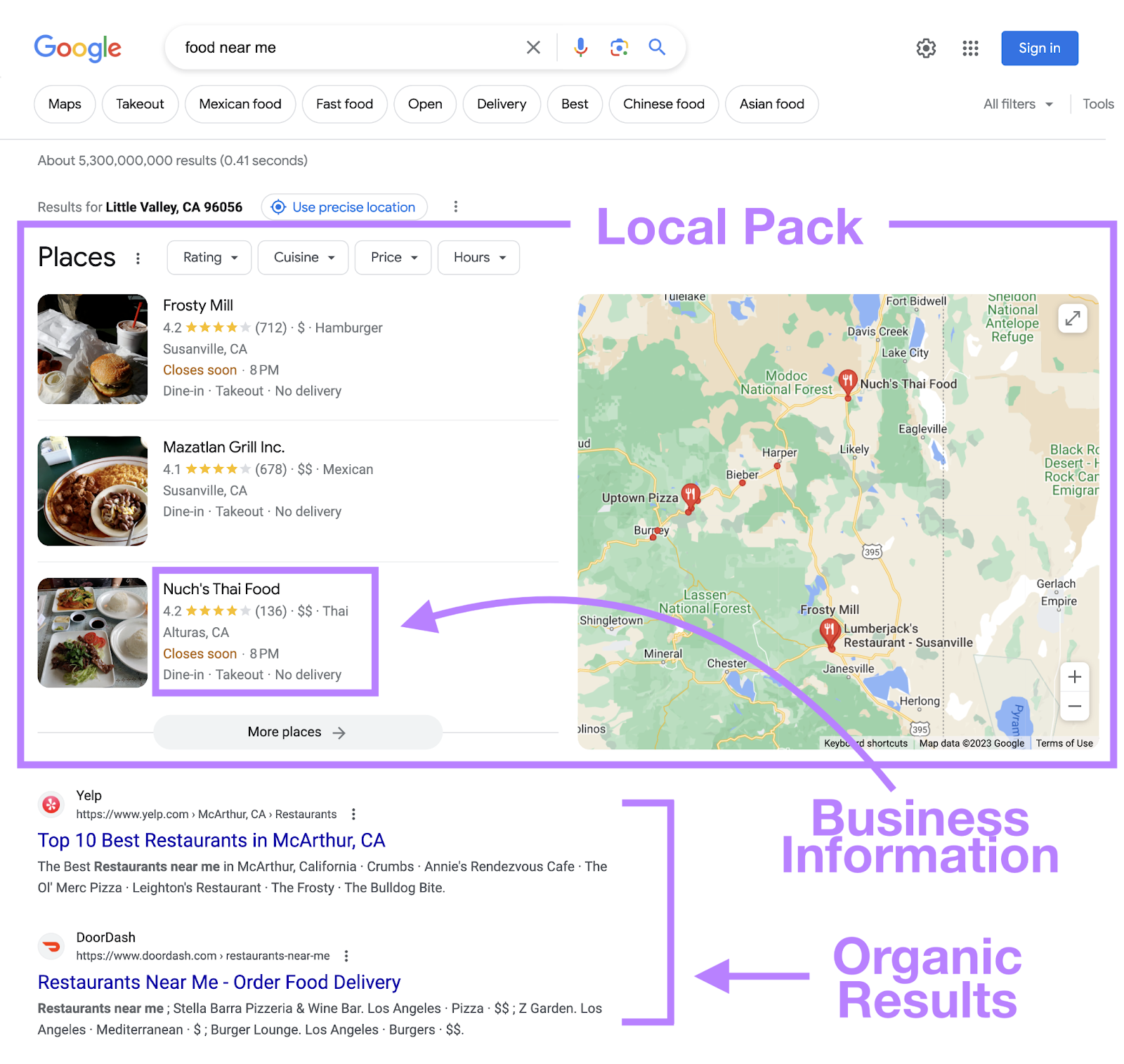
local pack in Google search for "food near me"

For example, when you search for “nutritionist miami,” Google displays a local pack at the very top.
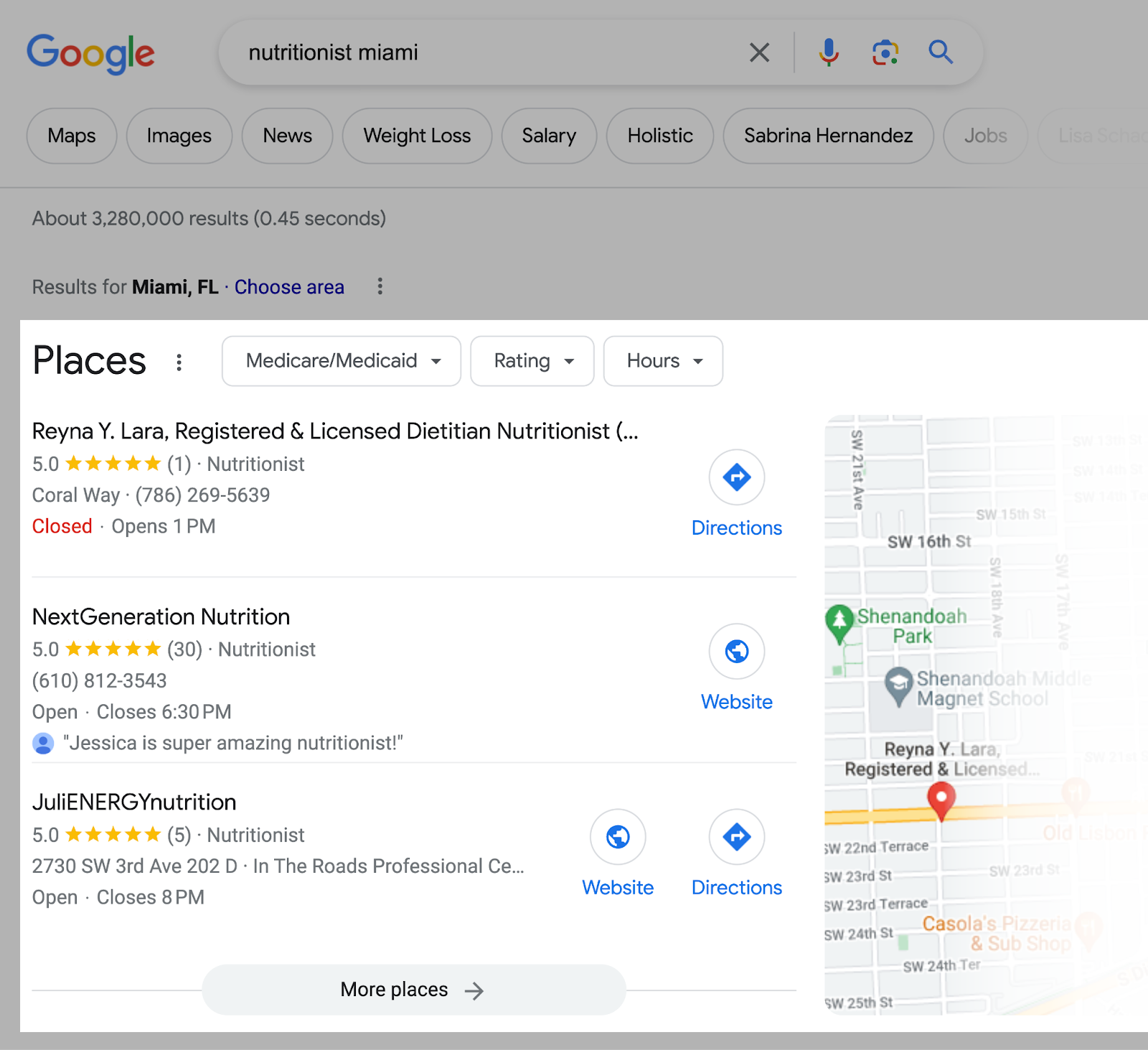
Google search for “nutritionist miami”

And the “regular” organic results underneath. 
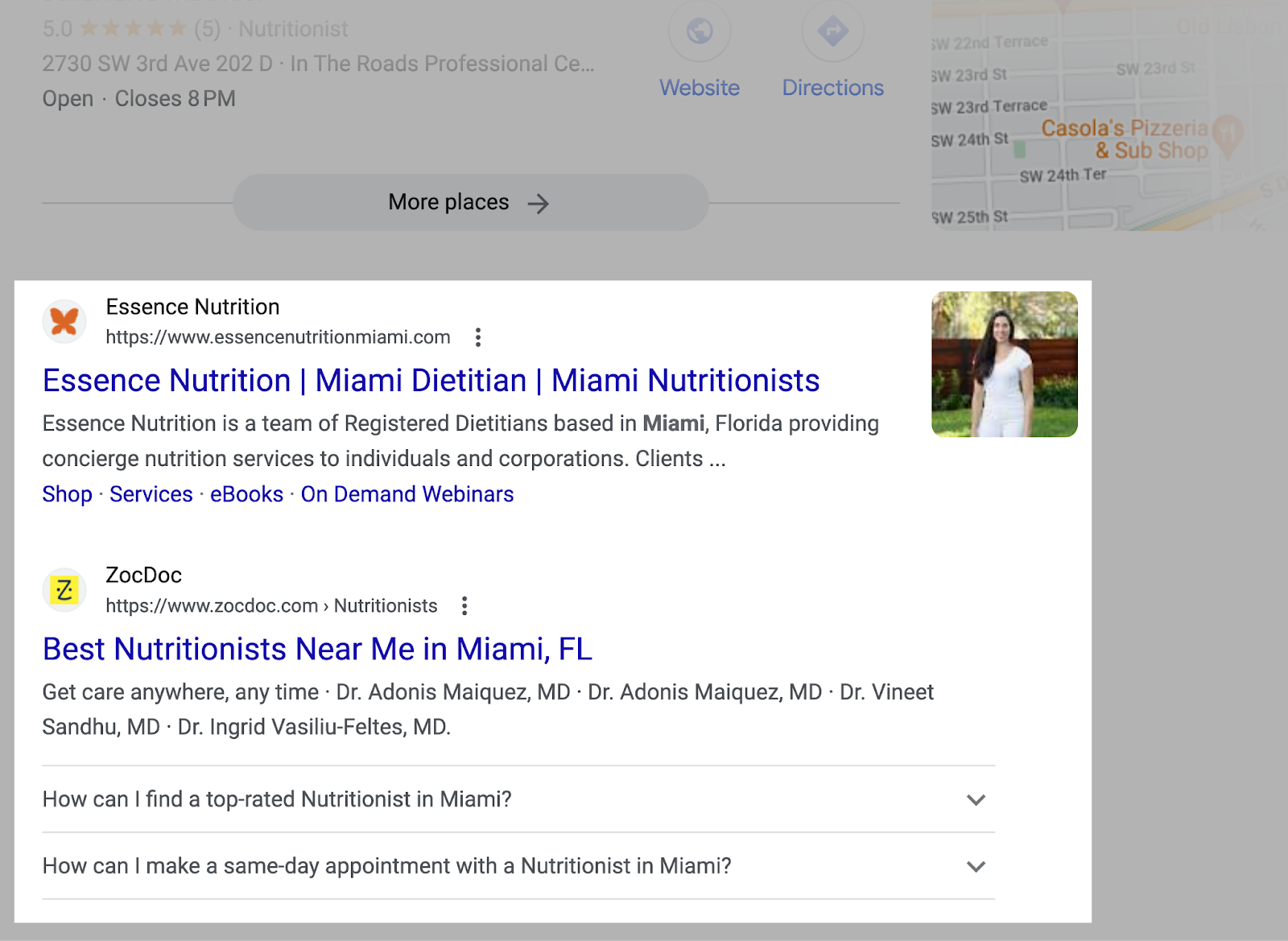
Organic results in Google for “nutritionist miami”

But Google doesn’t just display local results for queries that contain a city, state, or “near me” keyword. 

If Google believes the intent of your search is local, it’ll display local results.

Even if your search isn’t explicitly local. 

For example, if you were in Los Angeles and searched for “barber shops,” Google would still display a local pack for Los Angeles barber shops. 

Like this:
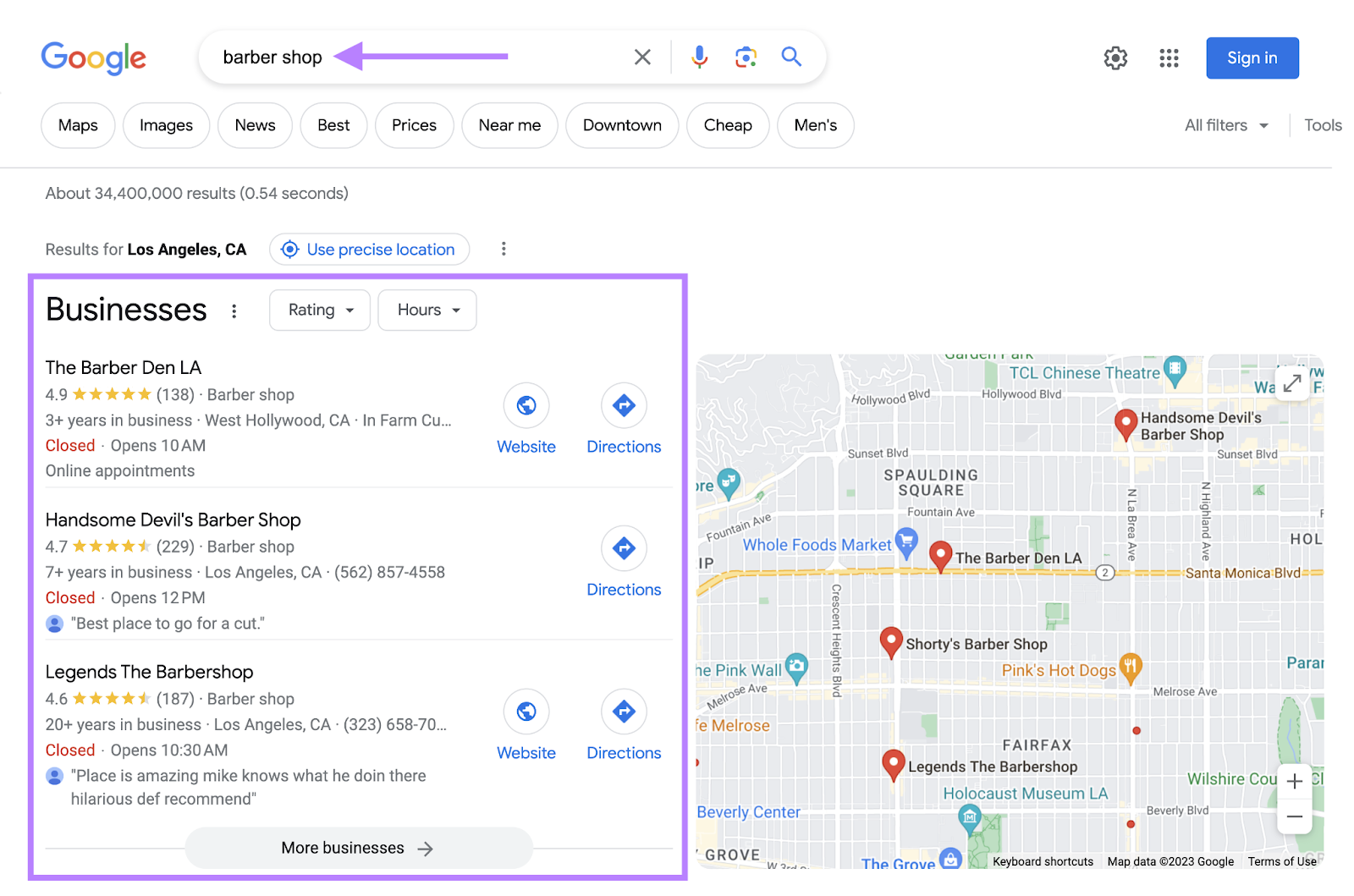
Google search in Los Angeles for “barber shops”

How to Do Local SEO 

Now it’s time to create a strategy so you can increase your local rankings and boost traffic. The following steps will help you get started. 

Tip: Remember—you can create a free Semrush account to follow along. 

Do Local Keyword Research

Keyword research for local SEO is the process of finding keywords people use when searching for local products and services. 

Ranking for these keywords drives highly targeted local traffic to your site and sends more customers your way. 

To get started, you need a short list of keywords people can use to find your local business. 

Here are a few different ways to start.

Research Your Competitors

Seeing what your competitors are doing is an easy way to start gathering ideas. 

One of the best ways to do that is to use Semrush’s Organic Research tool.

Enter a competing site and click “Search.” 

Like so:
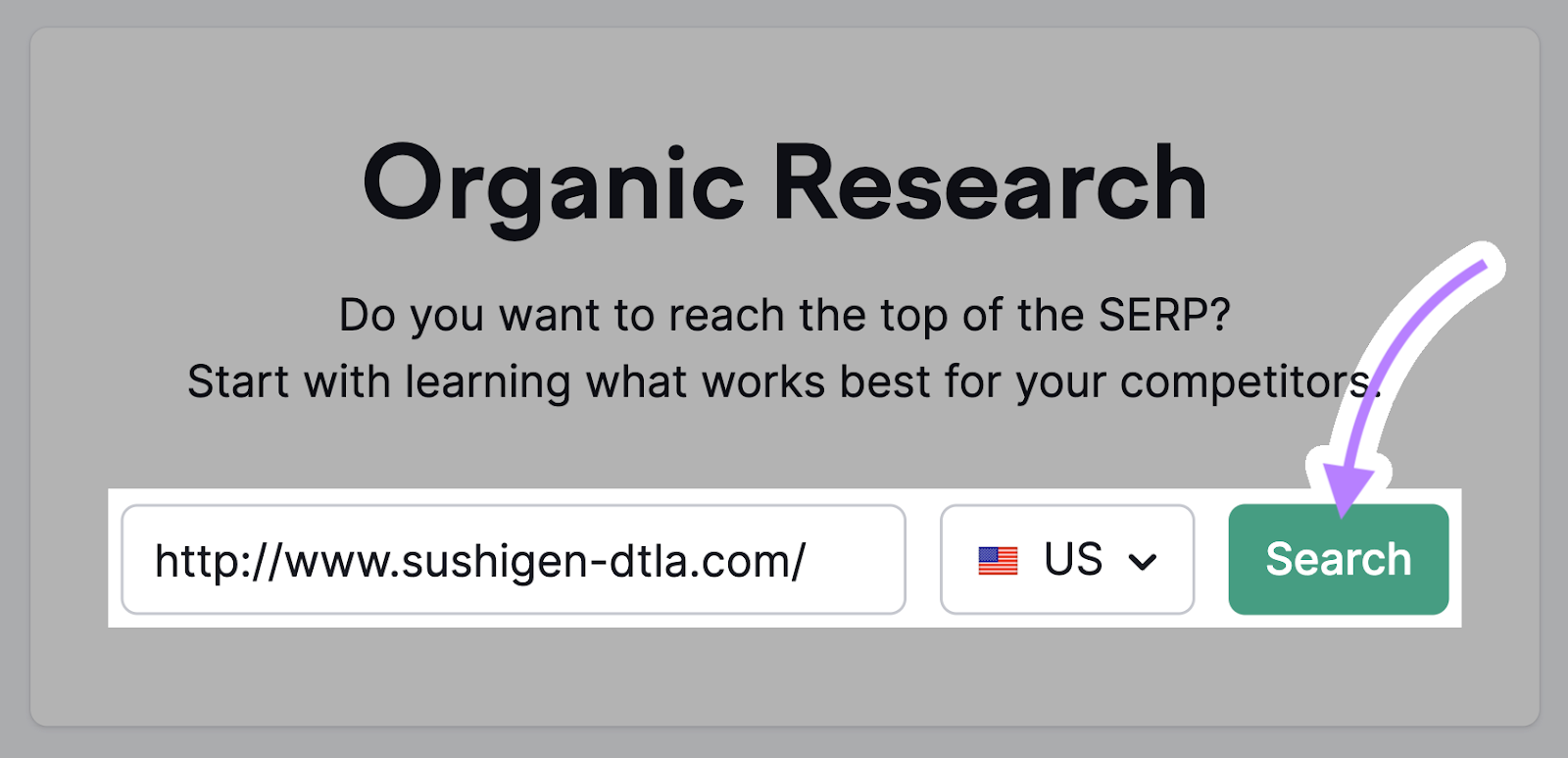
Semrush’s Organic Research tool

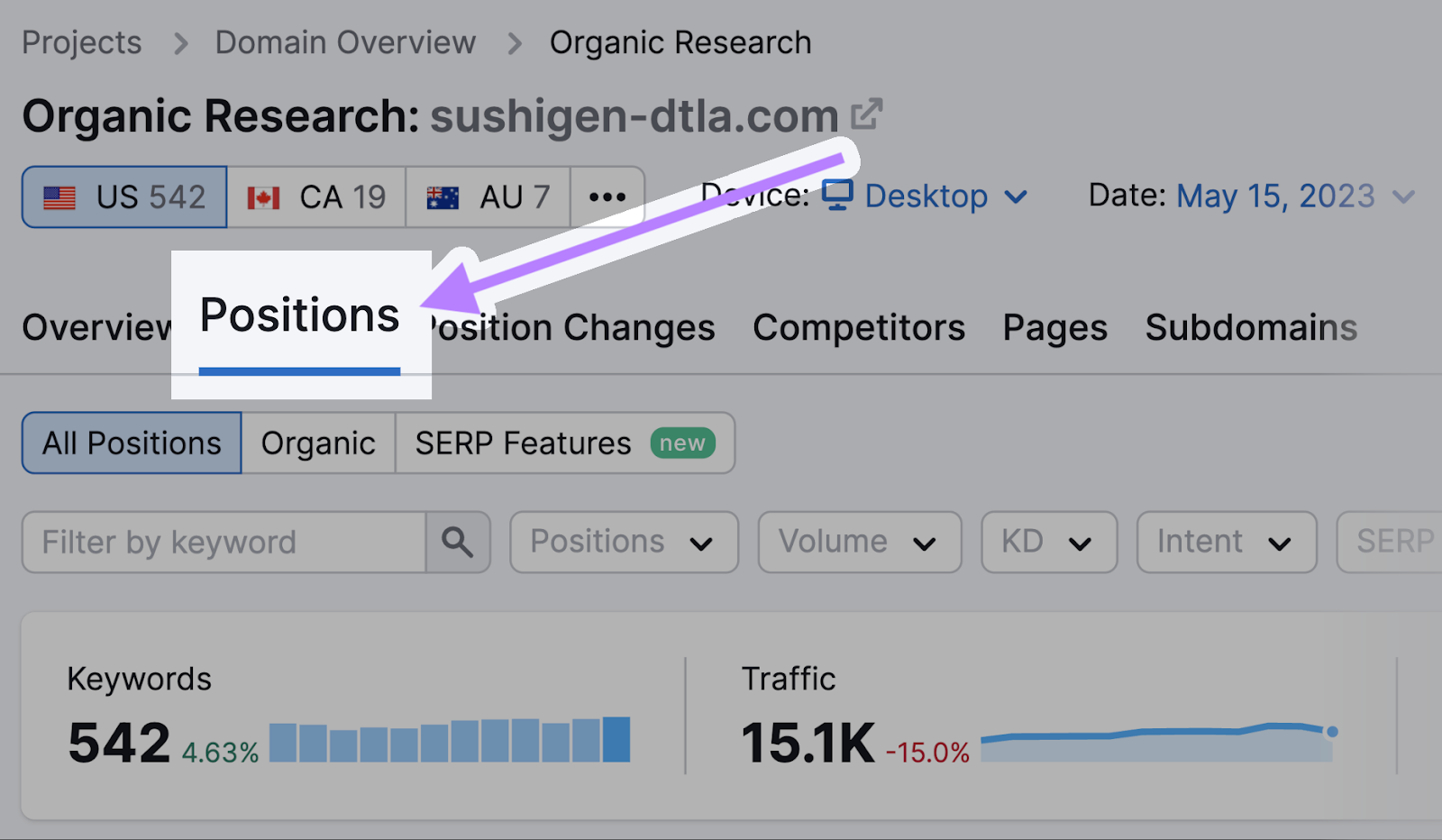
Then, go to the “Positions” tab. 

“Positions” tab

Click on “Advanced filters,” and exclude branded keywords (phrases that contain your competitor’s business name). 
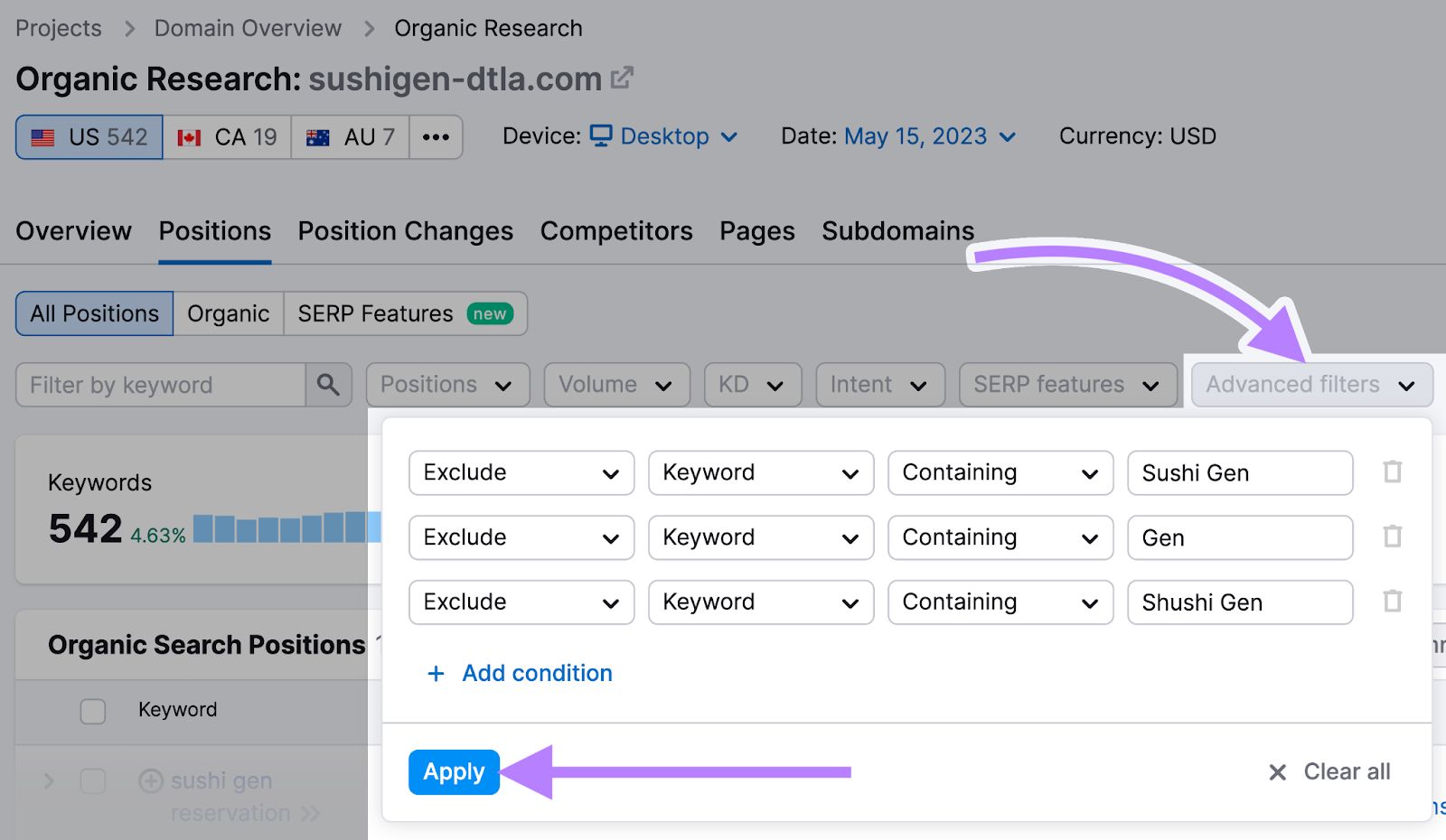
using “Advanced filters” in Organic Research tool

And click the “KD%” column to sort the table by keyword difficulty. 

Like so:
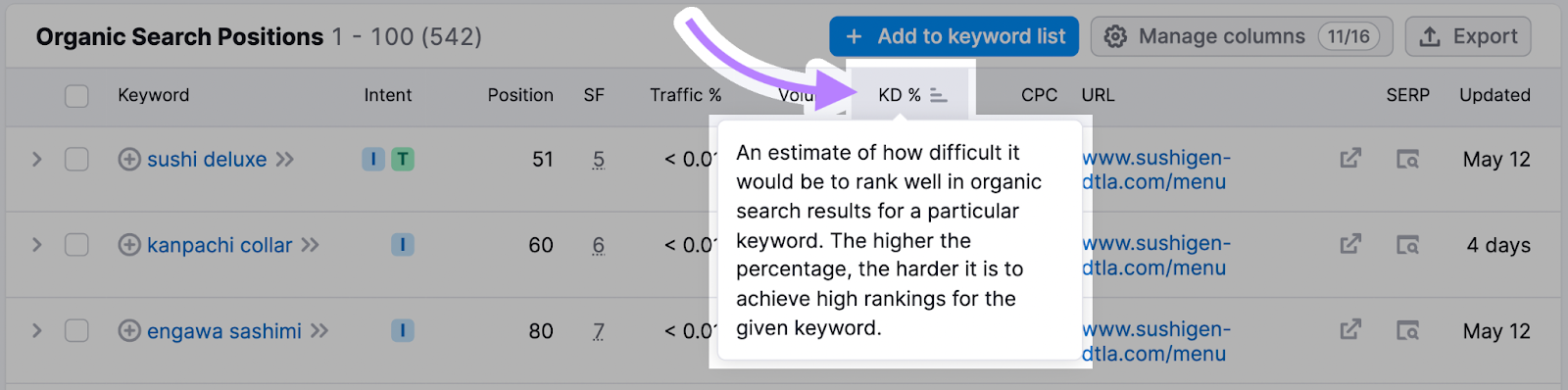
“KD%” column

Now you have a list of keywords you might want to target.
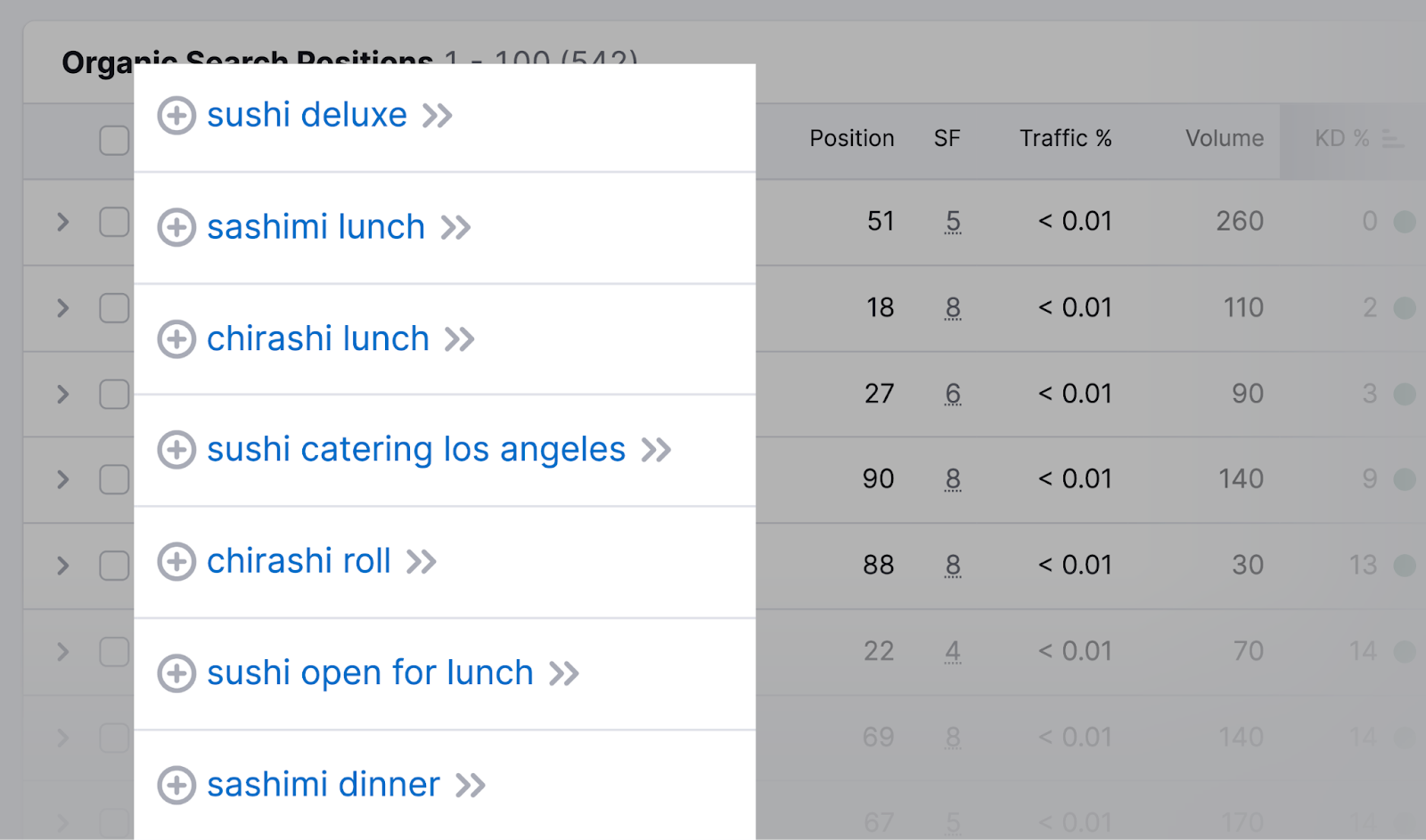
a list of keywords results

If your competitors are targeting these keywords, then they’re likely highly relevant to your business, too. 

Check Local Keyword Volume Metrics 

You’ll also want to get a sense of how difficult it is for your content to rank locally for keywords you choose to target. 

Use the local volume metrics feature in the Keyword Overview tool to identify valuable keywords you’ll want to target in your content. 

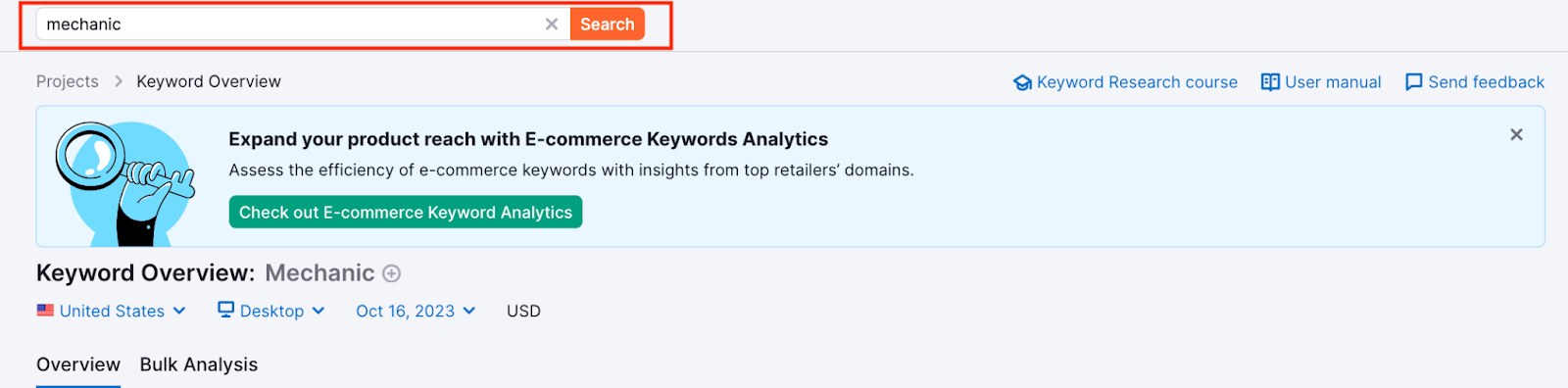
Enter your desired keyword into the search bar at the top of the page and hit “Search.”
ou4RorXHRDM4svf_0XBlmoyvDmdG6ZiaaDcITtX4LMlvNZxWivxzEs1ZHWkJoqnaHSAn60XMTFxNGfPl8AWATXZjVl0DrzHu8rHgjjyzEa_Ib8yIvtfHPQTAr4KGUZPM93lqBeixrZCuBBc6RK2d68k

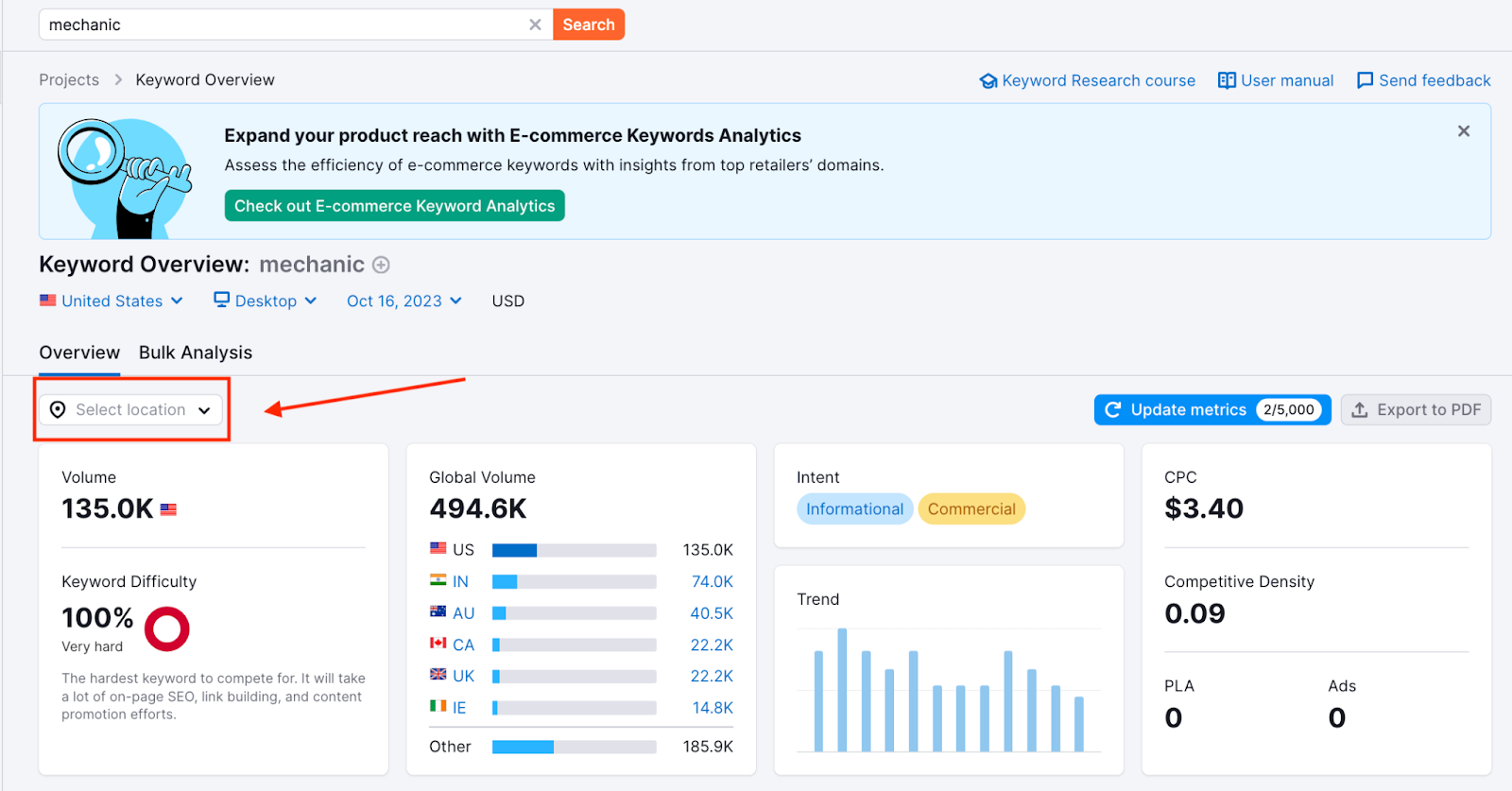
Once the tool delivers the keyword results, click on the drop-down bar labeled “Select location.” 
FvajtJ8WYwtcPnoUMjx9tV10tituXYw_oVRsAVHTuUonlJHsIMD9AiBGE7jVbM_QTyJJppCbz3oPVtOQxIvTLNG69uO2P5UuDy1wDl1XT4bQbkBQMiN0ZusSgegm3htqKs7UzKJnR5ly5NA8ddVgW18

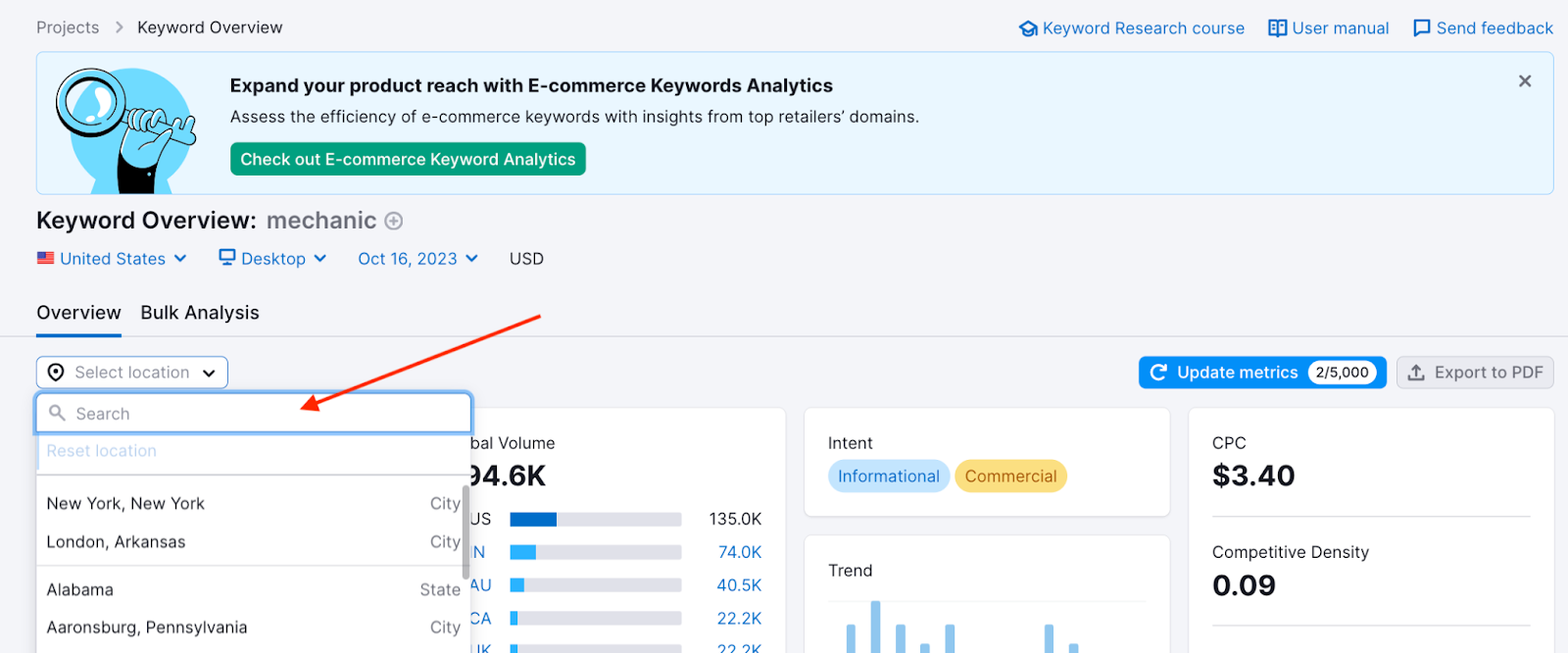
Type in your locale. This could be a state, county, province, city, or municipality. Go as narrow on the location as you wish. 
59Ct9432qkmdX80FXt_27SACwJewRwMvDm2rFJ78NkqnOtv-RNrTxx8d14vPT7-PedwosWoQ5sGx2hrc8nwnuieqUkSkPOvMynXxJ3HrVFbcpB7ne7aQdCpa7XOBzzl9Jj1vz-ixvMVbkuBOuNaNnKw

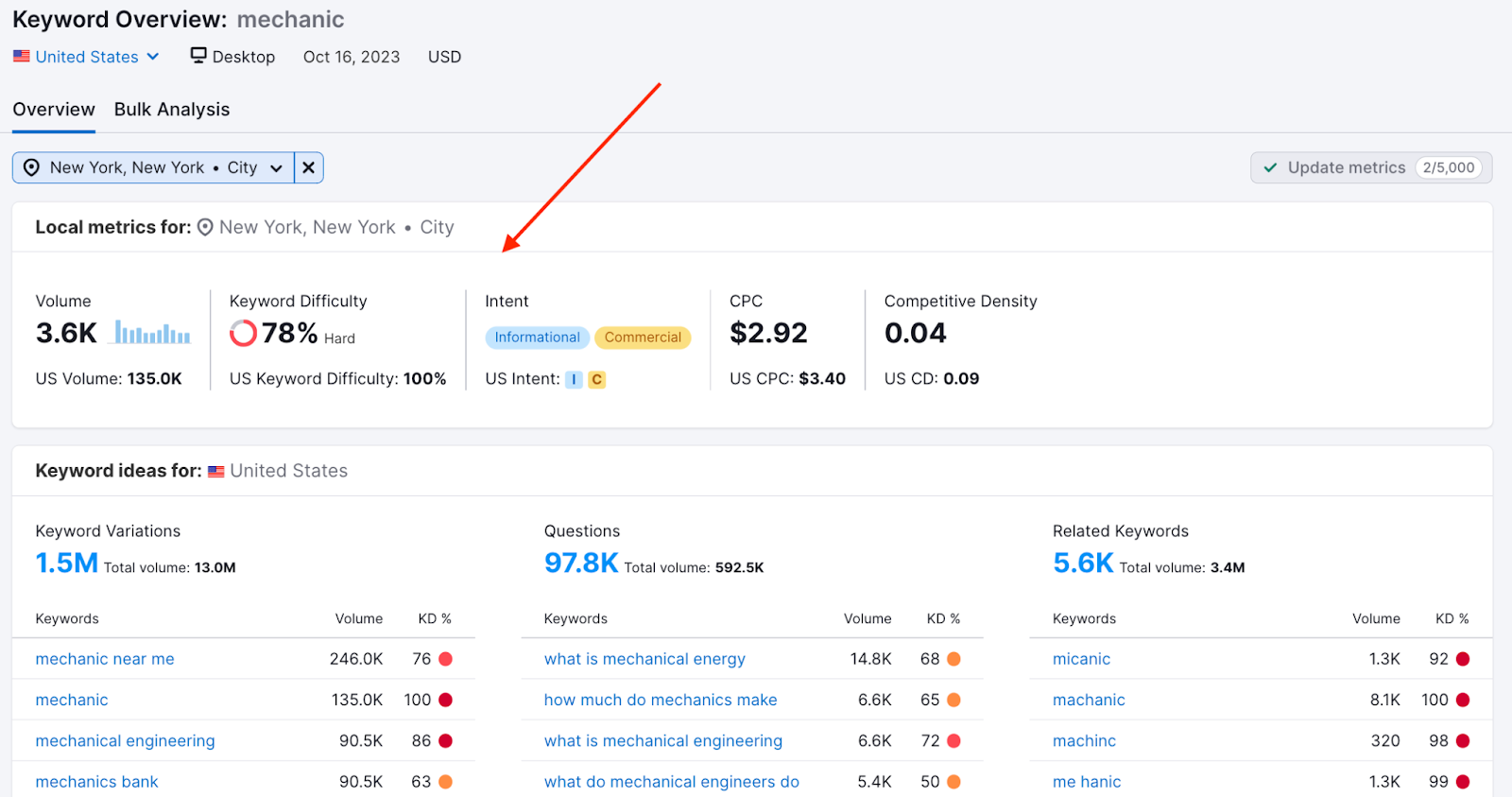
You’ll get local data, as well as the comparative national data. So you can see how easy or difficult it is to rank for your keyword in your exact location. 

Note: Some of these widgets show local data (volume, difficulty, SERP analysis, etc.), while others remain national-level (keyword variations, questions, related keywords).
tgDQGvFDEnQeiHbKXRYnnFw4Sx94snCTVvElkga2kozl7AlYChTAvYEnH_WWO1RJ_jBlprgGjZ_J7uAKKyqEy7B_9a5ZmocdWe9hLmqti_DEYz75JT8E1SJ-p6O-tTiadlQD7RG7068Crj0zJh2mVSE

If you’re a business operating at the local level, this is an essential feature to leverage as you’re building your targeted keyword list. Use the data to get an edge over competitors by optimizing your content for your specific area.

Use Google Autocomplete

Google autocomplete is a feature within Google Search that makes it faster to complete searches when you start to type. 

Its purpose is to save users time by predicting what they’re going to search for.

And it can help you discover valuable long-tail keywords for local SEO.

That’s because Google’s autocomplete predictions depend partly on your location. 

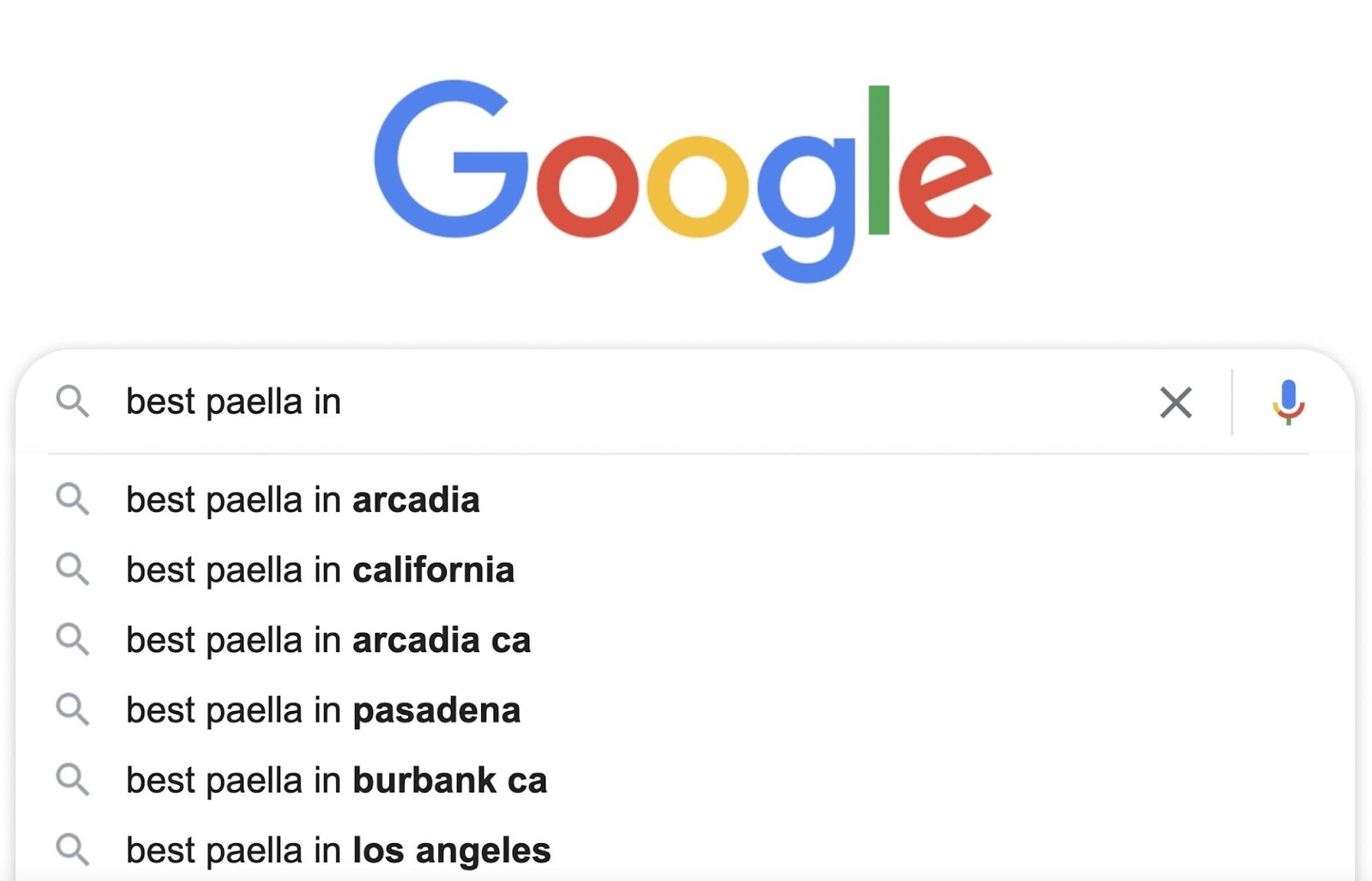
For example, if you’re in Arcadia, California, and you type “best paella in” into the search bar, you’ll see something like this:
Google Autocomplete suggestions for “best paella in” in Arcadia, California

All these locations are near Arcadia or in California. 

So, to find valuable local keywords, start typing in keywords related to your business. 

For example, if you run a cleaning services business, type in “cleaning services” to get a list of local keyword suggestions.

Blog Post Examples and Best Practices to Inspire Your Writing

What Is a Blog Post?

A blog post is a piece of writing typically published on a website’s blog that presents information, opinions, experiences, or insights on a particular topic. Blog posts vary in length. And can include text, images, or videos, depending on the topic.

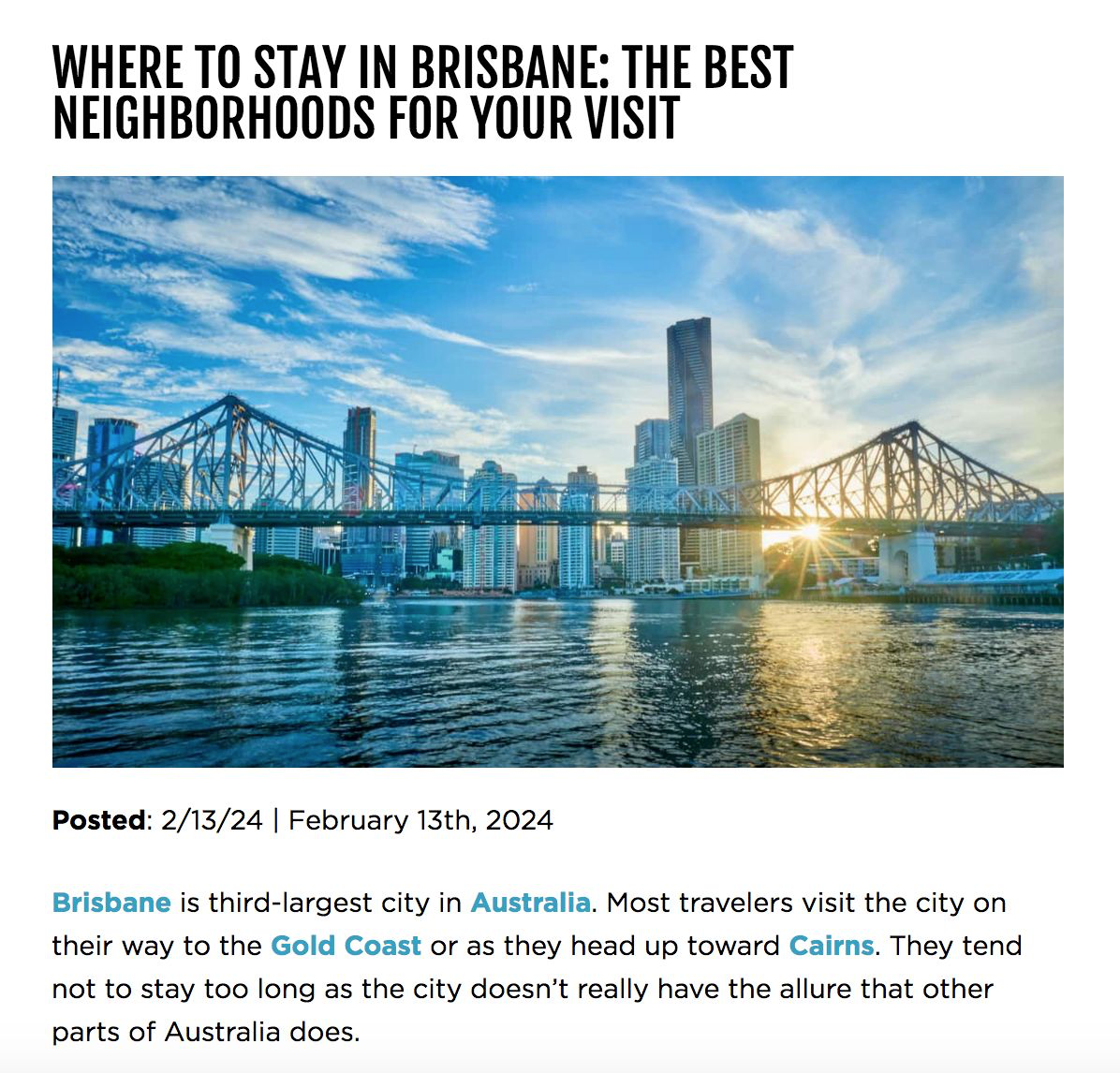
For instance, travel blogs are often rich in visuals. Showcasing the beauty or uniqueness of the places described. 

Like this blog post from travel blog Nomadic Matt:

Nomadic Matt's blog post titled "Where to stay in Brisbane: The best neighborhoods for your visit"

Business blog posts tend to be text-heavy. Focusing on data, expert interviews, industry news, statistics, and other helpful insights. 

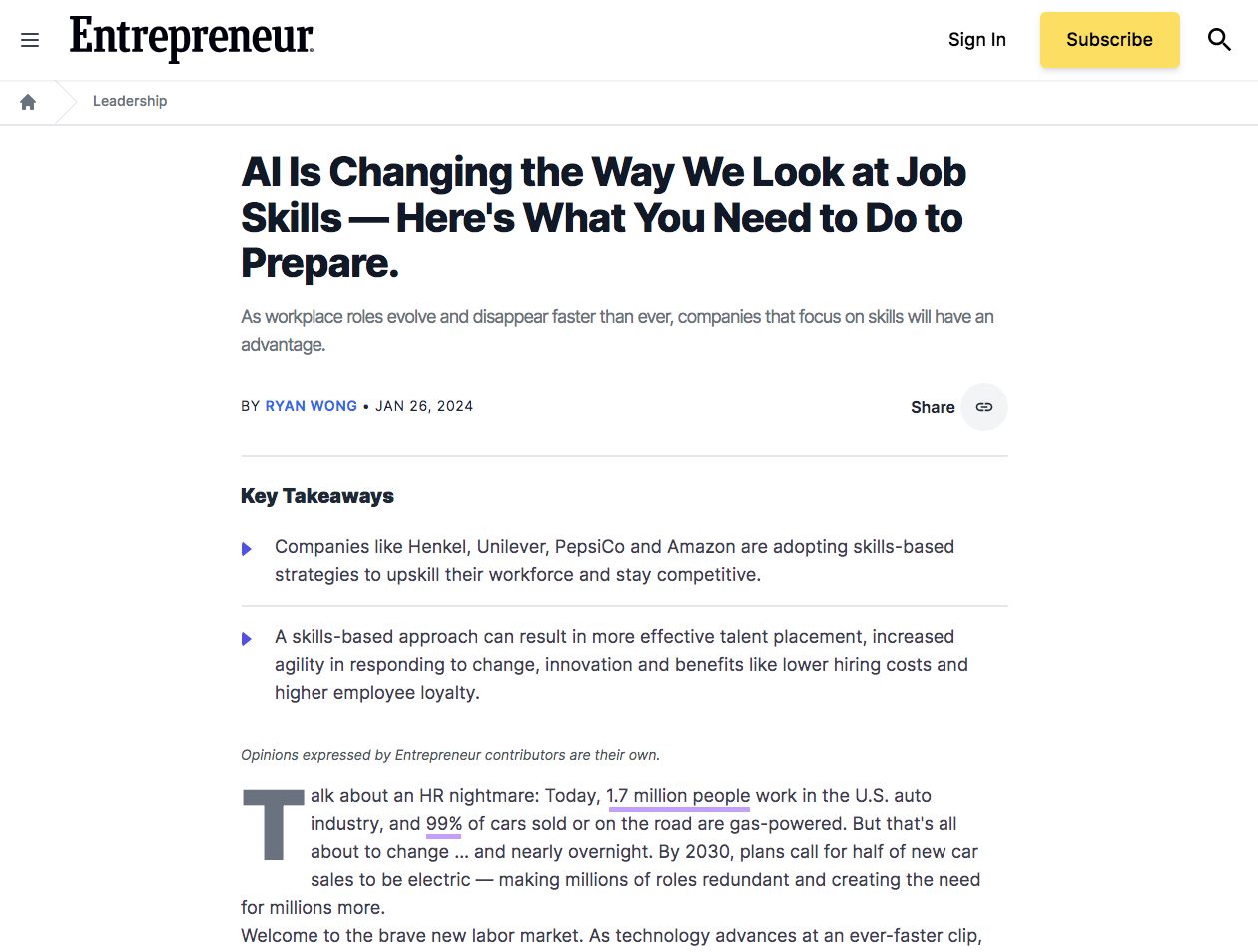
Like this blog post on Entrepreneur

Entrepreneur's article on how AI is changing the way we look at job skills

What Is a Blog? 

A blog, or weblog, is a regularly updated website (or page on a website) that features blog posts on various topics. The content is usually written in a conversational style, addressing the reader directly.

Note

Depending on your goals, you can set up a standalone blog or integrate it into your website (e.g., https://www.myshop.com/blog/). The first option is more suitable if you plan to use your blog as an online journal or diary rather than a business tool.

How Does Blogging Benefit Your Business?

Blogging has many potential benefits. Here, we look at the top advantages of creating blog posts for your business. 

Builds Authority and Trust 

Blogging can be a powerful tool if you’re looking to establish authority in your industry. 

By consistently creating valuable and informative content, you can demonstrate expertise. And engage with your audience in meaningful ways.

Here’s how blogging helps build authority:

  • Showcases expertise: Blog posts that tackle industry issues, explain complex concepts, or provide how-to guides showcase your depth of knowledge. This helps position you as a thought leader in your industry. 
  • Improves SEO: Well-crafted blog posts that incorporate relevant keywords can improve a website’s search engine rankings. Higher visibility in search results can lead to increased website traffic. And leads. 
  • Builds trust: By providing valuable content without a hard sell, businesses can build trust with their audience 

Gives You Full Control 

With a blog, you have full control over the content you publish. Including the length, format, and topics you cover. 

Blogging platforms like Medium and social media sites like Facebook can remove content at any time. And for any reason. 

This may happen if what you write goes against their guidelines, someone (such as a competitor) reports your posts, or the platform goes out of business.

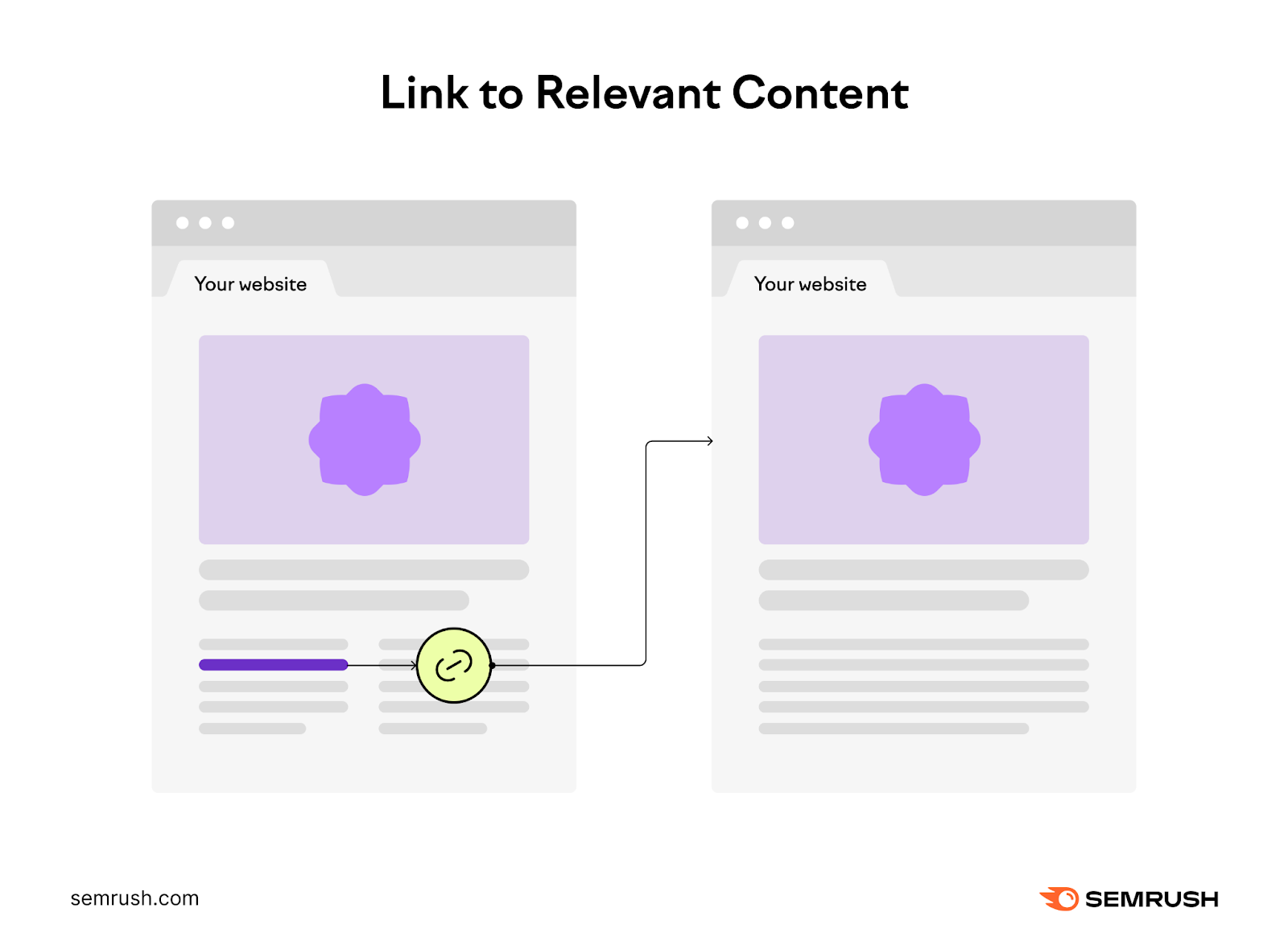
Another advantage of blogging is that it lets you build internal links, which can improve website navigation. Internal links connect various pages of your website, guiding customers through relevant content and product pages. 

A streamlined path makes it easier for customers to find and explore your products and other pages. 

An internal link from one page on your website (left) to another page with relevant content (right)

Let’s say you run an online store selling dietary supplements. You write about the benefits of protein on your blog. And link to product pages selling protein powder, protein bars, or other related products.

If your blog post is relevant and engaging, readers might click those links. And purchase the products you mentioned.

Improves Traffic and Visibility 

Incorporating SEO best practices into your content may lead to higher rankings, resulting in more traffic and exposure. 

For example, optimizing each blog post for specific keywords, such as “whey protein powder” or “vegan protein bars,” can help you get more targeted organic traffic. Keywords are search terms used by consumers to find information or products online.

Additionally, readers may share your blog posts on social media. Which can further boost website traffic and brand awareness.

Pro tip

Use Semrush’s Keyword Magic Tool to find top-performing search terms. Our tool can help you identify high-volume, low-competition keywords related to the topic you want to cover. 

Blog posts are a great way to build backlinks for your website or blog. Backlinks are incoming links from one website to another, acting as votes of confidence that help signal your site’s authority to search engines. 

High-quality backlinks can help boost your search engine rankings. And lead to more traffic. 

The more traffic you get, the likelier your target audience is to discover your brand and products. Some may become paying customers. And help spread the word about your business.

Lets You Target Users in All Funnel Stages

Blogging lets you create content for each stage of the marketing funnel. Which can help you attract, convert, and retain customers.

Here’s a quick look at how to apply the marketing funnel to blog content: 

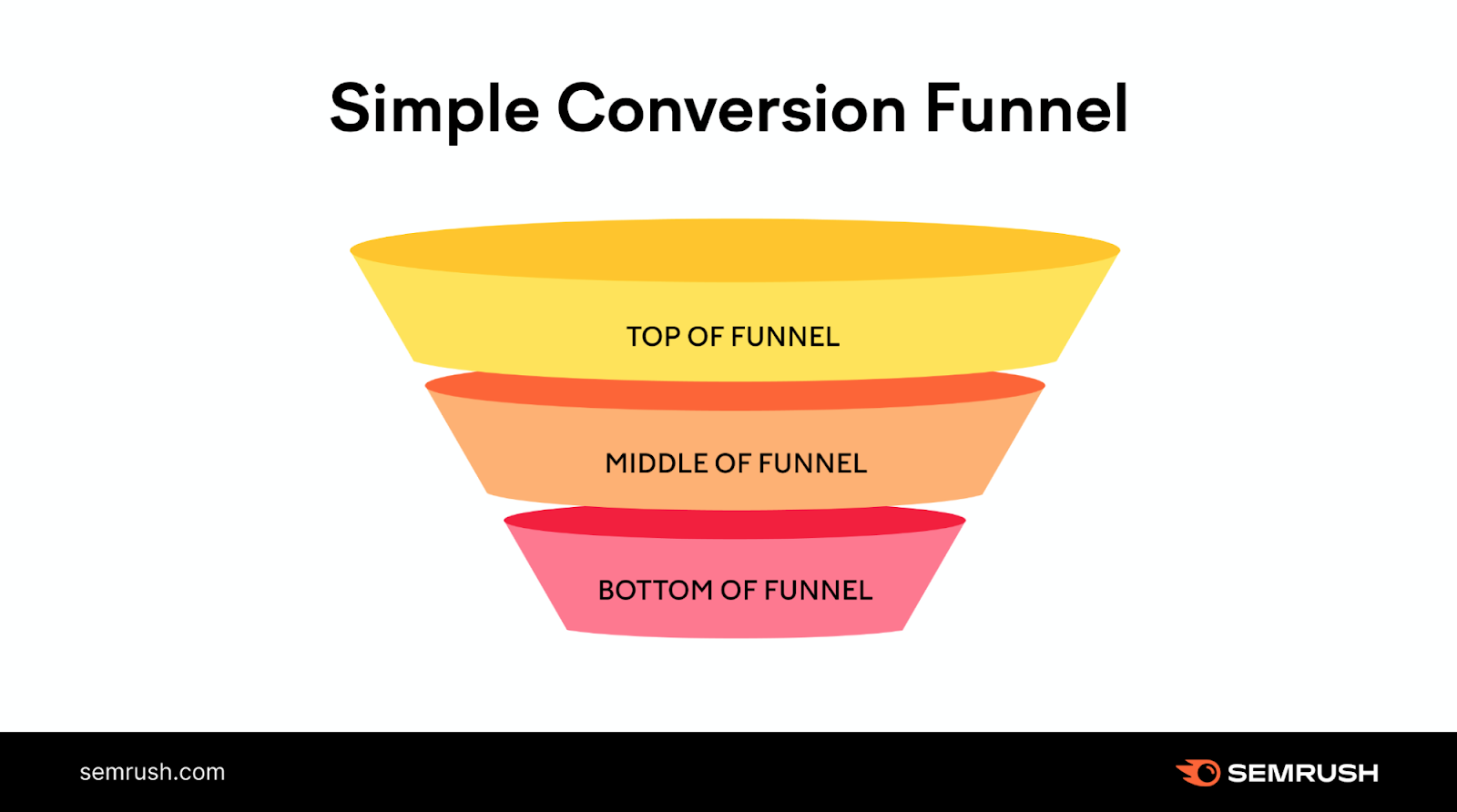
  • Top of the funnel (ToFu): Create how-to posts, listicles, infographics, and other types of content for new audiences. These people are just discovering your blog, products, or services. The goal is to build awareness of the problem you can solve. 
  • Middle of the funnel (MoFu): Produce longer, more in-depth content, such as ultimate guides, case studies, and comparison posts, for readers who are already familiar with your business. At this point, you’ll want to generate interest in your offerings. 
  • Bottom of the funnel (BoFu): Go into detail about the products or services you promote on your blog with detailed reviews and product demos. Your readers are ready to take the desired action (e.g., book a consultation)—they just need an extra push. 
A visual of a simple conversion funnel, with tofu, mofu, and bofu sections

Further readingToFu, MoFu, BoFu: A Practical Guide to the Conversion Funnel

6 Effective Blog Post Formats

There’s more than one way to format blog posts, depending on where your target audience is in the funnel. And your goals for the content. 

With that in mind, let’s see some of the most common types of blog posts.

1. Listicles

Listicles are articles or blog posts organized in list format. 

For example, a blog post titled “Top 10 Movies to Watch This Weekend” or “10 Must-Have Kitchen Appliances Every Home Needs” would be considered a listicle. 

Use listicles to break complex topics into smaller, more manageable chunks. And share tips, strategies, products, or ideas.

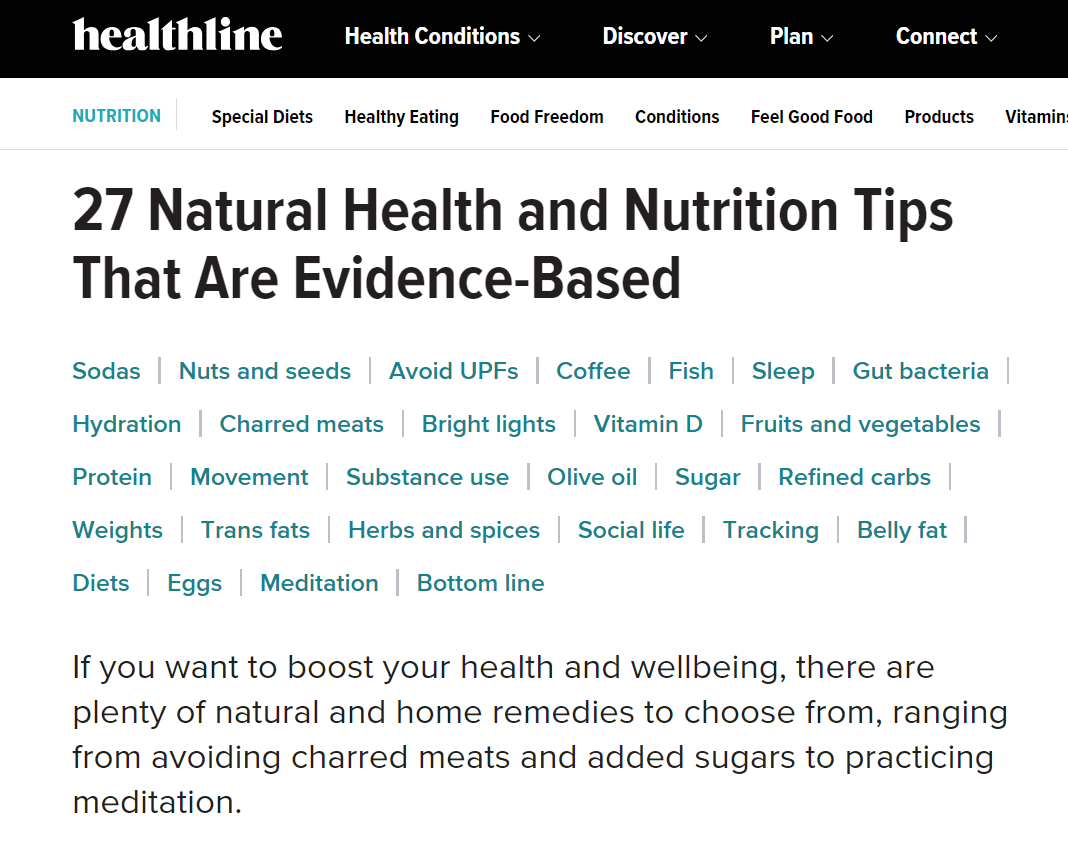
For instance, Healthline uses this format to cover complex topics in a clear and engaging manner. 

Below, you can see a listicle blog post about health and nutrition, broken down into 27 tips.

Healthline's listicle blog post about health and nutrition, broken down into 27 tips

Each tip is numbered and covers one idea, such as “Don’t fear coffee” and “Eat fatty fish.” 

Why Is My Business Not Showing Up on Google? [+ Solutions]

For customers to find your business online, ranking on Google is key. Because 49% of shoppers start their search for a product or service on Google. 

Google not only dominates local business searches. It’s also the gateway for global exposure. Making your business discoverable by Google allows the search engine to direct both local and international customers to your site.

Considering that approximately 74% of in-store shoppers search online for store-related information before visiting, online visibility is vital for your business. 

To boost online visibility, optimize your website for search engines—using relevant keywords and a mobile-friendly design—and maintain an accurate, up-to-date business listing. 

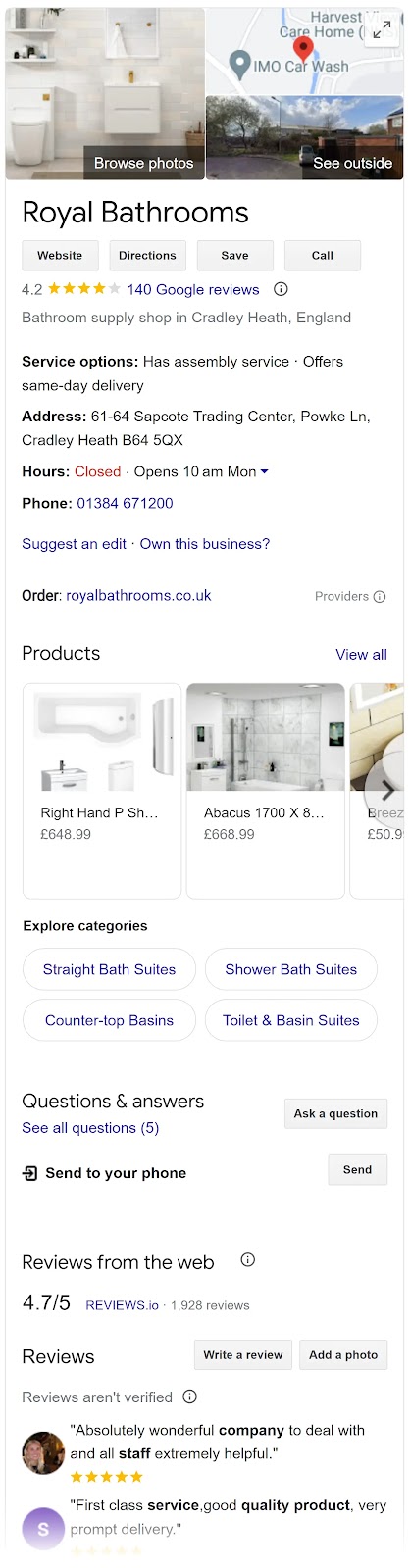
That’s where your Google Business Profile, or GBP, comes in. It looks like this:

Google Business Profile for "Royal Bathrooms"

This profile pops up when someone looks you up or searches for your products or services on Google Search or Google Maps. Bridging the gap between an online presence and your store’s physical location.

Why Is It Important for Businesses to Show Up on Google Maps?

Although consumers rely heavily on online organic searches to find local businesses, Google Maps has an added advantage because it addresses local search queries specifically. 

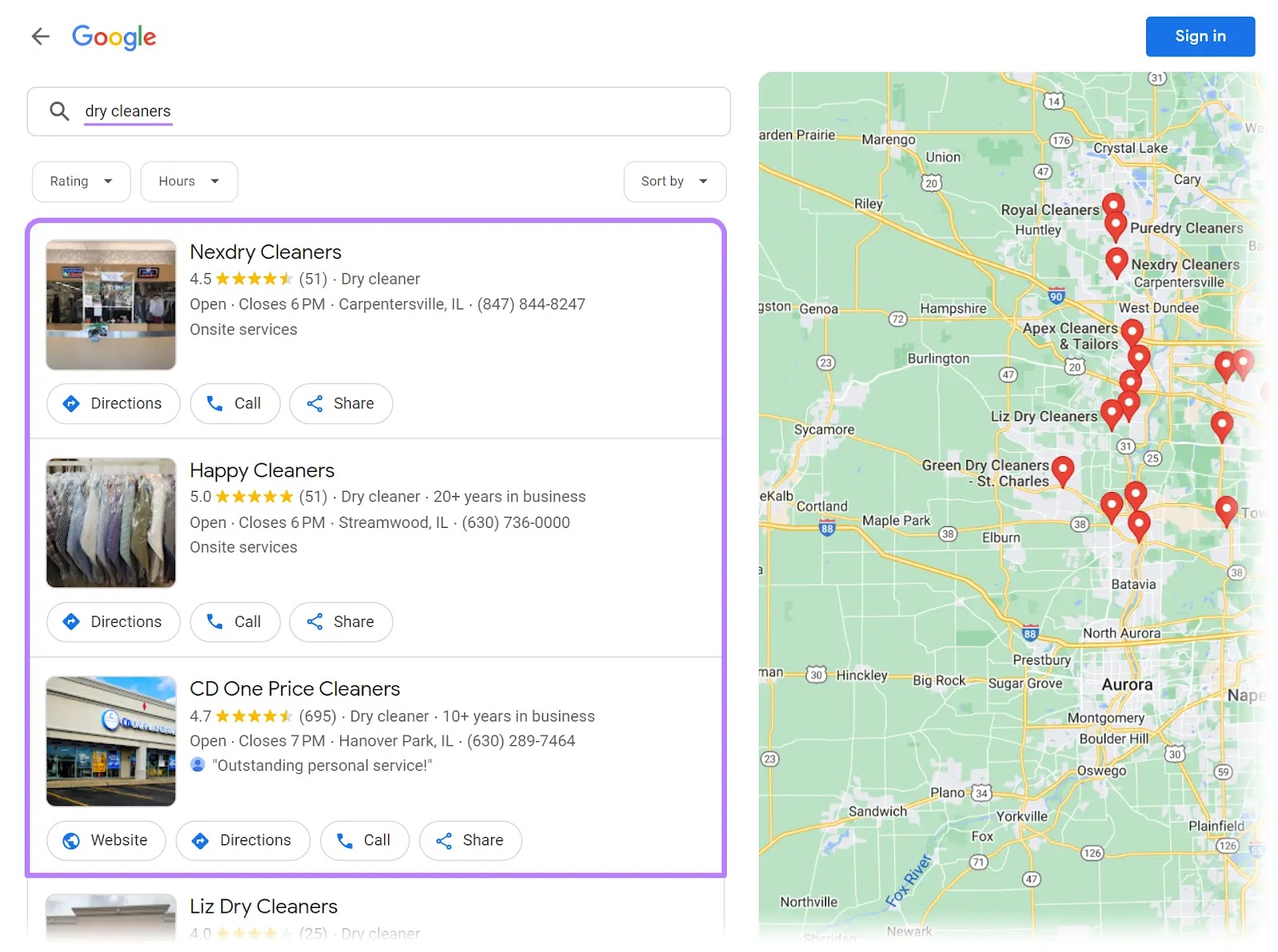
Say you provide dry cleaning services. When someone searches for dry cleaning in their area on Google Maps, they’ll be able to see a listing with your address, hours of operation, and contact details. All pulled from the information you entered into your Google Business Profile. 

Visibility and accessibility on Google Maps complements your GBP, local, and overall SEO strategy. 

While a general Google Search helps users discover your business online, Google Maps targets those searching in your immediate area and vicinity—effectively capturing local demand.

Google Maps results for "dry cleaners"

Essentially, showing up on Google Maps can significantly increase your business’s foot traffic and local sales.

Further reading8 Google Maps Marketing Tactics to Drive Local Business

Your business will be visible only if you set up your Google Business Profile correctly. If you’ve created one but still aren’t showing up on Google, there may be many reasons why. 

Possible Reasons Why Your Business Isn’t Showing Up on Google

1. You Need to Claim an Existing Business Profile

Your business might not appear on Google Maps if you still need to claim your GBP listing. 

An unclaimed listing means the business information is present on Google Maps but still needs to be verified or managed by the business owner. 

Both claiming and verifying your business listing are essential for managing your online presence and ensuring the accuracy of your information. 

To check and claim ownership of your business, follow some simple steps: 

Step 1: Sign in to GBP 

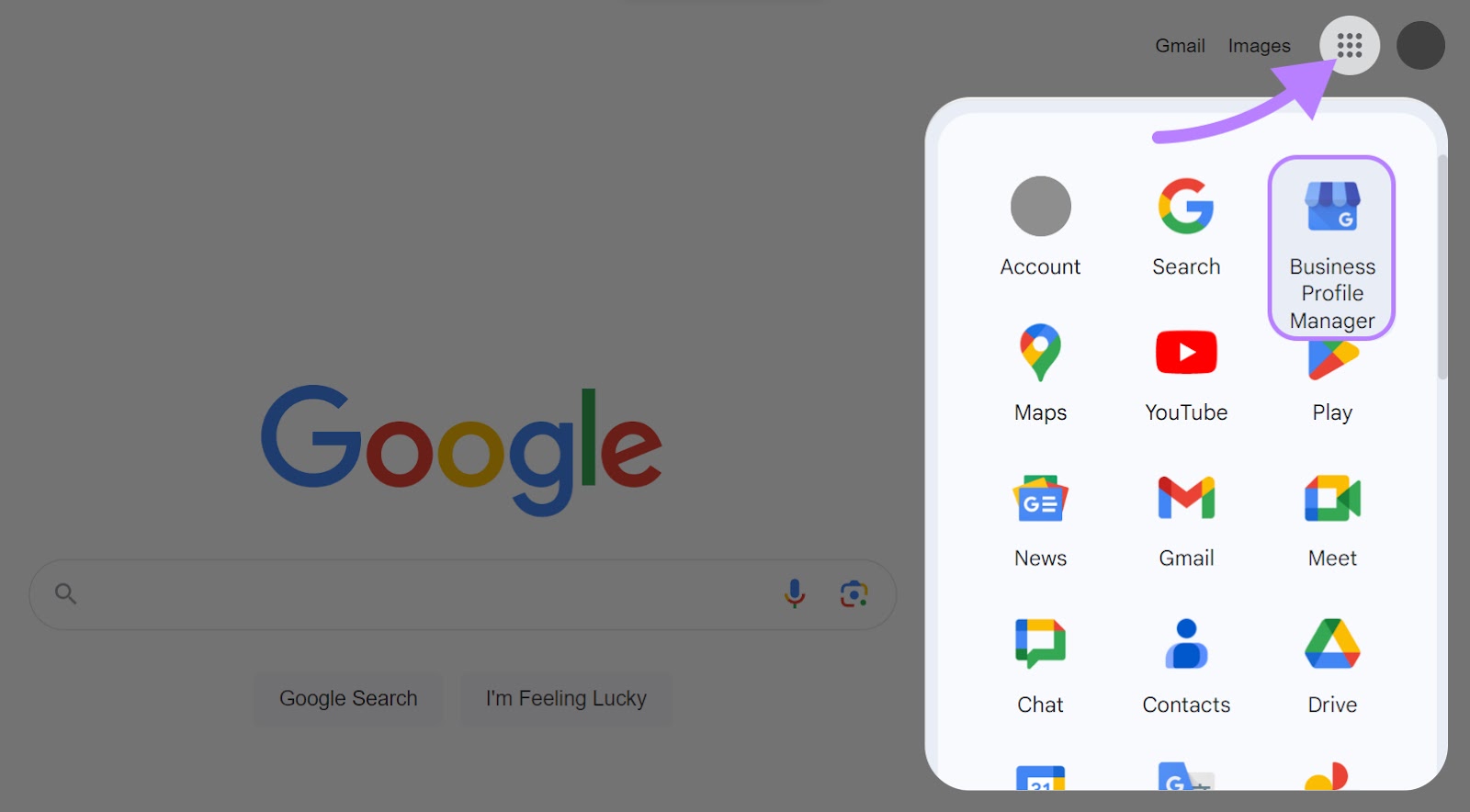
Log in to GBP on your desktop or the mobile app using your Google Account. Click the Google apps button next to your profile icon, and find “Business Profile Manager” in the top-right corner of the menu.

“Business Profile Manager” selected from Google apps

Step 2: Claim existing ownership of a verified Google Business Profile

If you own and have verified your business, Google will redirect you to the GBP dashboard. If not, move on to step three to claim your business.

Step 3: Access your business profile

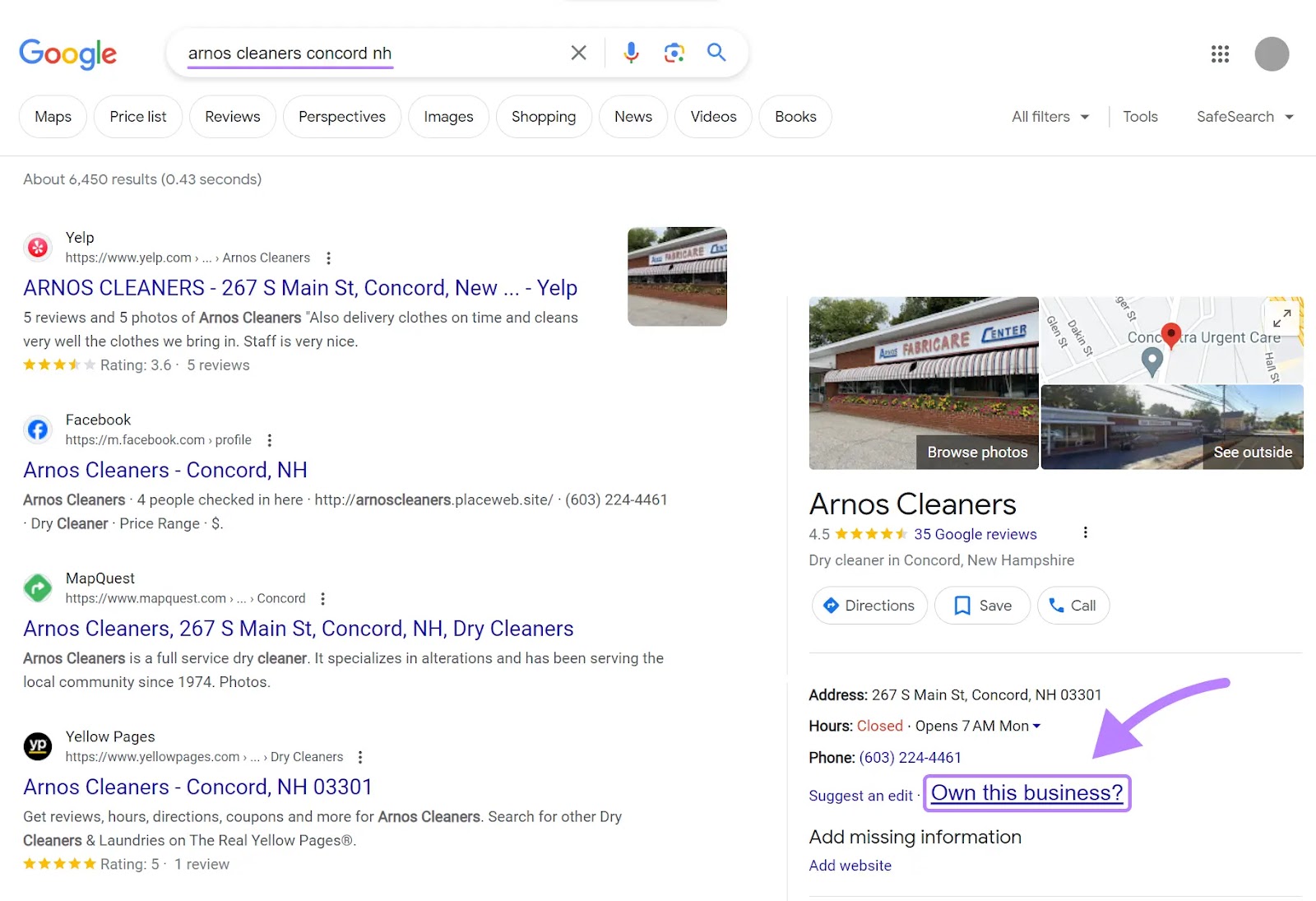
Search for your business name and location on Google.com. If your profile appears on the right-hand side, click “Own this business?

“Own this business?” link highlighted under "Arnos Cleaners" business on Google

Step 4: Request for claim 

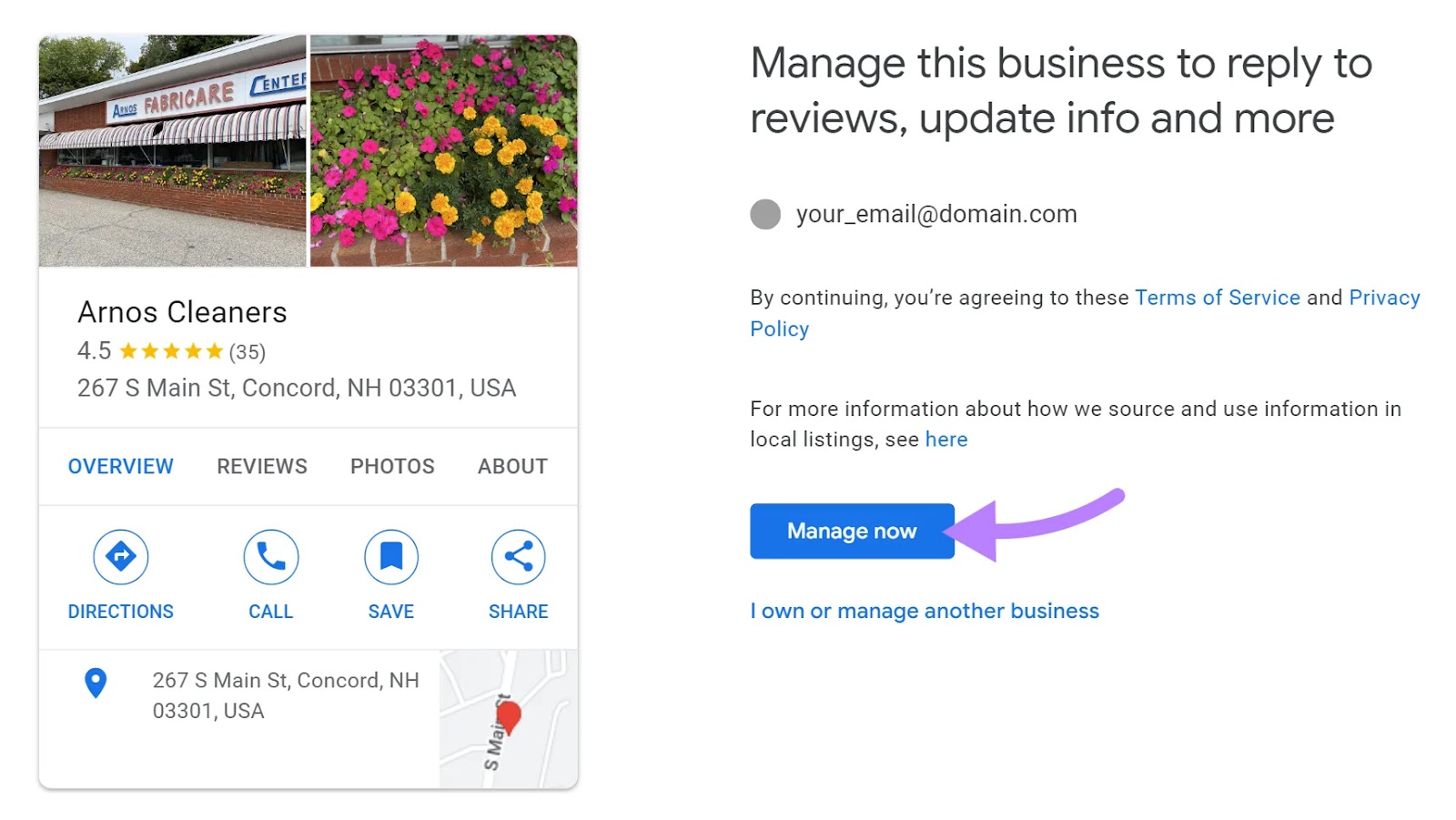
A prompt will appear on the screen. Click “Manage now.”

“Manage now" selected for "Arnos Cleaners" business

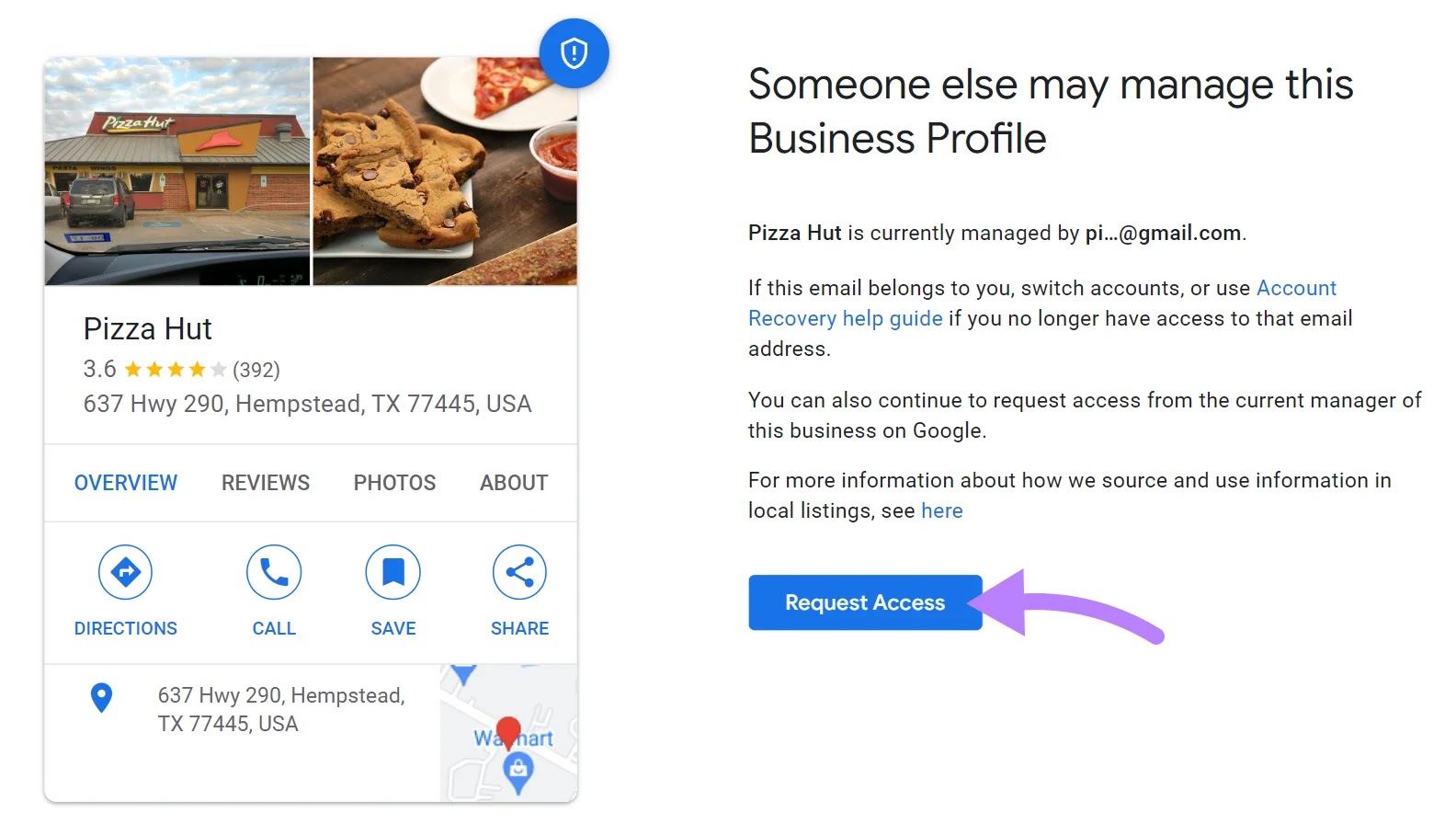
If someone else has already claimed this business, you might see something like this:

"Someone else mat manage this Business Profile" screen

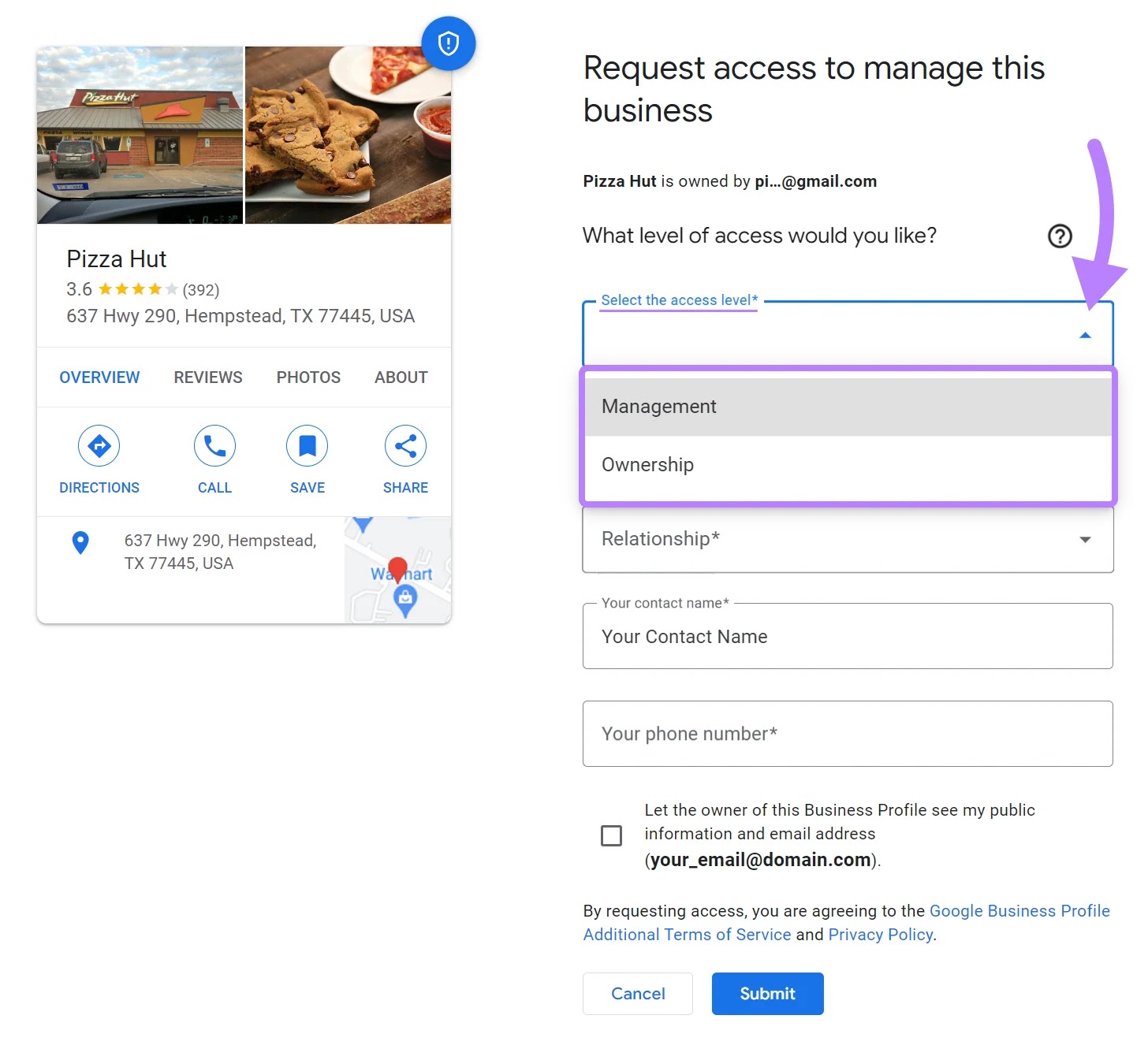
Click “Request Access.” Google will then ask about your level of ownership.

"Request access to manage this business" form in GBP

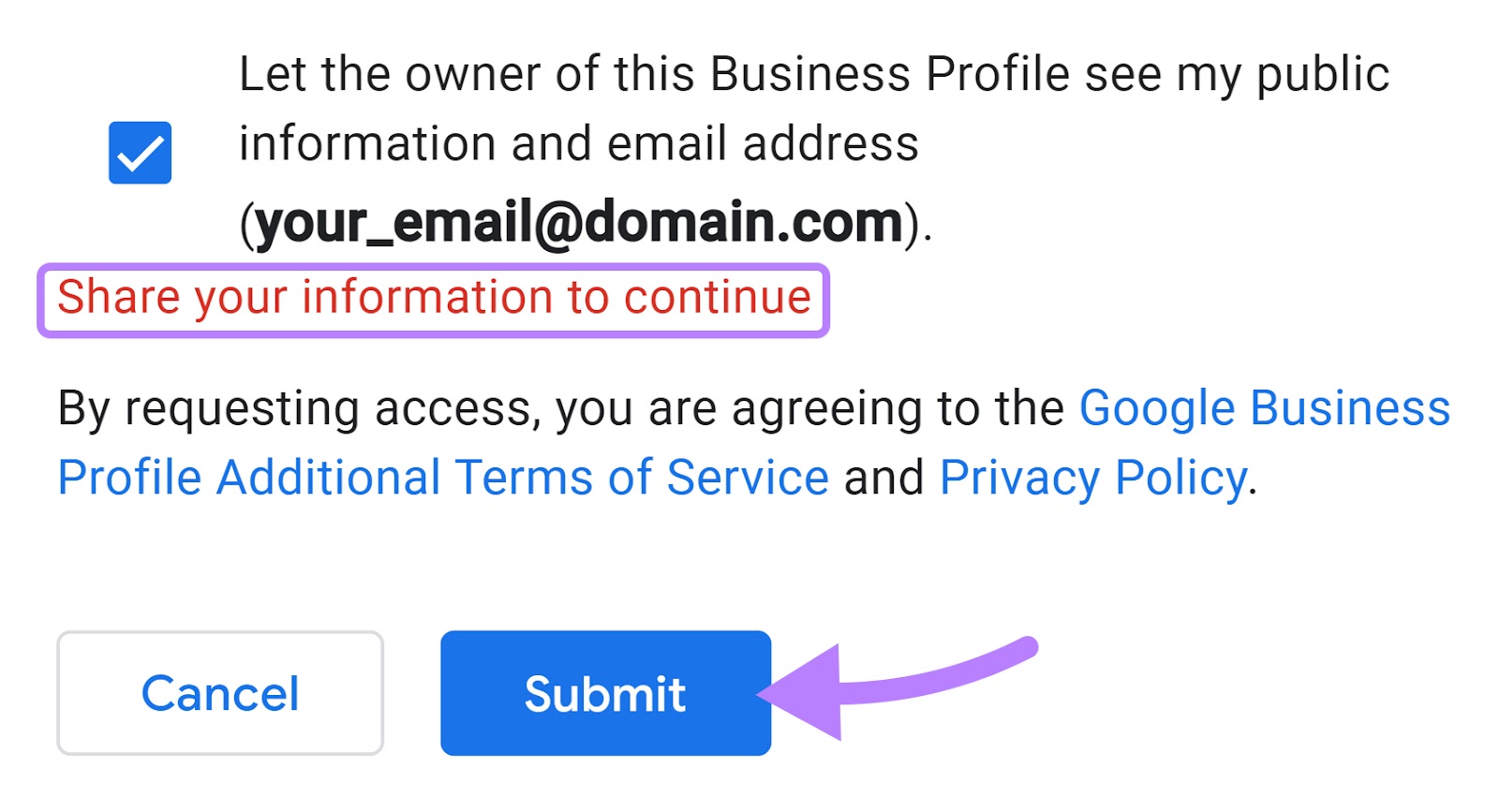
Fill in the required fields, and tick the option to let the business owner see your details.

If you don’t select this option, you won’t be able to move forward. Once done, hit “Submit.”

Submit your request to Google

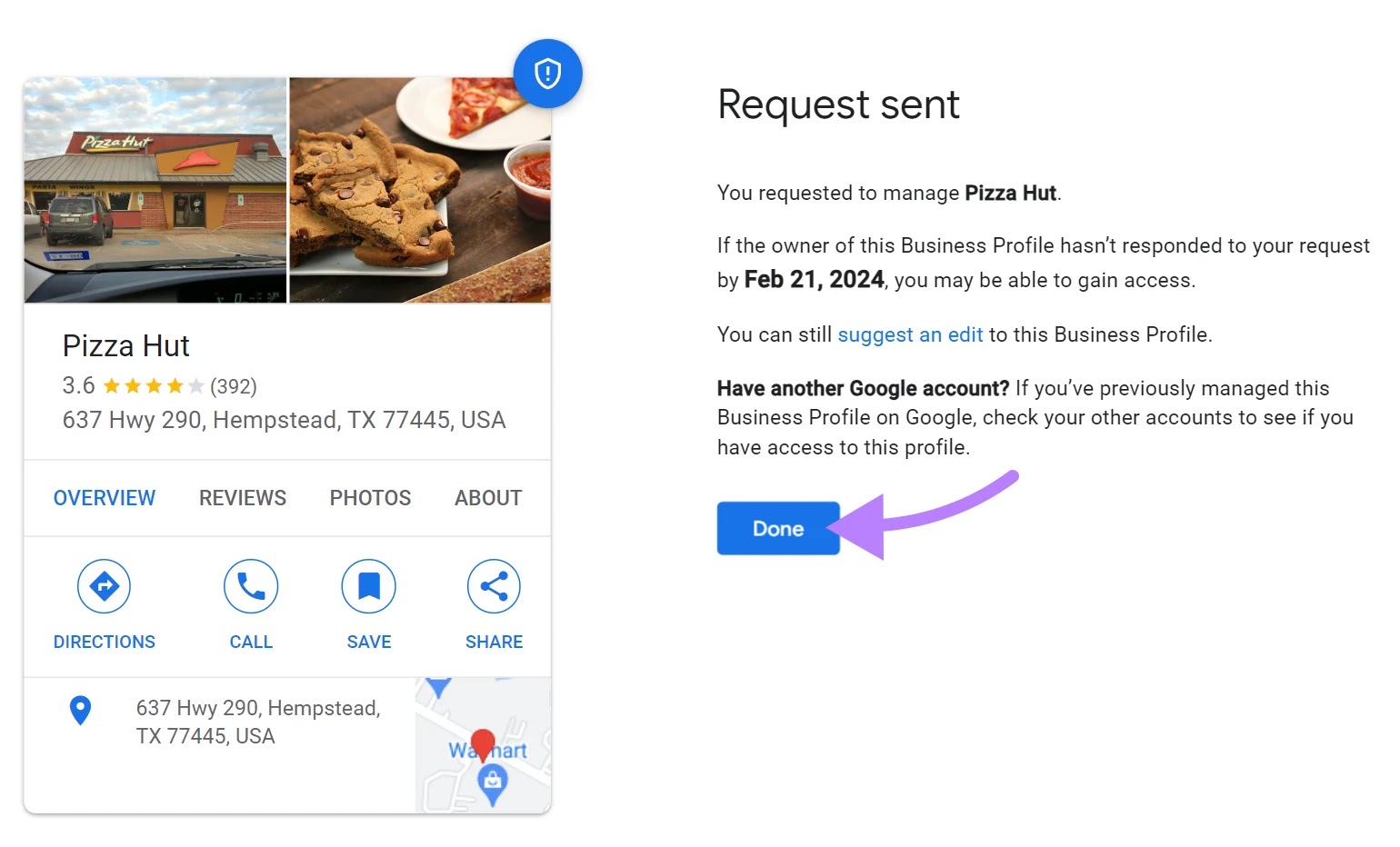
You will then get a confirmation prompt. And a date of when you should get ownership of your business profile if the current owner doesn’t respond.

Click “Done” and wait until you get access to your GBP.

"Request sent" screen on Google

Further readingRequest ownership of a Business Profile by Google Support.

Step 5: Verify business ownership 

After you click “Manage now,” the app will prompt you to provide ownership information.

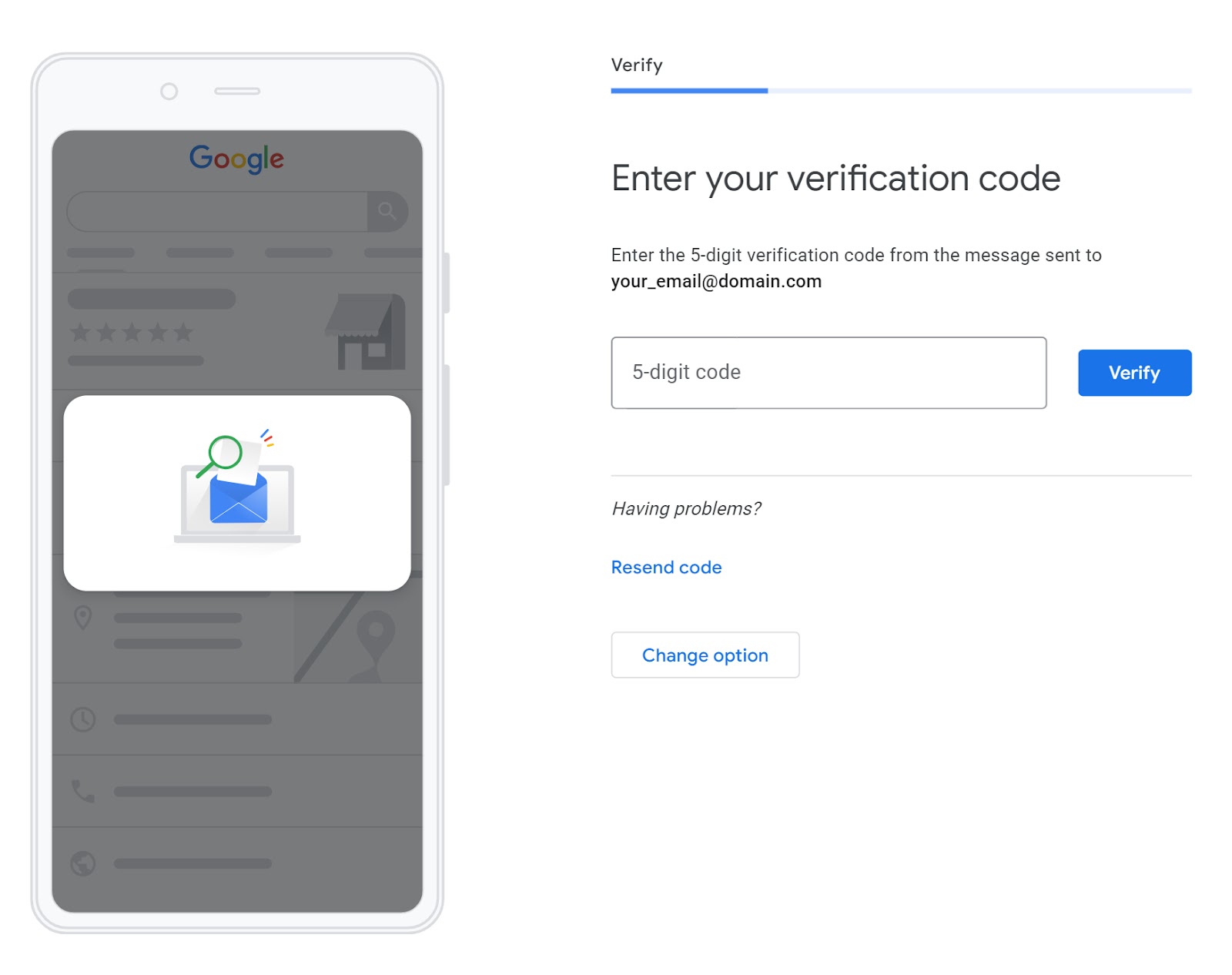
Depending on your business type and circumstances, you may get instant validation or receive a verification code.

"Enter your verification code" screen in GBP

If a verification code is required, you may receive it via regular mail, email, or text. Enter the code into your Google Business dashboard to complete verification.

Then, you’ll gain full ownership of your Google Business Profile.

2. Your Listing Is Not Verified on Google Maps 

Google prioritizes verified businesses to ensure reliability and accuracy in its listings.

Verification can be a part of the initial setup process or it can be completed afterward for existing profiles.

To verify your existing Google Business Profile, follow these steps:

  • Log in: Access your profile at google.com/business and follow Google’s verification steps
  • Verification method: Choose a verification option (phone, text, email, or video)
  • Enter the code: Follow the instructions to verify, typically entering a code sent to you
  • Review period: Verification reviews can take up to seven business days
  • Confirmation: Once verified, you’ll receive a confirmation of your profile’s status

Here’s a video that sums up the GBP verification steps:

Youtube video thumbnail

Further Reading: Learn more about setting up a Google Business Profile.

3. Your Website Is Not Optimized 

Effective website optimization plays a significant role in enhancing your business’s visibility in organic search results. Which positively influences how your business appears on both Google Maps and Search. 

Google’s algorithms consider various factors on a website to determine its relevance and authority. Like relevant content, mobile-friendliness, and user experience. These factors contribute to how well your business ranks in organic search results. 

A higher ranking in search results can lead to better visibility in local searches, including on Google Maps.

It’s a key step toward improving your online visibility, particularly if you’re a new business with a limited online presence

Efforts to optimize both your website and Google Business Profile are interconnected, as both elements can contribute to your overall online visibility.

Here’s a quick optimization checklist for your website:

  1. Homepage clarity: Make sure your homepage clearly explains your business and offerings
  2. Regular updates: Keep your website updated with relevant information about your products and services 
  3. SEO: Follow SEO best practices sitewide, including using relevant keywords, meta tags, and mobile-friendly design

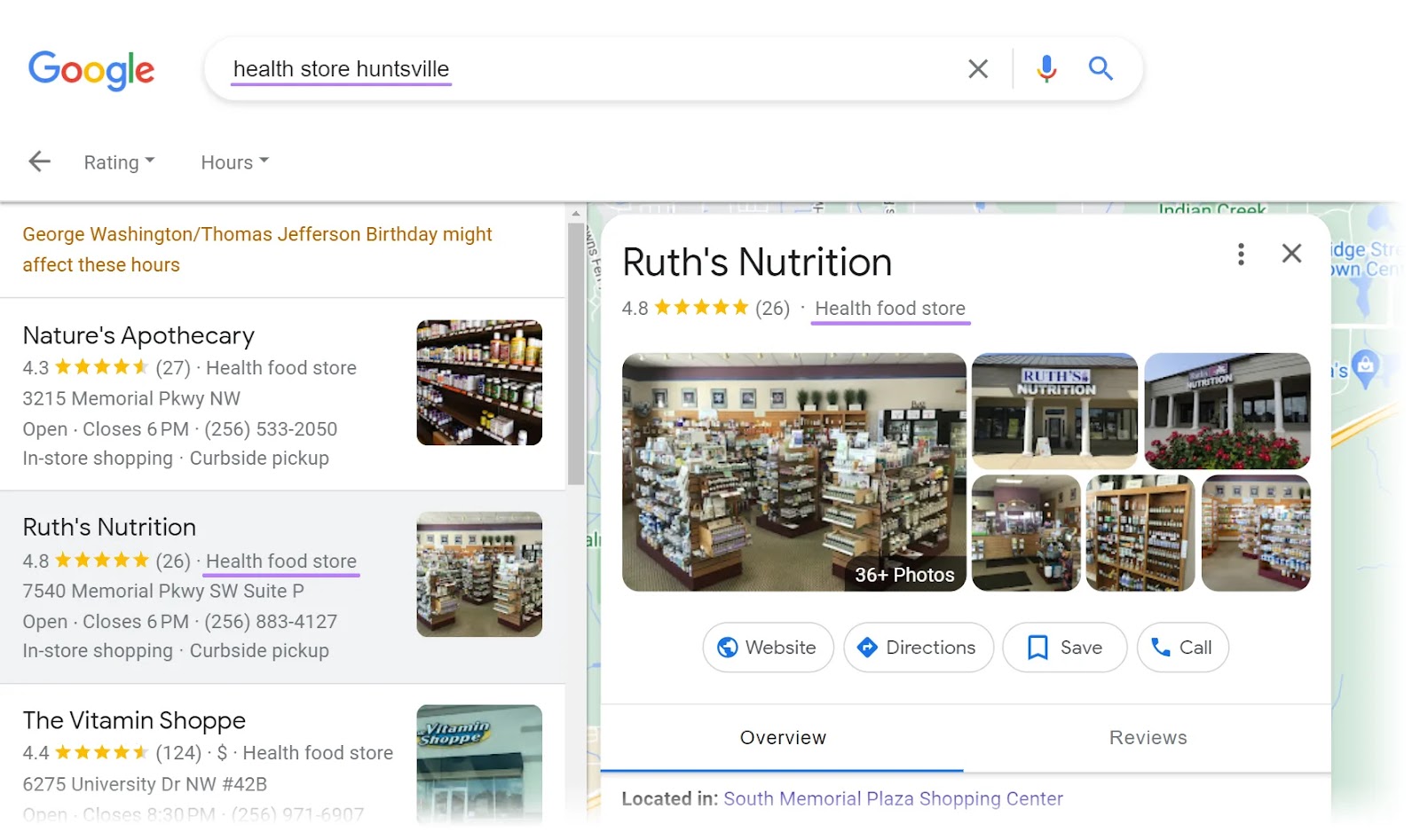
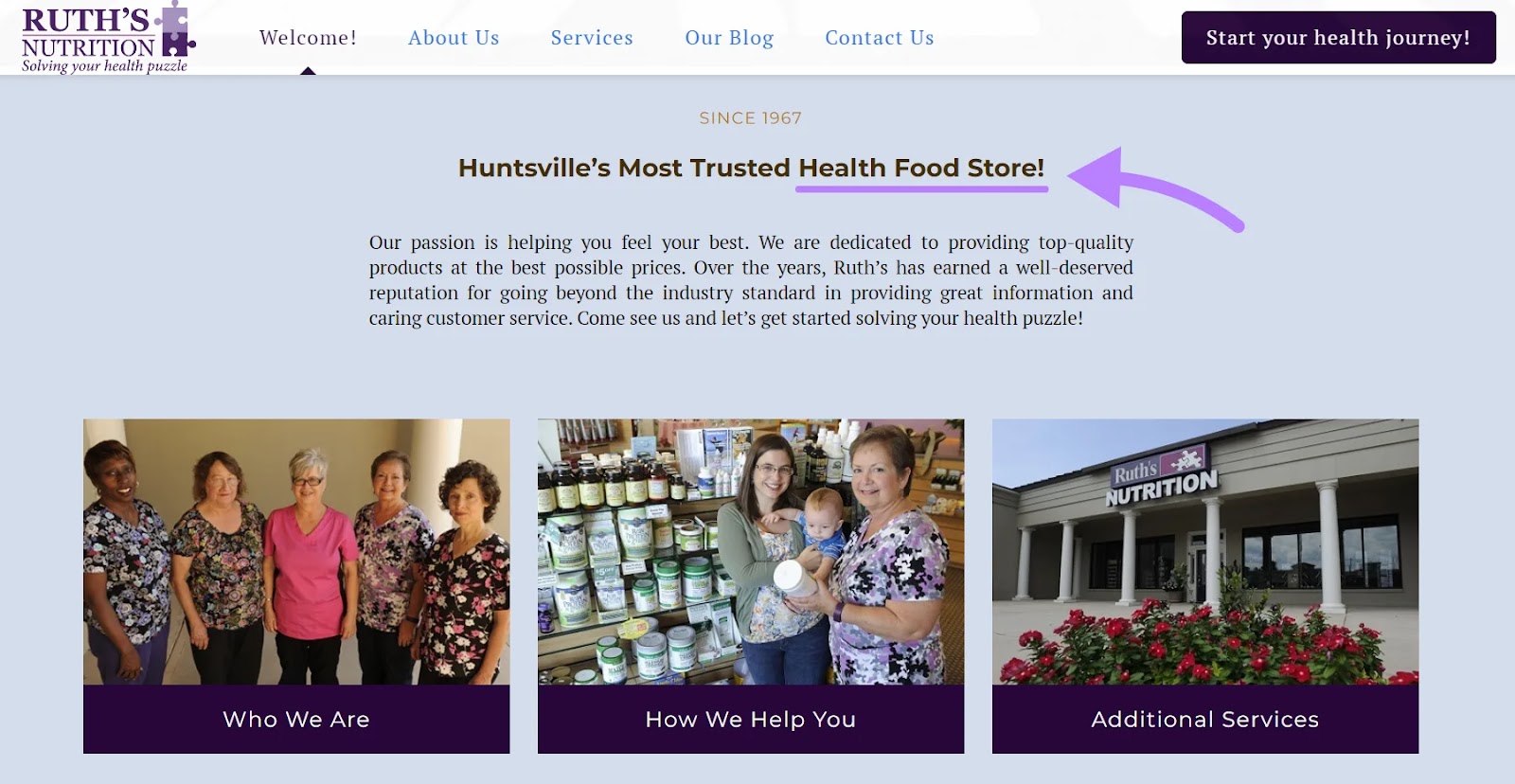
Consider Ruth’s Nutrition’s GBP as an example. 

Ruth’s Nutrition’s Google Business Profile with "health food store" category highlighted

The business uses similar keywords across its profile and website to connect both platforms.

Ruth’s Nutrition’s website with "health food store" keyword highlighted

Pro tip

Regular updates and local SEO strategies can improve your search rankings and attract more customers. 

4. Your Website Uses Too Few, Too Many, or the Wrong Keywords

Using too few keywords may lead to poor discoverability. Using irrelevant or incorrect keywords can attract the wrong audience. Or no audience at all.

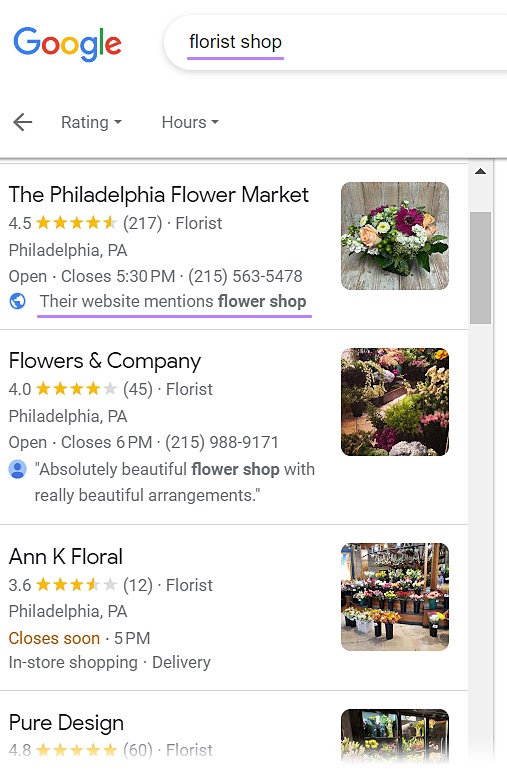
Consider The Philadelphia Flower Market, which often appears in the top search results for the keyword “florist shop” for users located in that city. 

The Philadelphia Flower Market appears in the top search results for "florist shop" search

The website content includes a variation of the specific search query, “flower shop.”

By including relevant keywords in its website content, The Philadelphia Flower Market aligns more closely with users’ search intent. And signals a relevant connection to search engines.

Meanwhile, the GBP listing uses the terms “florist,” “flowers,” and “market.”